Navigating Eurasia: What India Gains from the SCO

 1 month, 1 week ago
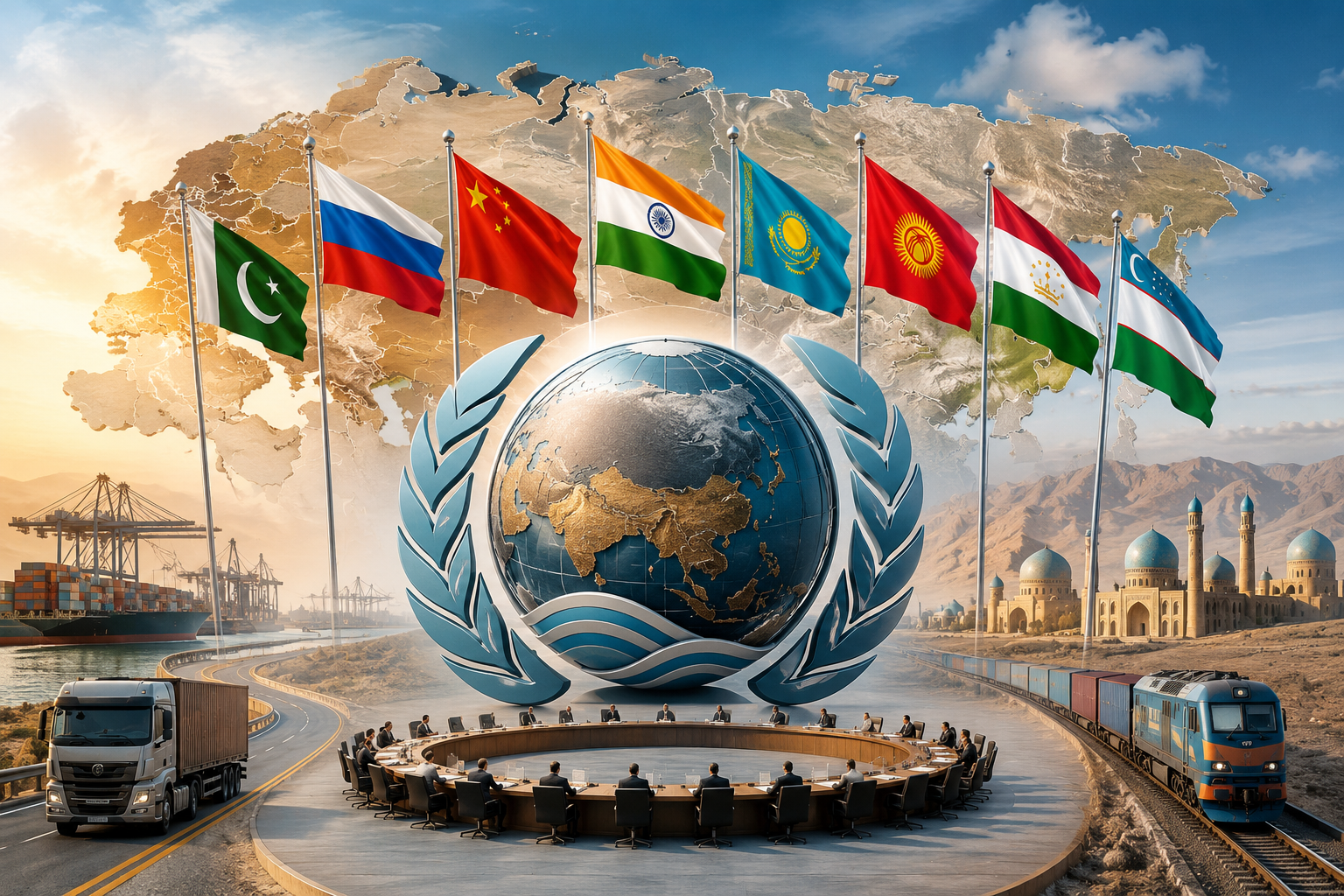
The Shanghai Cooperation Organisation (SCO) has often been characterised as an anti-Western security bloc or a vehicle for Beijing’s Eurasian ambitions. Yet for New Delhi, full membership since 2017 has provided an indispensable diplomatic foothold in its "extended neighborhood." As Central Asia undergoes a structural shift—moving away from historical Russian economic dominance toward an increasingly China-centric commercial reality—India's presence in the SCO prevents the region from becoming an exclusive sino-centric sphere of influence. The multilateral framework offers India a institutionalized platform to engage directly with the five Central Asian republics without being entirely outmaneuvered by greater powers.
At the top of India’s SCO agenda is regional security and counter-terrorism. Participating in the Regional Anti-Terrorist Structure (RATS) based in Tashkent gives New Delhi access to vital real-time intelligence on radical networks, drug trafficking, and cross-border insurgency emanating from Afghanistan. Because instability in Central Asia directly impacts India’s national security, the SCO’s institutional mandate to combat the "three evils"—terrorism, separatism, and extremism—aligns cleanly with
India's regional counter-terrorism imperatives. It allows New Delhi to keep a vigilant eye on regional security dynamics that directly affect its northern periphery.
Beyond hard security, the SCO serves as a crucial gateway for India’s resource and connectivity ambitions. Central Asia holds vast reserves of hydrocarbons, uranium, and critical minerals essential for India’s clean energy transition and high-tech manufacturing. While geographical barriers and Pakistan's denial of overland transit remain severe bottlenecks, the SCO framework complements India's efforts to advance alternative transport arteries, such as the International North-South Transport Corridor (INSTC) and the Iranian port of Chabahar. By promoting its "Security, Connectivity, and Opportunity" framework at SCO summits, India continually pushes for transparent, sovereignty-respecting regional infrastructure.
The organization also reinforces India’s doctrine of strategic autonomy. In an era of intense geopolitical polarization, maintaining active participation in an Eurasian bloc alongside Russia, China, and Iran counterbalances India's deep strategic alignment with Western-led platforms like the Quad. It signals that New Delhi refuses to be locked into rigid cold-war-style alliances. Crucially, the SCO offers a persistent, neutral multilateral venue to conduct high-level diplomacy and manage complex bilateral tensions with neighbors like China and Russia outside the glare of bilateral spotlights.
In the ultimate analysis, the SCO cannot match the scale of Chinese capital, nor can it solve all of India's Eurasian transport dilemmas. However, remaining inside the grouping is far better than watching from the margins. By offering Central Asian states a reliable alternative partner in areas where India excels—such as digital public infrastructure, pharmaceuticals, education, and capacity building—New Delhi uses the SCO to project soft power. The SCO is not a panacea for India's continental trade goals, but it remains a vital diplomatic anchor ensuring India stays politically relevant in the geopolitics of Greater Eurasia.







[[comment.comment_text]]