Common Cause of “Vote Chori”: Opposition and Gen Z Protests Rattle Government as Supreme Court Steps In

 an hour ago
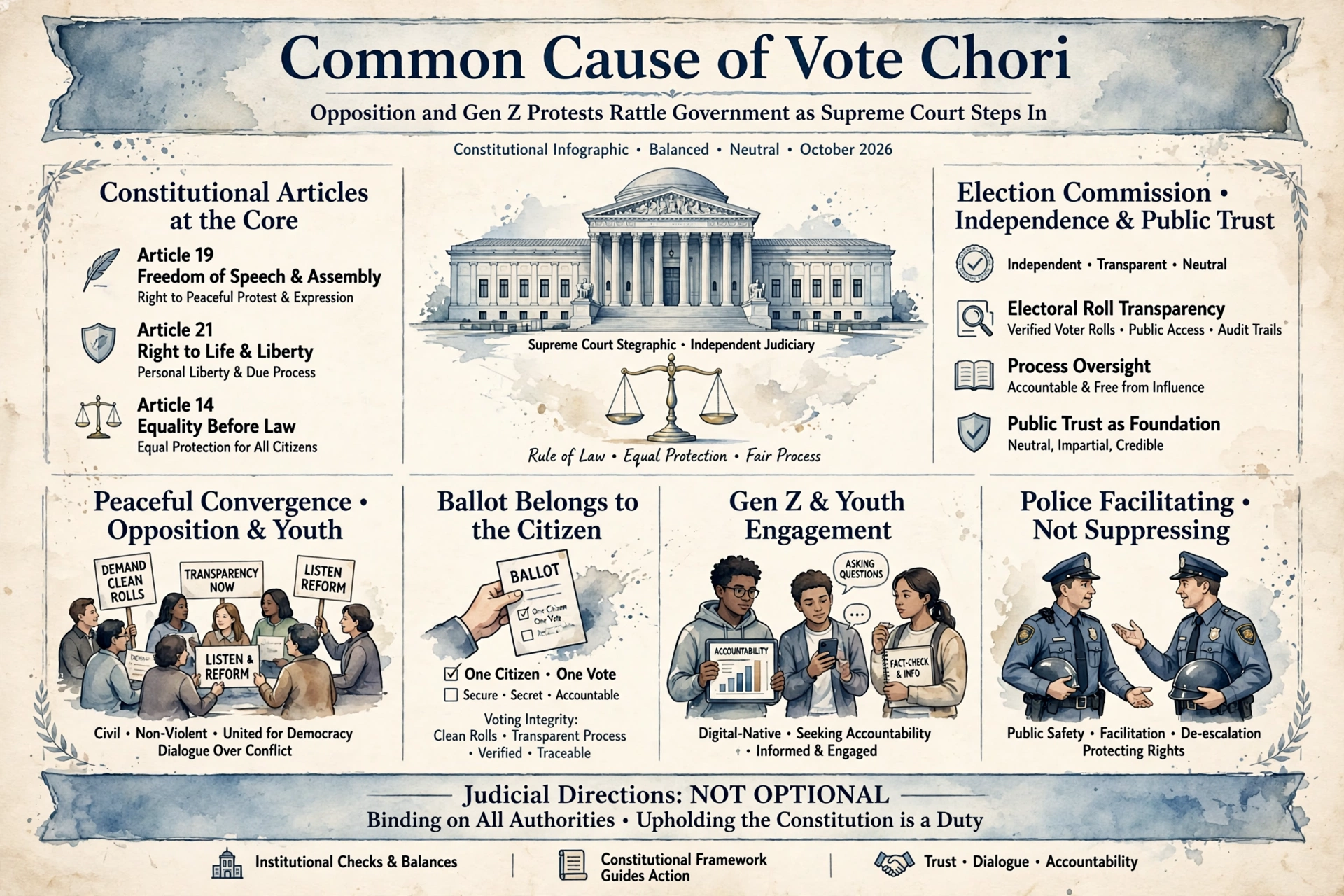
The ballot belongs to the citizen; the Constitution binds the government; the judiciary safeguards the limits of State power; and peaceful dissent remains essential to democratic life.
India’s democracy is facing a moment that demands constitutional introspection. The Opposition’s campaign against alleged “vote chori” has acquired wider significance as sections of Gen Z join the call for electoral accountability and the Supreme Court intervenes to protect peaceful protest and ordinary public movement. The convergence raises a question that cannot be answered merely through political rhetoric, police barricades or restrictions: can citizens trust the institutions responsible for safeguarding their democratic rights?
Democracy derives legitimacy not simply from announced results, but from public confidence in the fairness of the process.
“Vote Chori”: Allegations That Require Answers
“Vote chori” expresses a basic concern: can every eligible Indian vote, and can the public trust the process?
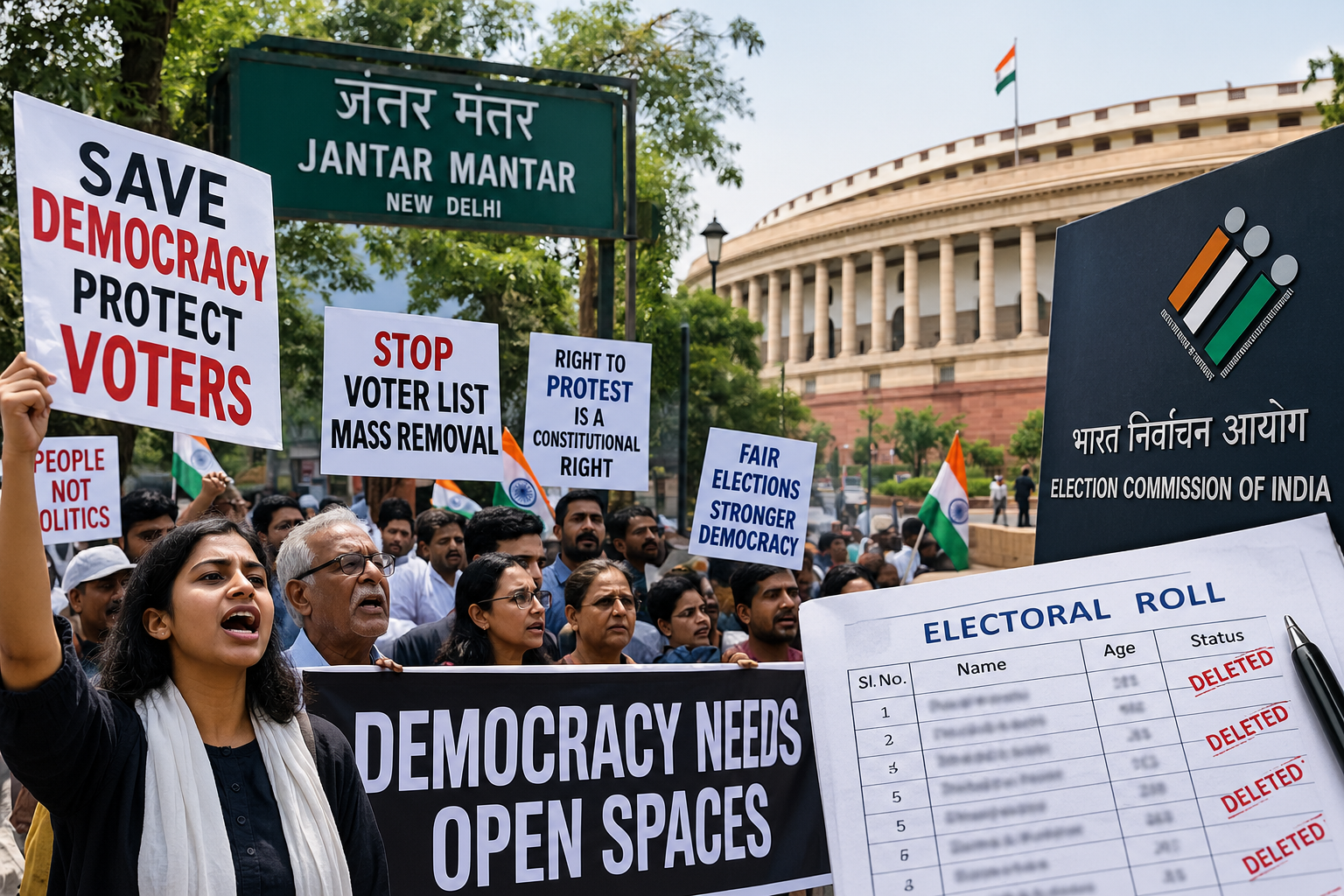
Controversy surrounding the Special Intensive Revision (SIR) of electoral rolls has intensified these questions. Opposition parties have raised concerns about deletions, verification procedures and the Election Commission’s handling of objections. The Commission has defended revision as necessary to maintain accurate rolls, citing deaths, migration and duplicate entries. Allegations of deliberate manipulation must be tested through evidence, not treated as conclusively established.
The issue cannot be dismissed because political parties have raised it. Electoral rolls are the foundation of representative democracy, and wrongful deletion can deprive an eligible voter of meaningful participation.
The answer lies in transparent procedures, accessible corrections and independent scrutiny. Every disputed deletion should be explained and reviewed; credible evidence of irregularity should prompt investigation.
The Election Commission’s independence is a public trust that must be sustained through transparent and fair conduct. Opposition and Gen Z: A Convergence Beyond Party Politics
The protests reveal a new political convergence.
The Opposition’s credibility depends on evidence, consistency and a willingness to pursue constitutional remedies. Young people’s participation adds another dimension. Gen Z has grown up with digital access and expects institutions to explain decisions, justify restrictions and respond to scrutiny.
This convergence should neither be romanticised nor dismissed. Allegations require evidence, protests must remain peaceful, and public authorities retain the duty to maintain law and order.
Criticism is not disloyalty, and dissent is not necessarily disorder. Electoral concerns call for engagement, verification and redress—not an assumption that questioners must be silenced.
The Supreme Court’s Intervention
The events surrounding protests in Delhi have raised a separate constitutional concern: how the State responds to peaceful dissent.
On October 11, 2026, a special Supreme Court bench of Justices Joymalya Bagchi and V. Mohana addressed restrictions affecting protesters and public movement. The Court directed authorities to remove barricades that were not strictly warranted, ensure normal functioning of Metro and railway services, and prevent the unlawful detention of peaceful, unarmed protesters.
These directions reaffirm familiar constitutional principles. The State may regulate assemblies and prevent violence, but restrictions must be lawful, pursue a legitimate objective and remain proportionate.
A capital city cannot be turned into a zone of indiscriminate restriction merely because a demonstration is politically inconvenient. Disruptions to transport and limits on public assembly require justification grounded in law and necessity.
Article 19 protects speech and peaceful assembly, subject to lawful restrictions; Articles 21 and 14 protect liberty and guard against arbitrary State action. These guarantees do not disappear when a government faces criticism.
The Court’s intervention places the balance between public order and civil liberty under judicial scrutiny.
Judicial Directions Are Not Optional
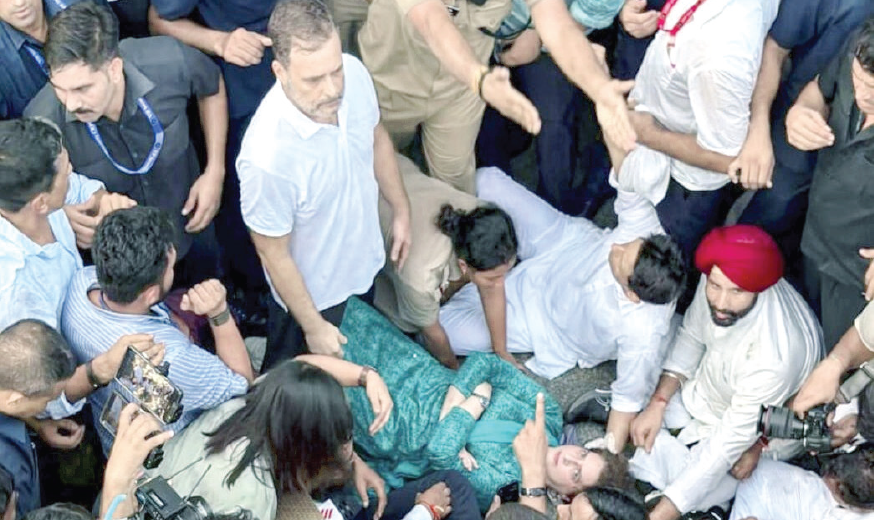
The most serious concern arises from allegations that restrictions continued, or were implemented in ways inconsistent with the Court’s directions, despite judicial intervention. Claims of police excess and unlawful detention require fair examination; deliberate disobedience must be established judicially.
The principle is clear: executive authorities cannot treat binding judicial directions as optional. If clarification is needed, they should seek it; they cannot substitute their preferences for a court’s order.
Deliberate non-compliance, if established, would undermine judicial authority and public confidence; accountability must follow through lawful proceedings.
Police must facilitate lawful activity, prevent violence and protect citizens. Force, detention and preventive restrictions must be justified by law and circumstances. Peaceful protesters cannot be treated as offenders merely because their message embarrasses those in power.
Democracy Is More Than Winning Elections
An elected government has a mandate to govern, not disregard constitutional limits. Equally, an Opposition cannot treat every defeat as proof of manipulation.
The Election Commission should explain revision procedures, protect personal data while publishing relevant information, provide hearings to affected voters and address documented discrepancies. Political parties and civil society should present verifiable evidence.
The judiciary must remain independent and impartial. The government must show its confidence in democracy by accepting scrutiny, while Parliament should consider strengthening safeguards for voter registration.
The Constitutional Test
The Opposition–Gen Z convergence is a reminder that public trust must be earned, not commanded.
The government can answer allegations with facts and restore institutional confidence. It should not mistake the management of public order for the suppression of public opinion. A strong government is not one that prevents uncomfortable questions, but one that answers them convincingly.
The Court has reiterated that constitutional government is defined by restraint as well as authority. Alleged irregularities and violations of judicial orders must be determined through evidence and due process. Neither slogans nor official denials can substitute for a credible examination of the facts.
India’s democratic strength lies in its Constitution, independent institutions and citizens’ freedom to question those who govern them. “Vote chori” must ultimately be tested through evidence and accountability, but the slogan must not become an excuse to avoid scrutiny.
The ballot belongs to the citizen; the Constitution binds the government; the judiciary safeguards the limits of State power; and peaceful dissent remains essential to democratic life.
The real test of democracy is not whether those in power can silence their critics, but whether they can command public confidence while allowing their conduct to be questioned. That is the constitutional challenge before India today.
(Author is a Senior Advocate, Supreme Court of India, Constitutional Thinker and a Public Intellectual.)








[[comment.comment_text]]