Trump’s Presidency Under Congressional Watch!
 3 hours ago
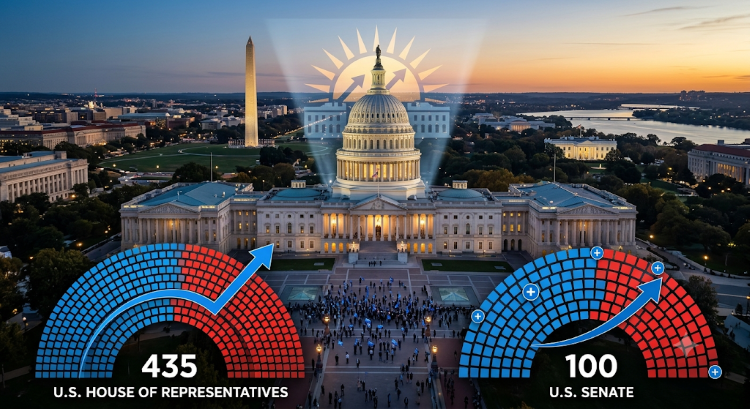
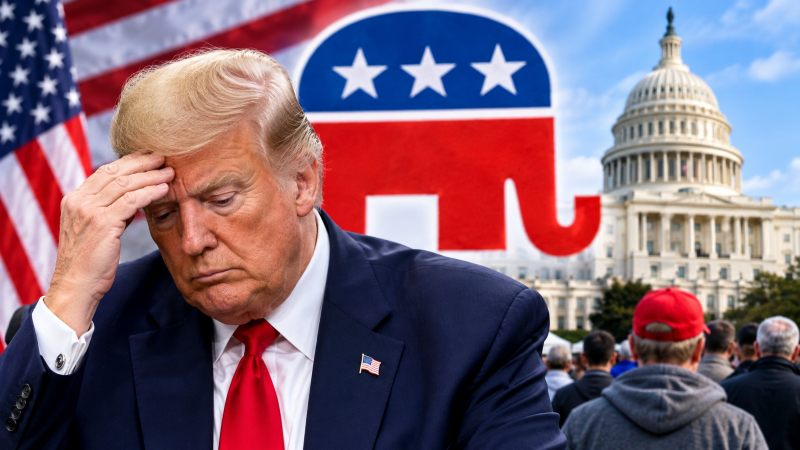
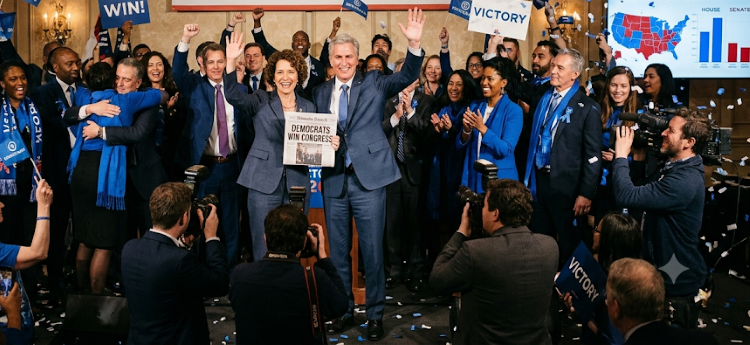
In American democracy, the real test of presidential power is not just in presidential elections but also in front of the institutions established by the constitution to restrain that power. This essential constitutional tenet is once again at the centre of American politics following the midterm elections on November 3, 2026. President Donald Trump now confronts a fresh threat to the balance of power since the Democratic Party has taken control of both the Senate and the House of Representatives. This is a substantial change in the political dynamics guiding the last two years of Trump's presidency, not just an electoral defeat for the Republican Party.
Since Trump's term ends in 2028, the question is not whether he will continue as president. The true question is whether he will be able to govern with the same political leeway that he has used to promote his policies and choices thus far. Will Congress now scrutinise, disagree with, and oppose the White House's executive power on constitutional grounds?
This is referred to as a "divided government" in the American political system because the opposition controls both chambers of Congress while the president is a member of one party. The president's constitutional powers are not eliminated by such a system, but the political costs and limitations of using them are greatly increased. Trump's challenge will now be to govern on his terms rather than just to govern.
Five Checks on Trump’s Power
Trump's greatest issue after the midterm elections won't be holding onto the president but rather making sure his choices and programmes can still be implemented in a way that effectively governs the country. The main challenge will be the increasingly forceful operation of the constitutional system of checks and balances rather than just the opposition's growing numerical power. His political goal may encounter institutional obstacles if Democrats control both chambers.
First, restrictions imposed by law. It will be much harder to pass legislation pertaining to healthcare, immigration, taxes, and economic policy. The president will need to bargain and reach an agreement with the opposition in order to enact his political agenda.
Congress's authority over the budget comes in second. Congress is given the power of the purse under the US Constitution. Intense political negotiating may be necessary to secure funding for government spending, international aid, and defence. The possibility of a government shutdown might possibly arise if the conflict intensifies.
Executive accountability comes in third. Executive orders, government expenditures, and administrative choices can all be looked into by congressional committees. The Trump administration will be under constant legislative inspection due to their authority to demand documents, summon officials for hearings, and issue subpoenas.
Fourth, authority over appointments. Senate confirmation is required for presidential appointments to important administrative and constitutional offices. Such appointments might be postponed or rejected by an opposition-controlled Senate, making it more difficult for the president to staff his cabinet.
The fifth is the impeachment pressure. Impeachment procedures may be started by the House of Representatives. However, a two-thirds majority in the Senate is needed to remove a president from office.
As a result, Trump will continue to serve as president, but his ability to do so will no longer be as politically unrestricted. Capitol Hill will become a far more muscular counterweight, but the White House will still have executive authority. Trump's presidential powers will remain intact; the only thing that will change is the political cost of using them.
The President's Power Limitations
After the midterm elections, Trump's greatest obstacle will not be holding onto his presidential powers but rather using them carelessly. The US president still has broad authority to make important foreign policy choices, establish administrative policies, and issue executive orders. He will continue to hold the position of Commander-in-Chief of the armed forces. However, holding the presidency does not entail having total authority.
Trump Under Congressional Watch
Legislation defining the boundaries of presidential power, imposing restrictions on federal expenditures, and looking into executive actions can all be passed by a Democratic-controlled Congress. Important nominations may be blocked by the Senate, and unconstitutional executive decrees may be overturned by the courts. A two-thirds majority in the Senate and the House of Representatives can override even a presidential veto.
Perhaps the best example is provided by Trump's tariff programme. Even though Congress has the primary legislative authority over import taxes and international trade, it has given the President some ability to levy tariffs in certain situations. Consequently, Trump's tariffs would not be automatically invalidated by a Democratic majority.
Trump will essentially still be able to make judgements, but it will be much harder to carry them out unilaterally. He will still have the White House, but every significant choice will come under growing scrutiny from Congress and the constitutional test.
Trump’s Foreign Policy, Congress’s Check
Trump's constitutional right to pursue foreign policy won't be taken away by a midterm defeat, but doing so will come with more institutional and political consequences. He will have a great deal of latitude as president to pursue diplomatic agreements, engage in negotiations with foreign governments, and make strategic choices. But his options could be severely limited by congressional control over defence and foreign aid funds, economic sanctions, diplomatic appointments, ratification of international treaties, and military action.
A Democratic majority may look into these choices using its oversight authority and hold the administration more accountable. To put it another way, Trump will still be in charge of US foreign policy, but it will be harder to ignore Congress while directing it.
Trump’s 2028 Credibility Crisis
The 2026 midterm elections mark the start of the political realignment ahead of the 2028 presidential contest in addition to a change in the balance of power in Congress. Democrats now have a chance to establish a genuine political platform and alternative leadership in addition to challenging the policies of the Trump administration.
Trump's political credibility regarding inflation, the economy, immigration, and foreign policy will be put to the test throughout the next two years of his presidency. However, it would be naive to construe a Democratic House majority as a popular mandate for 2028. Trump's control over Washington has been called into question by the midterms; the 2028 election will decide if this challenge results in a long-term change in American politics or just a short-term electoral loss.
Trump’s Diminishing Clout, India’s Diplomatic Reset
It seems improbable that Donald Trump's political losses in the US midterm elections would only affect the US Congress and the White House. Their effects might be felt in worldwide trade, global diplomacy, and strategic alliances. Given the scope of its interactions with Washington, which include trade, military, technology, and energy security, this trend is very important for India. However, it would be far from wise statecraft to see Trump's political weaknesses as an inherent diplomatic advantage for India.
Tariff Taming, Trade Relief
The most effective tool in Trump's trade strategy has been tariffs. For Indian exporters, import taxes and Washington's demand for a trade deal have created a great deal of uncertainty. Increased legislative scrutiny and political opposition to the president's tariff policy could result from Democratic control of Congress, perhaps providing India more diplomatic clout in trade talks. But the president's authority over tariffs wouldn't vanish immediately.
H-1B Visas
Indian IT professionals, students, and skilled workers have expressed alarm about America's increasingly restrictive immigration laws. A Democratic majority might put pressure on the Trump administration on matters like green cards and H-1B visas, which could lead to opportunities for policy relief for Indian talent. However, a shift in congressional authority by itself won't immediately impact the visa system.
India’s Strategic Space
Bilateral pressure and individualised leadership have been key components of Trump's foreign strategy. India's task is to make sure that the political inclinations of any one president do not control its relationship with Washington. India can provide a more legitimate and long-lasting basis for its strategic autonomy by upholding relations with Russia, Iran, and other nations in line with its national interests while increasing interaction with American institutions.
China: A Strategic Constant
The United States and India continue to share strategic concerns about China's growing influence in the Indo-Pacific. Republicans and Democrats hold generally similar views on this matter. Therefore, it is doubtful that Trump's electoral defeats will cause India-US security cooperation to abruptly deteriorate. Congress will still continue to have a significant influence on regional agendas, defence expenditures, and arms supplies.
Iran, Oil and India’s Economic Exposure
Crude oil prices, maritime trade, and India's energy security are all directly impacted by the US-Iran conflict in West Asia. Increased political pressure for de-escalation could result from a Democratic-controlled Congress demanding more accountability for US military action and war-related spending. India may benefit in terms of energy imports and economic stability if hostilities subside.
Ultimately, a drop in Trump's political power does not necessarily indicate a worsening of bilateral relations or a guarantee of strategic wins for India. Moving past personality-driven diplomacy and establishing a more robust, well-rounded relationship with America's institutional structure is where the true opportunity is found. After all, presidents and political majorities shift, but national interests remain constant in international interactions.
The President Rules, Congress Checks!
Although Trump's midterm electoral defeat highlights the political boundaries of presidential power, it does not reduce the office. He is still in charge of the White House, the military, the executive branch, and foreign policy. However, fiscal restrictions, institutional responsibility, and congressional oversight now affect every significant decision. This is also an opportunity for India to strengthen a long-term strategic alliance with American institutions, going beyond personality-driven diplomacy. In the end, democracy is strengthened by the independence of institutions that hold those in positions of authority responsible rather than by the unbridled power of a president. The supremacy of the Constitution is what gives democracy its legitimacy, even when presidents and political equations may change.
(The author, a Doctorate in Laws, is a senior lawyer and civil society activist.)








[[comment.comment_text]]