The Urgency for Joint Action Against Khalistani Extremism

 2 years, 10 months ago
EW Desk
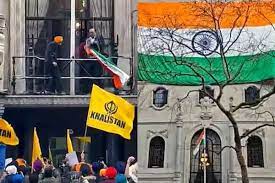
The United States has indicted an Indian national for allegedly conspiring to carry out the assassination of Gurpatwant Singh Pannun, a prominent Khalistani leader associated with Sikhs for Justice (SFJ), on American soil. This revelation, pointing to a violent and radical ideology, demands careful consideration and a unified response from both the United States and Canada.
New Delhi's cautious response to the indictment is evident in the establishment of a high-level inquiry committee to investigate the "inputs" provided by the US. The official Indian statement alluded to a nexus involving organized criminals, gun-runners, and terrorists without explicitly acknowledging the alleged plot to assassinate Pannun. This measured reaction underscores the gravity of the situation.
It is noteworthy how India's responses to allegations from the US and Canada differ, particularly in contrast to Prime Minister Justin Trudeau's accusations, which were promptly dismissed as "absurd" by New Delhi. The contrast indicates the significance attached to the recent developments involving the Khalistani leader.
The external affairs ministry's acknowledgment that the case against an Indian in a US court is a "matter of concern" and "contrary to government policy" emphasizes the seriousness with which India views the situation. The recognition of the potential threat posed by a violent and radical Khalistani ideology is crucial, necessitating a collaborative effort to address and counteract this menace.
The need for joint action between the US and Canada becomes even more apparent in the face of a common adversary – the violent Khalistani extremism represented by figures like Gurpatwant Singh Pannun. The allegations of an assassination plot on American soil highlight the global reach of this threat, requiring coordinated efforts to prevent its further escalation.
It is imperative for both the US and Canada to recognize the gravity of the situation and acknowledge the potential repercussions of allowing Khalistani extremism to flourish within their borders. The shared responsibility to combat terrorism, irrespective of its origin, should prompt a cooperative stance in investigating and addressing the allegations.
As nations committed to upholding democratic values and countering terrorism, the United States and Canada must collaborate closely with India to dismantle networks associated with Khalistani extremism. This joint effort should extend beyond addressing the immediate allegations to actively working together to counter the roots of radicalization and extremism.
In conclusion, the recent indictment and the alleged plot to assassinate Gurpatwant Singh Pannun underscore the urgent need for the United States and Canada to recognize the threat posed by Khalistani extremism. A united front against this radical ideology is essential to ensure the safety and security of all nations involved. The time for joint action is now, and by working together, these nations can effectively address the challenges posed by violent ideologies and safeguard the principles of democracy.
The Urgency for Joint Action Against Khalistani Extremism
The United States has indicted an Indian national for allegedly conspiring to carry out the assassination of Gurpatwant Singh Pannun, a prominent Khalistani leader associated with Sikhs for Justice (SFJ), on American soil. This revelation, pointing to a violent and radical ideology, demands careful consideration and a unified response from both the United States and Canada.
New Delhi's cautious response to the indictment is evident in the establishment of a high-level inquiry committee to investigate the "inputs" provided by the US. The official Indian statement alluded to a nexus involving organized criminals, gun-runners, and terrorists without explicitly acknowledging the alleged plot to assassinate Pannun. This measured reaction underscores the gravity of the situation.
It is noteworthy how India's responses to allegations from the US and Canada differ, particularly in contrast to Prime Minister Justin Trudeau's accusations, which were promptly dismissed as "absurd" by New Delhi. The contrast indicates the significance attached to the recent developments involving the Khalistani leader.
The external affairs ministry's acknowledgment that the case against an Indian in a US court is a "matter of concern" and "contrary to government policy" emphasizes the seriousness with which India views the situation. The recognition of the potential threat posed by a violent and radical Khalistani ideology is crucial, necessitating a collaborative effort to address and counteract this menace.
The need for joint action between the US and Canada becomes even more apparent in the face of a common adversary – the violent Khalistani extremism represented by figures like Gurpatwant Singh Pannun. The allegations of an assassination plot on American soil highlight the global reach of this threat, requiring coordinated efforts to prevent its further escalation.
It is imperative for both the US and Canada to recognize the gravity of the situation and acknowledge the potential repercussions of allowing Khalistani extremism to flourish within their borders. The shared responsibility to combat terrorism, irrespective of its origin, should prompt a cooperative stance in investigating and addressing the allegations.
As nations committed to upholding democratic values and countering terrorism, the United States and Canada must collaborate closely with India to dismantle networks associated with Khalistani extremism. This joint effort should extend beyond addressing the immediate allegations to actively working together to counter the roots of radicalization and extremism.
In conclusion, the recent indictment and the alleged plot to assassinate Gurpatwant Singh Pannun underscore the urgent need for the United States and Canada to recognize the threat posed by Khalistani extremism. A united front against this radical ideology is essential to ensure the safety and security of all nations involved. The time for joint action is now, and by working together, these nations can effectively address the challenges posed by violent ideologies and safeguard the principles of democracy.
**************









[[comment.comment_text]]