Silence, Lawlessness, and Institutional Collapse: When the State Turn Its Back

 2 months, 2 weeks ago
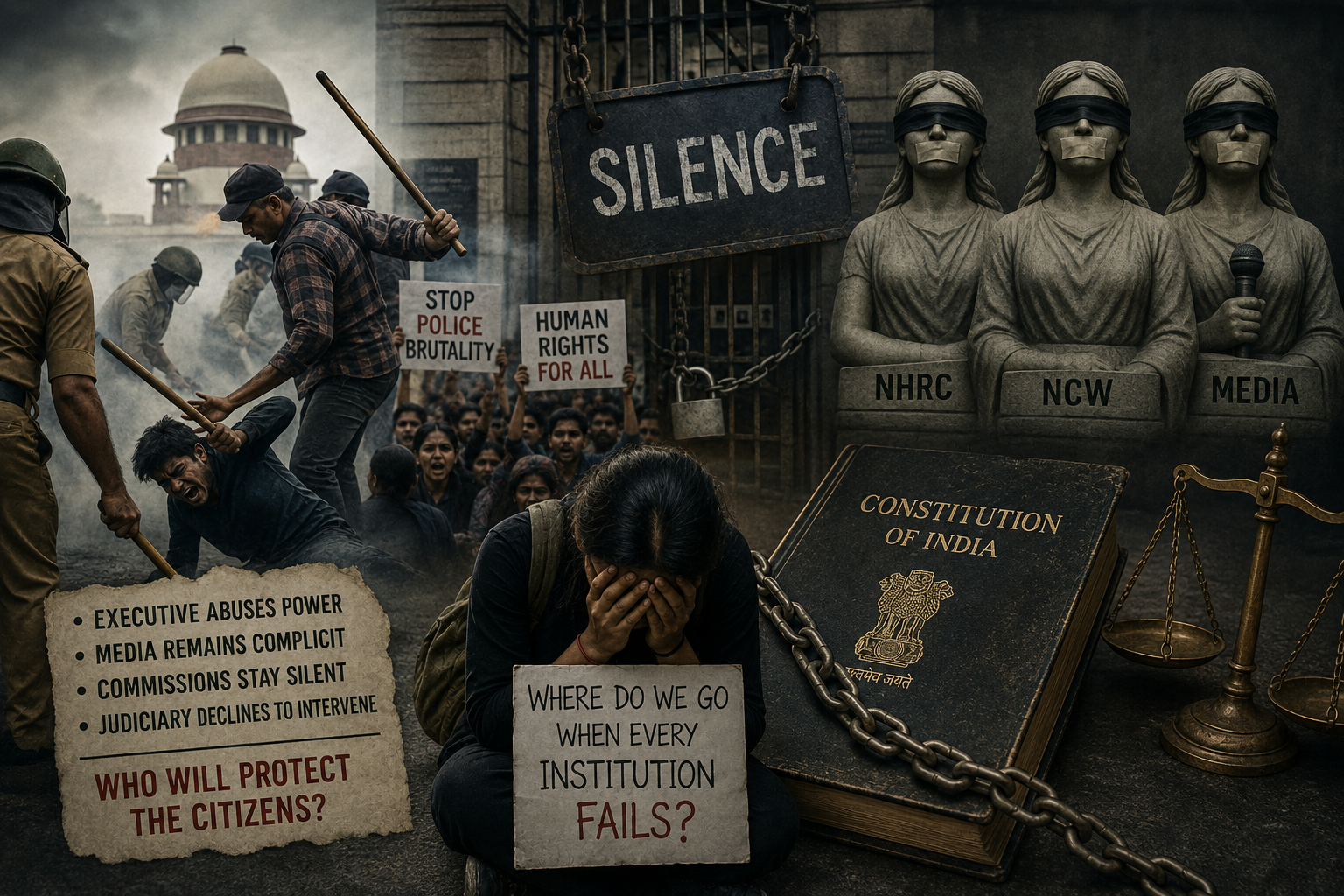
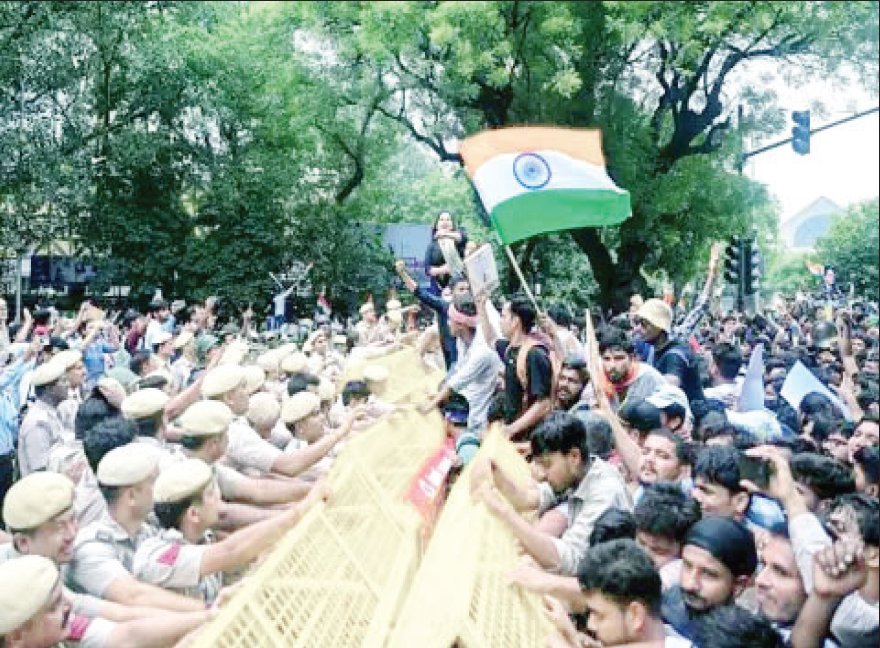
The heavy, uncomfortable silence coming from the government during moments of public unrest is deeply troubling, but it is not entirely surprising. What is far more alarming is the absolute quiet from the institutions explicitly built to protect citizens from state overreach. Bodies like the National Human Rights Commission (NHRC) and the National Commission for Women (NCW) were created to act as independent watchdogs, ensuring that civil liberties and basic human rights remain protected regardless of who is in power. Yet today, these commissions appear completely paralysed,
surrendering their mandate under political pressure and abandoning the very purpose of their existence.
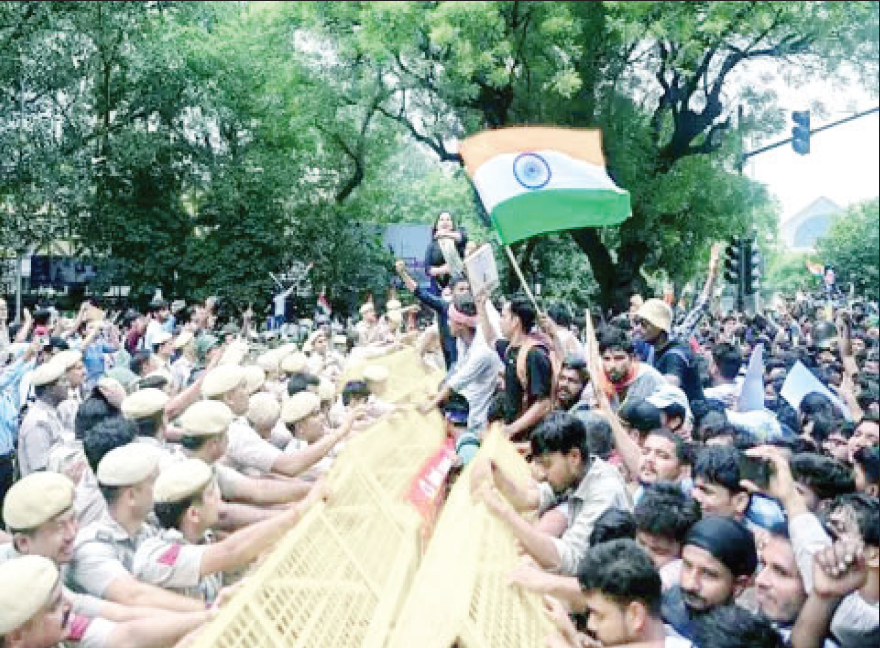
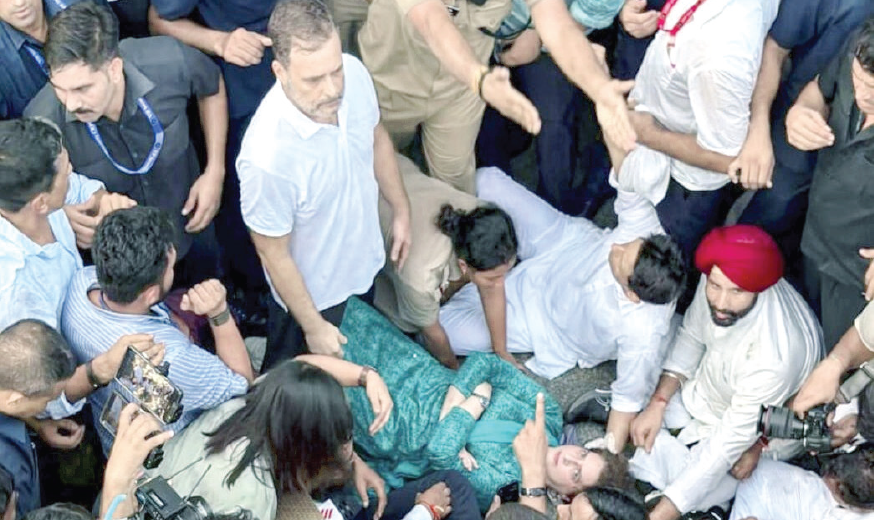
Adding to the chaos on the ground is the presence of unidentified individuals dressed in plain clothes standardly wielding batons against peaceful protesters. When untraceable civilians or off-duty personnel exercise violent state power without accountability, it fundamentally shatters the rule of law. Citizens are left with no way of knowing whether they are being restrained by lawful authority or targeted by partisan mobs operating under official protection.
This aggressive approach directly violates established legal protocols regarding the use of force. Under the Punjab Police Manual Act—which legally governs the conduct of the Delhi Police as well—the deployment of batons and physical force is strictly regulated. State force is meant to be a last resort, calibrated carefully to disperse crowds without inflicting severe physical trauma, let alone life-threatening injuries.
The judiciary has repeatedly reinforced these boundaries. In the landmark case Yash Pal vs. Commissioner of Delhi Police (2003), the Delhi High Court explicitly ruled that whenever police force becomes necessary during demonstrations, officers must ensure that batons are aimed strictly at lower body parts to prevent fatal injuries. During recent protests, however, these guidelines were utterly ignored, with brutal strikes targeted indiscriminately at vital body parts.
Legal precedents offer clear redress for victims of such high-handedness. As laid down in the historical D.K. Basu judgment, if a Medico-Legal Case (MLC) report confirms that a citizen’s injuries were caused by excessive or illegal force, the state is legally bound to provide adequate financial compensation. Crucially, the court also mandates strict disciplinary and criminal action against the individual officers responsible for abusing their authority.
Despite these clear legal frameworks, mainstream media outlets—increasingly referred to as "Godi media" for their unquestioning alignment with power—completely averted their eyes. Rather than investigating police brutality or demanding accountability from statutory commissions, media channels remained occupied with absurd, distraction-driven narratives. By refusing to ask critical questions, the press effectively acted as a shield for state accountability.
The lack of basic transparency was further highlighted during an interaction with a female paramilitary officer on site. When questioned by reporters as to why she was not wearing her mandatory name badge, she casually claimed it had been removed due to the heat. Such a flimsy excuse raises serious security questions: were these actual law enforcement personnel evading accountability, or were non-state actors operating inside official uniforms?
This breach of protocol also runs contrary to long-standing guidelines on crowd control measures like tear gas. Following the tragic 2012 Ramlila Maidan police action, courts clearly instructed law enforcement that tear gas canisters must be fired into the open air near crowds to disperse them, never shot directly at human beings. Yet, reports from recent demonstrations reveal that canisters were launched point-blank at protesters, risking severe head trauma and blindness.
When citizens turned to the legal system as a last resort, expecting the courts to enforce their own past judgments, they were met with disappointing inertia. By declaring that the judiciary should not be "dragged into" the matter, the court effectively closed the door on those seeking immediate relief. Such responses leave marginalized citizens feeling entirely abandoned by the legal mechanisms meant to protect them.
When the executive abuses its power, the media remains complicit, regulatory commissions stay silent, and the judiciary declines to intervene, a dangerous question arises: where is a citizen supposed to go to lodge a complaint against the system?
When every institutional safety net fails simultaneously, the foundational trust between the public and the democratic state begins to erode beyond repair.




[[comment.comment_text]]