A Pause in the Tariff War


 1 year, 5 months ago
"Wahi aable hain wahi jalan, koi soz-e-dil mein kami nahi
Jo laga ke aag gaye ho tum, woh lagi hui hai bujhi nahi."
– Sagar Nizami
The verse above, though poetic, mirrors the reality of the modern geopolitical and geoeconomic landscape. The fire ignited by the United States through the imposition of aggressive tariffs against China—an economic strategy aimed at unsettling Beijing’s dominance—still burns, unresolved and potent. Though the recent 90-day truce between the two superpowers signals a momentary cooling, it is far from extinguishing the underlying tensions that have come to define this chapter of global trade history.
The announcement of the temporary halt on tariffs—finalized by both Washington and Beijing—was less a declaration of peace than a mutual decision to pause and reassess. It reflects a reluctant American admission that the strategy of economic coercion through tariffs may have overestimated China’s vulnerability and underestimated its strategic depth. Far from buckling, China has responded with calculated resilience, leveraging its position as the world’s factory and building stronger regional and global alliances to buffer the impact.
This short-term agreement lays bare a fundamental flaw in the Trump administration’s trade policy assumptions: that punitive economic measures alone could compel a global manufacturing powerhouse to alter its core economic policies. Instead, what emerged was a rare demonstration of the limits of American leverage in a world where supply chains are deeply transnational and where economic nationalism, though politically appealing, can be economically shortsighted.
The notion that U.S.-based corporations would obediently bring production back home proved naïve. Multinational giants, focused on efficiency and profit, remained firmly entrenched in China, citing the country's low labor costs, skilled workforce, and unmatched production infrastructure. The Trump administration’s calls fell on deaf ears not because of disloyalty, but because of economic reality. This global entanglement, built over decades, cannot be undone by executive orders or nationalist rhetoric.
China’s ability to withstand and even counter the tariff pressure is rooted in its strategic geoeconomic vision. By strengthening trade ties with countries like Russia, Pakistan, and Bangladesh, and by positioning itself as a lender and investor through initiatives such as the Belt and Road, Beijing has created parallel economic pathways that reduce dependency on the West. It has woven itself so deeply into the global economic fabric that its exclusion or isolation is not only impractical but potentially catastrophic for the very economies attempting to penalize it.
India, while eyed as a democratic alternative to China’s economic model, has not yet reached a comparable industrial scale. Despite government initiatives to boost manufacturing, India's infrastructure limitations, regulatory hurdles, and labor market complexities prevent it from assuming China’s role anytime soon. Thus, the U.S., hoping to shift the global supply chain dynamics, found itself isolated in strategy and limited in influence.
The IMF’s recent bailout of Pakistan, viewed by some as a geopolitical necessity, was also a move to prevent China from deepening its hold over another strategic Asian nation. That Washington had to indirectly accommodate Beijing’s growing influence is another sign of the shifting power balance.
Was the U.S. forced to blink first in this trade standoff? Perhaps. Or perhaps this truce is simply a tactical pause—a moment to evaluate whether economic aggression can succeed in an era where interdependence is no longer optional, but structural. What is clear, however, is that the “tariff fire” lit by Washington continues to burn—scorching the global economic order in unpredictable ways. China may have negotiated temporary relief, but the embers remain hot, and the geopolitical contest is far from over.
Strategic Motivations and Domestic Calculations
The path to the US-China trade truce has been shaped as much by shifting economic realities as by evolving political imperatives. Behind the headlines and formalities of diplomacy lies a complex matrix of domestic pressures, global market anxieties, and strategic recalculations that forced both Washington and Beijing to reconsider their hardline postures.
In the United States, pressure mounted from multiple fronts. Wall Street, wary of prolonged uncertainty, grew increasingly critical of the tariffs’ destabilizing effects on global investment flows. But perhaps more consequential was the discontent from Main Street. American farmers, particularly in the Midwest, suffered significant financial losses as exports of soybeans, corn, and other staples to China plummeted in response to retaliatory tariffs. Once a core base of support for the Trump administration, many in the agricultural sector began to publicly question the viability of a trade war that offered little in the way of relief.
At the same time, major American corporations—including tech giants and manufacturers—warned of long-term strategic setbacks from attempting to sever supply chains so tightly interwoven with Chinese production networks. These firms cited increased input costs, delays in production, and the stalling of innovation as side effects of a forced decoupling. As the ripple effects of the trade conflict spread, economists began to speak out more forcefully. In a pointed interview with CNN, economist Jeffrey Sachs observed, "The trade war was always based on a false premise. Yes, China engages in unfair trade practices, but unilateral tariffs have hurt American workers and businesses far more than they’ve helped."
Economic indicators added urgency to these warnings. Inflationary pressures in the United States intensified, with the Consumer Price Index (CPI) recording a 3.8% year-over-year increase during the height of tariff escalation. Much of this was attributed to the rising costs of imported goods—costs ultimately passed on to American consumers. With election cycles approaching, political leaders across the aisle urged the administration to stabilize economic conditions before voter dissatisfaction could translate into electoral consequences.
China, too, had to perform a delicate balancing act. While Beijing demonstrated notable resilience, pivoting toward domestic consumption and cultivating alternative trade relationships, it could not entirely shield itself from the economic impact. GDP growth fell to a three-decade low of 4.8% in 2024, and industrial output slowed as demand from Western markets waned. Internally, the Communist Party sought to maintain a narrative of calm, competence, and global cooperation, especially with upcoming political milestones in sight. Speaking to Xinhua, Professor Zhang Wei of Fudan University summarized the Chinese stance: "China is not capitulating. We are choosing peace over prolonged economic attrition. The world is watching how maturely both nations can navigate this rivalry."
Simultaneously, both countries were expanding international engagements on other fronts. The U.S. advanced trade negotiations with allies including the United Kingdom, Mexico, and the European Union, while China accelerated Belt and Road projects and finalized trade agreements with partners such as Russia, Pakistan, and Bangladesh. In this broader context, the 90-day truce serves as a strategic pause—allowing both powers to reinforce their global positions while tempering the bilateral heat.
Rather than signaling the end of hostilities, the truce represents a tactical interlude in a larger contest—one that will likely define the economic balance of the coming decade.
India’s Balancing Act and Future Implications
For India, the U.S.-China trade truce presents a mix of challenges and opportunities. Long seen as a potential alternative to China in global supply chains, India has yet to fulfill that promise due to infrastructural deficiencies, bureaucratic red tape, and limited industrial depth. The trade war had momentarily positioned India as a preferred destination for manufacturers seeking diversification. However, the temporary truce could shift that attention back to China if it manages to stabilize its export landscape.
India’s exports grew by a modest 6.3% in 2024, largely driven by pharmaceutical and IT services. Yet, its manufacturing sector continues to lag. The Make in India initiative, though ambitious, has struggled to attract the level of foreign direct investment necessary for transformative growth. Economists warn that unless India significantly enhances its logistical and industrial capabilities, it risks being sidelined in the next phase of global supply chain reconfiguration.
Political scientist Dr. Suman Bery noted in a recent ORF roundtable, "India must view the U.S.-China truce not as a threat but as a strategic pause. It has time to improve its value proposition to global investors. But that window won’t remain open indefinitely."
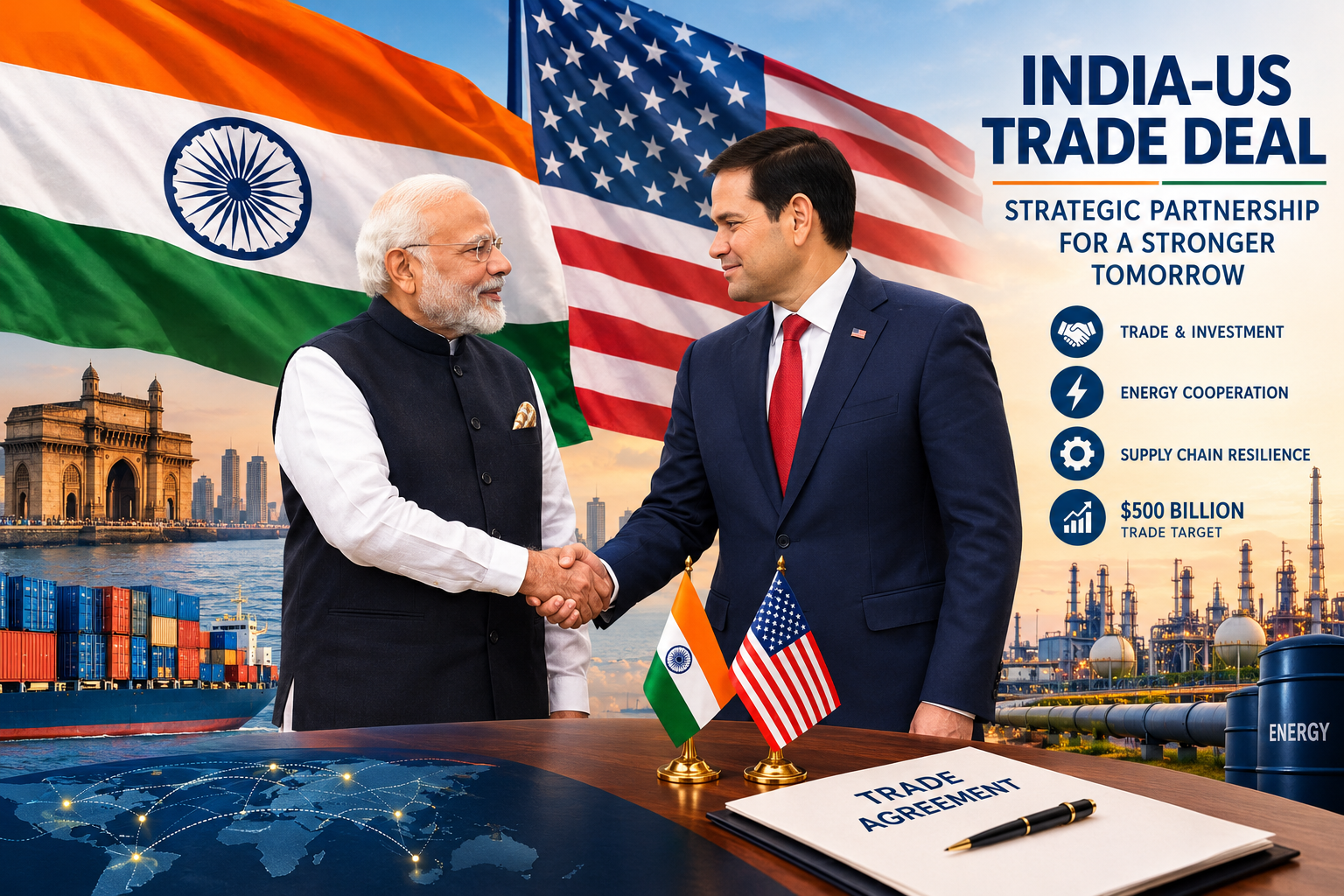
On the diplomatic front, India faces its own tightrope walk. It has deepened strategic partnerships with the United States, including through platforms like the Quad, but it also maintains crucial economic and geopolitical ties with China. Navigating this dual alignment will require a nuanced foreign policy approach, especially if the U.S. and China resume hostilities post the 90-day window.
Looking ahead, the 90-day truce could either mark the beginning of a new era of managed competition or merely serve as a pause before another round of economic aggression. Much will depend on whether both sides can address core issues like intellectual property rights, technology transfers, and market access through structured diplomacy.
While the U.S.-China tariff pause has provided a moment of relief for the global economy, it is not a resolution. The fundamental tensions remain unresolved. For stakeholders across the world—from American farmers and Chinese manufacturers to Indian policymakers—this is a moment that demands strategic foresight, agile policymaking, and a readiness for rapid shifts in the global trade landscape.
( Author is Managing Editor of The Emerging World )







[[comment.comment_text]]