Unwinnable War, Unworkable Peace


 2 months, 2 weeks ago
The persistent cycle of temporary ceasefires followed by renewed military engagements highlights fundamental vulnerabilities in current U.S. foreign strategy. Every two to three weeks, military operations are forced into a pause, primarily triggered by domestic economic distress. Protracted combat quickly leads to stock market declines, sharp inflationary surges, and rising living costs. However, resuming hostilities remains an enticing option for policymakers who fear that a permanent cessation of operations would allow Iran to consolidate its position as an unassailable regional power.
Iran's influence across the Middle East has grown significantly, backed by strong public support within neighboring Arab nations. Despite high-profile strikes against Iranian leadership, public opposition to the American military presence has intensified. Citizens in countries such as Jordan, Iraq, Kuwait, and Bahrain are increasingly vocal in demanding the removal of U.S. military bases. Consequently, whenever Iranian forces retaliate against American installations, public sentiment across the region leans heavily in favor of Tehran, severely complicating Washington's strategic baseline.
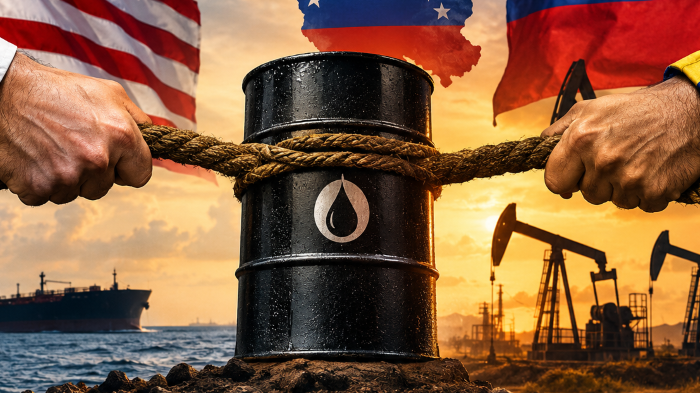
The economic consequences of the conflict are most acutely felt along key maritime trade corridors. Iranian control over the Strait of Hormuz, coupled with Houthi maritime operations around the Bab-el-Mandeb strait in the Red Sea, effectively chokes off essential trade routes heading toward Europe via the Suez Canal. This dual blockade severely restricts Gulf oil exports, driving global crude prices toward critical thresholds near $300 per barrel. Whenever oil prices approach these levels, Washington is forced to pause military actions to prevent severe global economic disruption.
Despite official statements from Washington claiming ongoing diplomatic contacts, Iranian representatives maintain that no direct talks are taking place with the United States. Instead, primary negotiations are channeled through Oman to establish a functional framework for the Strait of Hormuz, a body of water shared by both nations. Iranian negotiators insist on structural guarantees rather than temporary concessions, while Washington seeks immediate passage for commercial shipping without conceding long-term regional leverage.
Domestically, American public opinion has shifted noticeably against prolonged foreign conflict. Citizens are demanding an end to military engagements in favor of diplomatic solutions, driven by worsening domestic economic conditions. High inflation and rising fuel costs have turned foreign operations into a major source of political friction. The American electorate is increasingly prioritizing domestic stability over costly overseas initiatives, placing substantial political pressure on the administration.
Gulf Arab monarchies face severe fiscal strain due to the disruption of maritime trade. Relying on oil revenue for 70% to 80% or more of their national budgets, these governments operate with minimal domestic taxation and depend on energy exports to fund public expenditures. While efforts to diversify into petrochemicals and attract foreign investment continue, these sectors cannot currently offset the massive budget deficits caused by blocked shipping lanes.
The fiscal pressure on host governments is compounded by rising domestic demands to re-evaluate foreign military agreements. Public sentiment across the Gulf increasingly favors closing local airfields to foreign combat operations and reducing reliance on Western defense guarantees. In response, regional discussions have begun to explore an independent security architecture—an idea long advocated by Tehran—that would rely on collective regional agreements rather than external superpowers.
The financial toll of the conflict on the United States continues to escalate rapidly. Beyond the tens of billions of dollars already expended, the Pentagon has requested an additional $200 billion from Congress to fulfill emergency defense contracts and replenish depleted weapon stockpiles. Furthermore, defense officials have proposed increasing the annual defense budget toward $1.5 trillion, a figure that has drawn intense criticism from taxpayers who favor investments in healthcare, infrastructure, and education.
Military analysts and defense officials acknowledge the practical limitations of seeking a decisive military outcome. Ground operations inside Iranian territory carry immense operational risks and high anticipated casualty rates. Furthermore, strategic objectives—such as neutralizing hardened nuclear sites or detaching specific peripheral regions—have proven unfeasible through air strikes and targeted special operations alone. Iranian defensive preparations and regional proxy networks have effectively blunted conventional power projection.
Diplomatic efforts remain stalled due to fundamentally incompatible demands. While Washington seeks extensive concessions regarding regional defense architecture, Tehran refuses terms it views as capitulation. Iran’s negotiating positions demand the unfreezing of locked foreign assets, the removal of broad economic sanctions, and reparations for damaged infrastructure. With both sides holding firm positions, neither military force nor formal negotiations have yielded a lasting resolution.
These strategic and economic challenges create a difficult environment ahead of the upcoming U.S. midterm elections. The administration faces a fractured political landscape: a powerful pro-war lobby advocates for continued military pressure, while a growing anti-war consensus among voters and congressional candidates favors immediate de-escalation. Compounded by broader economic measures such as tariffs—which raised domestic prices without restoring local manufacturing capacity—foreign policy in the region remains at a critical crossroads.
(The author, a former JNU researcher, is a well-recognised commentator on politics and society in West Asia.)









[[comment.comment_text]]