Suwarna Bangla: Beyond Preservation

 an hour ago
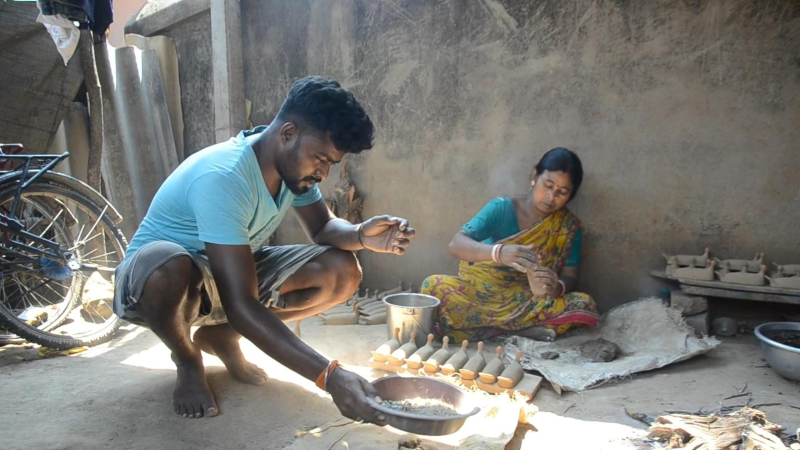
A civilisation can lose its inheritance quietly. A master grows old. A workshop falls silent. A technique survives in photographs, but no longer in practising hands. Bengal celebrates its craftsmanship. Yet behind the finished objects lie accumulated intelligence, uncertain livelihoods and skills that may find no successors.
The Suwarna Bangla series began with a conviction: the true wealth of Bengal's crafts resides not merely in what artisans create, but in what they know. Across textiles, woodcarving, embroidery, metal casting and clay modelling, generations have developed largely unwritten knowledge through observation and disciplined practice. Its survival depends on transmission. But preservation cannot be separated from livelihood. A society cannot indefinitely celebrate inherited mastery while overlooking the economic insecurity of those expected to sustain it.
The question is whether this inheritance can offer dignity, opportunity and choice to future generations. Call this knowledge-system viability: the capacity to retain and transmit expertise while sustaining dignified livelihoods and genuine occupational choice.
The Intelligence Behind the Object
In Natungram, Purba Bardhaman, my interaction with woodcarver Subhas Sutradhar revealed the intelligence behind familiar figures: selecting timber, reading grain, judging proportion and controlling the tool. In Sabang, Paschim Medinipur, Masland weaving requires precision in preparing and working madurkathi grass. The finished mat conceals countless skilled decisions.
At Dwariapur, I observed Dokra artisans negotiating clay, wax, mould and molten metal with practised judgement. Their modest workshops contrasted sharply with the prestige of their creations. Muslin workers in Santipur, Phulia and Dhatrigram balance yarn and tension; kantha artisans in Nanoor and Ausgram stitch intricate designs; clay modellers combine structure and imagination.
These are not merely decorative occupations. They embody material intelligence, technical judgement and cultural understanding. Yet such knowledge seldom receives recognition comparable to expertise acquired through formal institutions.
A finished product can be photographed, priced and displayed; the judgement behind it is harder to capture. Documentation must follow the process: decisions, responses to imperfect materials and corrections made by practised hands. Otherwise, archives preserve appearances but lose methods. We admire the masterpiece without consistently recognising the intellectual labour that makes it possible.
The Knowledge that Remains Invisible
Another concern running through the series has been the under-recognition of intermediate production stages, particularly those performed by women. Spinning, preparing materials, stitching and finishing demand skill, yet are often dismissed as household assistance. When productive work is absorbed into domestic duty, women become invisible in decisions about remuneration, training and support.
No craft economy is sustainable while skilled work remains unpaid, underpaid or uncounted. Recognition must include measurement and fair remuneration. Without separate records of women’s hours and earnings, household-income figures can conceal unequal returns. Training may overlook existing expertise without improving bargaining power or market access. Inclusion requires listening to workers and tracing how value is created and paid.
Durga pratima-making offers a parallel: the image is immersed, but expertise in armature, straw, clay and finishing survives through transmission. The annual renewal of the image demonstrates continuity of practice. It does not, by itself, establish the economic security of the households involved. The survival of an object cannot alone demonstrate the security of the knowledge system that produced it.
When Mastery Becomes Uneconomic
Bengal's historical muslin provides a compelling illustration. Its fineness depended on cotton, climate, spinning, weaving and skilled labour: an entire production ecosystem. Changing commercial and technological conditions weakened that ecosystem; inadequate rewards for labour-intensive mastery compounded the pressure.
Fine fabric alone cannot restore the skills, materials, fair pay and teaching needed for sustained production. Exhibitions bring visibility, not necessarily orders. Geographical indications protect identity, not wages. Training introduces techniques, but does not guarantee mastery. Can artisans earn adequately, work safely and support households through lean periods without abandoning their skills?
An exceptional product proves technical possibility, not a viable livelihood. The test is whether ordinary practitioners, not only award-winning masters, secure repeat orders, dependable materials and fair prices. Otherwise, revival risks remaining a showcase rather than a sustainable profession.
The Generation That Has a Choice
Education and alternative careers have widened young people’s choices. A young person may admire an ancestral skill yet recognise that another occupation offers more predictable earnings, safer conditions or greater professional mobility. Nor is departure necessarily cultural failure. Hereditary work can constrain freedom; no child owes society an inherited occupation.
The real failure occurs when craftsmanship ceases to be a credible professional option. Masters need time and security to teach; apprentices need sustained instruction and confidence in future earnings. The challenge is not to compel inheritance, but to make mastery worth pursuing.
Seen together, these concerns suggest four connected tests of knowledge system viability:
Knowledge: Is specialised knowledge still held, practised and capable of adaptation?
Transmission: Are experienced practitioners able to develop competent successors through sustained learning?
Economic viability: Can practitioners earn adequately after accounting for material, production and market-access costs?
Choice: Can a young person or skilled newcomer freely regard the occupation as a credible professional option?
Recognisable objects may survive even as the knowledge behind them erodes.
From Documentation to Public Responsibility
Suwarna Bangla has brought artisans’ expertise and constraints into public discussion. West Bengal’s artisan initiatives and Rural Craft Hubs, alongside SFURTI, PM Vishwakarma and the National Handloom Development Programme, support training, tools, finance and markets. Support must respond to production realities, raw materials, fair pay and sustained apprenticeship. Knowledge transmission must be measured, not assumed.
How many artisans receive regular orders and adequate net earnings? How many apprentices continue independently? Are women recognised and newcomers welcomed? These outcomes matter far more than expenditure, enrolment or exhibition attendance.
Public schemes can provide essential support where markets fail. A practical accountability step would be an annual, independent follow-up with a representative sample of artisans: recording net earnings, repeat orders, working tools and apprentices who continue independently. Publish the findings by craft and region, including women’s contributions. That would distinguish assistance delivered from livelihoods sustained.
From Activity Metrics to Continuity Metrics
Evaluation should pair activity figures with measures of lasting continuity:
Livelihood continuity: frequency and predictability of orders, net earnings after production costs and the ability to withstand periods of low demand.
Knowledge continuity: the number of active masters, the depth of documented practice and the extent to which critical techniques remain in use.
Apprenticeship continuity: the number of learners completing sustained instruction and later practising independently.
Recognition and inclusion: the visibility and remuneration of women's work and the ability of newcomers to enter without hereditary connections.
Occupational attractiveness: whether younger practitioners choose to remain after gaining realistic exposure to alternative livelihoods.
These measures would show whether programmes create durable economic and knowledge outcomes.
Universities, designers and technology enterprises can assist with documentation, materials and markets, but must also treat artisans as knowledge holders, not design suppliers. Writers can establish a credible record; governments, civil society and enterprises must translate insight into opportunity. Partnerships must begin with artisans’ priorities.
Transparent costing and reliable buyers may matter more than new designs. Digital platforms can widen markets but cannot replace fair contracts or infrastructure. Technology should improve artisans’ bargaining power, not create new dependence. Awareness is the beginning of responsibility, not its fulfilment.
The Inheritance We Choose to Protect
The series neither romanticises hereditary work nor promises easy revival. It recognises overlooked expertise and places artisans’ lives within the debate on development. In five or ten years, success should mean not more celebrations, but more people freely choosing to learn and practise these skills. A master without an apprentice represents a cultural loss. An apprentice compelled to inherit poverty represents a social failure.
Bengal must ensure that preserving one does not require perpetuating the other. The finished masterpiece may find a place in a museum. The intelligence that created it cannot be placed behind glass. The future of Suwarna Bangla lies not in preserving poverty alongside heritage, but in making inherited knowledge a living source of dignity, opportunity and choice.
(The author, a double masters in Business Administration and Political Science, is an accomplished Professor. She is a recognised commentator on education, socio-cultural diversities, and empowerment issues.)




[[comment.comment_text]]