Law, Order and the Limits of State Power

 3 months, 1 week ago
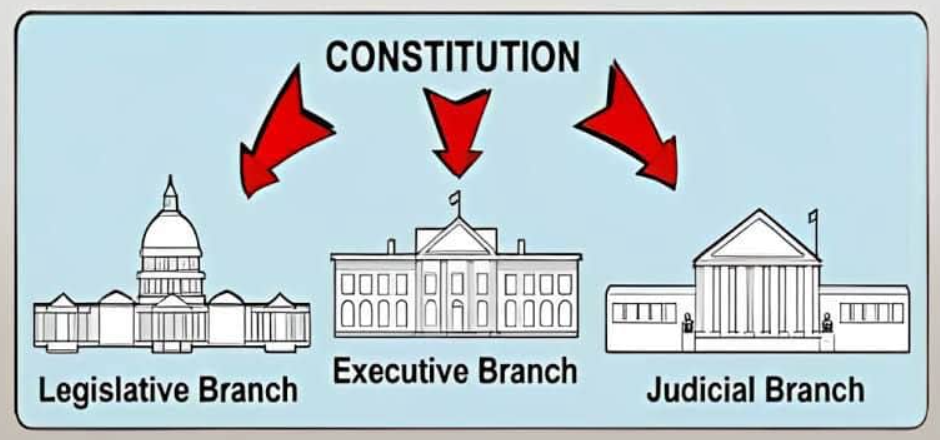
Every elected government inherits two fundamental responsibilities that often pull in opposite directions: maintaining public order and protecting individual liberty. A functioning democracy cannot thrive in the absence of either. Citizens expect governments to curb crime, dismantle organised criminal networks and ensure that streets, neighbourhoods and public institutions remain safe. At the same time, they also expect the State to exercise its coercive powers within the boundaries of the Constitution and the rule of law. Striking this balance is never easy, but it is precisely this balance that distinguishes democratic governance from arbitrary authority. The Bharatiya Janata Party (BJP) government's proposed anti-crime legislation in West Bengal, while reflecting a legitimate concern over deteriorating law and order, must therefore be examined with both public safety and constitutional safeguards in mind.
The proposed legislation seeks to significantly expand the legal definition of "anti-social activity," empower authorities to detain individuals preventively for up to 12 months without trial and authorise the auction of an offender's property to compensate for public losses. The government has justified these measures as necessary to tackle organised crime, political violence, illegal land occupation, extortion, sand mining mafias and other entrenched criminal activities that have long plagued the state. Few would dispute that West Bengal has faced persistent challenges in maintaining law and order. Political violence, allegations of partisan policing, illegal syndicates and local criminal networks have repeatedly undermined public confidence in governance. During successive elections, reports of intimidation and clashes have reinforced the perception that administrative neutrality has often been compromised.
Against this backdrop, the government's determination to restore order is understandable. The electorate expects visible improvements in public safety, and any administration that fails to address organised criminality risks eroding public trust. Strong policing, effective prosecution and decisive action against criminal syndicates are essential components of good governance. Citizens have every right to demand that the State dismantle networks that thrive on violence, extortion and political patronage.
However, the legitimacy of this objective does not automatically validate every instrument employed to achieve it. Democracies are judged not only by their ability to punish crime but also by the fairness of the processes through which punishment is administered. Extraordinary powers granted to the executive require extraordinary safeguards against misuse. History, both in India and elsewhere, demonstrates that laws enacted to target hardened criminals have frequently been invoked against political opponents, activists, protesters and individuals whose actions, while inconvenient to those in power, do not constitute serious criminal conduct.
One of the most contentious aspects of the proposed legislation is the broad and potentially expansive definition of "anti-social activity." Legal drafting demands precision because vague terminology allows excessive administrative discretion. If definitions become sufficiently elastic, the boundary between violent criminal conduct and legitimate democratic protest may begin to blur. Peaceful demonstrations, labour agitations, student movements or public campaigns against government policies should never be vulnerable to criminal prosecution simply because they inconvenience the administration. In a constitutional democracy, dissent is not a threat to public order; it is an indispensable feature of political accountability.
The provision permitting preventive detention for up to twelve months without trial raises even more profound constitutional questions. Preventive detention has always occupied an uncomfortable place within India's legal framework. Although permitted under the Constitution in exceptional circumstances, it remains one of the most extraordinary powers available to the State because it allows individuals to be deprived of their liberty not for crimes already proven in court but for acts they are presumed likely to commit in the future. Such powers were intended to remain exceptional rather than routine instruments of governance.
The experience of several Indian states illustrates why caution is necessary. Similar preventive detention provisions in states such as Uttar Pradesh and Tamil Nadu have attracted criticism from civil liberties advocates and legal scholars who argue that such laws often expand beyond their original purpose. Preventive detention, if employed without rigorous judicial oversight, risks substituting executive discretion for judicial determination. Liberty cannot depend solely upon administrative satisfaction.
Equally concerning is the proposal that detainees may not automatically have legal representation before advisory boards reviewing their detention and that proceedings may remain confidential unless specific permission is granted. The right to legal counsel is among the most fundamental safeguards available to any citizen confronting the power of the State. Restricting access to lawyers or limiting transparency in proceedings risks undermining public confidence in the fairness of the process. Justice must not only be delivered; it must also be seen to be delivered. Opaque legal mechanisms inevitably invite suspicion, particularly when they involve prolonged detention without formal conviction.
Transparency is especially important in politically sensitive environments such as West Bengal, where allegations of selective law enforcement have persisted across successive governments. One administration cannot legitimately criticise the alleged politicisation of policing by its predecessor while simultaneously creating legal frameworks that may themselves become vulnerable to political misuse. Institutional credibility depends upon consistency, not merely political change.
The proposal allowing authorities to auction the property of offenders to compensate for public losses also requires careful scrutiny. Holding convicted individuals financially accountable for damage caused by unlawful activities is not, in itself, an unreasonable proposition. Courts have increasingly recognised the need to recover losses resulting from vandalism or organised violence. However, such penalties must follow due judicial process and established findings of guilt. Premature or administratively driven property seizures without exhaustive legal safeguards risk violating constitutional protections relating to property rights and procedural fairness.
India's criminal justice system already provides substantial legal mechanisms to combat organised crime. Various central and state laws address money laundering, organised criminal syndicates, terrorism, illegal mining and financial offences. The challenge often lies less in the absence of legislation than in the effectiveness of investigation, prosecution, judicial capacity and timely adjudication. Enacting increasingly stringent laws cannot substitute for strengthening policing, forensic infrastructure, witness protection programmes and judicial efficiency.
Indeed, excessive reliance on extraordinary legislation may unintentionally weaken ordinary criminal justice institutions. If governments begin depending on preventive detention rather than timely investigation and successful prosecution, systemic reforms necessary for long-term institutional improvement may receive less attention. Strong laws cannot compensate for weak investigations or delayed trials.
West Bengal undoubtedly deserves safer streets, impartial policing and freedom from criminal syndicates that exploit political patronage. Citizens have long demanded decisive action against land mafias, illegal mining operations, extortion networks and politically protected local strongmen. Delivering on these expectations is entirely consistent with constitutional governance. But public security and civil liberties should never be presented as mutually exclusive objectives. The most successful democracies are those that protect both simultaneously.
The government's substantial electoral mandate provides it with both authority and responsibility. That mandate should be used to strengthen institutions rather than expand discretionary executive power without adequate checks and balances. Laws intended to protect society must themselves remain subject to constitutional discipline. Judicial oversight, access to legal representation, transparent review mechanisms and narrowly defined statutory language are not procedural obstacles; they are the safeguards that prevent legitimate law enforcement from degenerating into arbitrary governance.
Ultimately, the true measure of any criminal justice legislation lies not in the severity of its provisions but in its fairness, accountability and constitutional resilience. Governments undoubtedly require robust legal tools to combat organised crime and restore public confidence in law enforcement. Yet the strength of the rule of law is tested precisely when the temptation to bypass due process appears strongest. West Bengal deserves effective policing, impartial administration and a justice system capable of dismantling criminal networks. It deserves, equally, laws that uphold the constitutional promise that liberty may be restricted only through fair, transparent and accountable legal processes. A democracy secures lasting public order not by concentrating power in the hands of the State, but by ensuring that the exercise of that power always remains subject to the rule of law.










[[comment.comment_text]]