The Throne Is Empty: The Greatest Scorer in Men’s Football History Leaves Portugal
 2 hours ago
After 23 years, 234 caps and 146 goals, the greatest scorer in men’s international football has handed back the shirt. The ending was not the one he would have written.
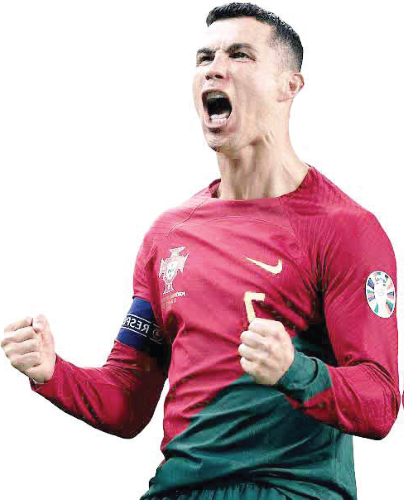
There is a particular kind of silence that follows a career that has never really been quiet. On 5 November 2026, Cristiano Ronaldo dos Santos Aveiro did not call a press conference or step in front of a wall of cameras. He said goodbye the way a man does when the words are too heavy for a crowd: quietly, in a short video shared on Instagram. No stadium, no roar, no fanfare. Just the boy from Funchal, twenty-three years later, handing back the No. 7 shirt.
He spoke of a country that would “always be a part of me” and told supporters that “no captain walks alone and you’re all part of my story.” They were simple words from a player who has spent a lifetime being loud, and that is why they landed. It was not a boast or a record, only gratitude and the ache of letting go of something that was never just a job. It also arrived five weeks after he walked out of a national team camp, and seventeen days after the federation suspended him for it.
First, a necessary clarification. Ronaldo has not retired from football, only from international football. He is under contract at Al Nassr until June 2027 and told Vogue in August that this is “probably my last year of football.” What ended this week was narrower and, for a nation of ten million, far more personal: the loud, record-breaking era of Ronaldo in red and green.
It deserved a better final act. To see why it did not get one, you have to hold two stories at once: the numbers, which are staggering, and the man, who has never stopped competing, even with his own coach.
The boy from Madeira
Cristiano Ronaldo dos Santos Aveiro was born in Funchal on 5 February 1985, the youngest of four children in a family that had little. He played for Andorinha, then Nacional, before Sporting CP’s academy in Lisbon took him at sixteen. Within two years he had a senior debut for Sporting, a £12.24 million move to Manchester United and a first cap for Portugal.
What Portugal got in return was extraordinary. For two decades a small country on the edge of Europe sent out a team that anyone could beat and everyone feared, because somewhere in the lineup was a player who might decide the match at any moment. His 146 international goals are the most by any man in history, a record he took from Iran’s Ali Daei in September 2021. His 234 caps are the most anyone has collected. Those are not the numbers of a talented player who lasted a long time. They are the numbers of a player who refused to be less than his best.
What he won, and what remained
The defining image of his Portugal career is not a goal. It is a man in tears in July 2016, carried off injured in the first half of the Euro final against France. Portugal had never won a major tournament, and now they were without their captain. Yet with Ronaldo pacing the touchline like a second manager, they held on, and Éder’s extra-time goal gave them a 1–0 win.
He holds the European Championship records for goals, with 14, and appearances, with 30. Portugal added the Nations League in 2019 and again in 2025, when they beat Spain in Munich and Ronaldo scored in normal time. Three trophies for a country that had won none is not a footnote. It is a transformation.
The World Cup stayed out of reach. He is the only player to score at six consecutive World Cups, but he never reached a final. His last match, on 6 July in Arlington, ended 1–0 to Spain through a stoppage-time goal from Mikel Merino. He left saying he had a “clear conscience.” Lionel Messi won the trophy in 2022, Ronaldo’s best remains a semi-final in 2006. It is the cleanest gap in his record, and the one that will follow him longest.
The summer it began to fray
After the World Cup exit, Roberto Martínez left the job and the federation turned to Jorge Jesus, who had coached Ronaldo at Al Nassr through 2025–26. On paper it was a smooth handover. A coach who knew him, a player who trusted him. After positive talks, Ronaldo had even said he would not retire after the World Cup.
Then came Norway. On 27 September Portugal won 2–1, and Ronaldo warmed up as a substitute but never came on. Three days later, the day before the match against Denmark, he left camp, accusing Jesus of breaking his word on playing time.
The affair rose unusually high. Portuguese media reported that Prime Minister Luís Montenegro spoke separately to Ronaldo, Jesus and federation president Pedro Proença. When a team dispute reaches the head of government, it was never only about minutes.
Ronaldo’s response mixed contrition and defiance. “The responsibility is exclusively mine,” he said, while alleging an “absolute breach of trust.” The rules allow a month to six months for abandoning camp. He received the minimum, 30 days, plus a €255 fine. A man who earns about $300 million a year was fined less than the price of a decent dinner, but the symbolism mattered more than the sum. The national team’s greatest player had been disciplined like any other.
Anatomy of an exit
There are two ways to read this ending, and both are true. The first is that Ronaldo was treated unfairly. He is 41, his nation’s most successful player, and he was left on the bench in a match Portugal were winning against a modest side. If the coach did promise him minutes, walking out, however regrettable, was the act of a player who felt his word had been betrayed.
The second is less flattering, and history backs it. His exit from Manchester United in November 2022 followed a ninety-minute interview with Piers Morgan in which he said he felt “betrayed” and criticised his manager and the owners. United terminated his contract by mutual consent while he was at the World Cup in Qatar. The pattern is hard to miss,enormous talent, enormous pride, and a public escalation when he feels slighted.
Both readings coexist. The refusal to accept a lesser role that made him is the same quality that makes him hard to manage as the minutes shrink. You cannot keep the fire and remove the heat.
The door left open
What softens the ending is that nobody has slammed the door. In an earlier letter he promised fans “one or more farewell matches.” The federation says it wants to organise a tribute, and Jesus has said Ronaldo would be welcome back.
Portugal host Denmark on 14 November and visit Wales on 17 November, the first matches without him. His son, Cristiano Jr., who is 16 and recently scored his first goal for Portugal’s Under-16s, is a reminder that the story may have a sequel. Ronaldo has said he hopes the boy will surpass him. That would take some doing.
He is not finished
The surprising thing about this retirement is how little it changes about the player. His official count stands at 985 senior goals as of 29 October, with one recent Saudi strike disputed, which is why some outlets say 984. Either way, 1,000 is in sight: he needs about fifteen more, and with roughly thirteen matches left in 2026, early next year looks likelier than December. A fifteen-minute hat-trick against Al Kholood on 29 October showed the instinct has not faded.
He has also found a trophy in Saudi Arabia. On 21 May, in a 4–1 win over Damac on the final day, he scored twice, one a free-kick, to give Al Nassr their first league title since 2018–19. He finished the season with 28 league goals in 30 appearances.
The money is real, too. Forbes lists him as the world’s highest-paid athlete in 2026, with about $300 million over twelve months, against $140 million for Messi. Skeptics call the Saudi chapter a well-paid victory lap in a league short of Europe’s standards, and that has some force. But nobody scores 28 in 30 at 41 on reputation alone.
The inevitable comparison
No discussion of this retirement can avoid Messi, who played his last game for Argentina less than a month before Ronaldo’s announcement. Two players who defined an era left the international stage within weeks of each other, in very different ways.
The numbers cut both ways. Ronaldo has more career goals, 985 to 936, and more Champions League goals than anyone, 140 in 183 appearances. He won league titles in England, Spain, Italy and Saudi Arabia and lifted the Champions League five times. Messi has eight Ballons d’Or to his five, a World Cup, a better head-to-head record and far stronger creative numbers.
At the 2026 World Cup a reporter asked Ronaldo about Messi. His reply was two words: “next question.” After so many years, he will not be measured against anyone but himself. The debate cannot be settled because it was never about statistics: the relentless accumulator against the effortless artist.
What he leaves behind
It is tempting to wrap the career in one tidy sentence. Ronaldo resists it. He is the record holder who left over bench minutes, the legend who delivered Portugal its first major trophy and then fell out with its coach, the international retiree with a thousand-goal milestone still to chase.
History will probably be kinder than the final weeks. The walkout will fade into a paragraph, and the €255 fine will become a trivia question. What will remain is the child in Funchal or Porto or Lisbon who watched a man in the No. 7 shirt drag a country to a European title and decided that a small place does not have to produce small dreams. For twenty-three years, Portugal borrowed his ambition and made it theirs.
When the tribute comes, and it should, Portugal can give that back: the stadium, the anthem and the farewell he failed to script himself. The No. 7 is hung up, and the player is not done. But for the first time in two decades Portugal will walk out without him, and the silence, when it comes, will be louder than any goal he ever scored.
(The author, currently pursuing a Master’s degree in Journalism from Maharaja Sayajirao University of Baroda, is the founder of blogging site: dumpyourthoughts.)



[[comment.comment_text]]