The Missing Link in India’s Growth Story

 9 months, 3 weeks ago
India’s growth story is often told through highways, digital platforms, rising GDP numbers, and global ambition. Yet beneath this narrative of progress lies a persistent and deeply rooted weakness—the absence of civic sense as a shared national value. From traffic indiscipline and littered streets to vandalised public property and routine disregard for basic rules, everyday behaviour continues to undermine public systems across cities and towns. The problem is not the lack of laws or government schemes, but the widespread belief that civic responsibility is optional and that public spaces belong to no one in particular.
This deficit cuts across class, education, and geography. Educated professionals violate traffic rules as casually as the unlettered, and cleanliness remains a personal habit rather than a collective commitment. While citizens demand world-class infrastructure, they often refuse to adopt world-class civic behaviour. The result is a cycle in which governance becomes reactive, enforcement inconsistent, and public trust steadily eroded.
As India aspires to become a developed nation, the missing link is not policy innovation alone but behavioural reform. Without a culture that respects rules, institutions, and fellow citizens, even the most ambitious development projects will fall short. Civic sense, long treated as a moral footnote, must now be recognised as a cornerstone of sustainable national progress.
A Crisis of Civic Sense
Today India presents a striking paradox. It is a nation that celebrates record infrastructure creation, digital governance, and global ambition, yet struggles with basic civic behaviour in everyday life. From gleaming expressways littered with trash to smart cities choked by traffic indiscipline, the contradiction is visible everywhere. While policy discourse focuses on growth rates, investments, and reforms, a quieter but deeper crisis continues to undermine progress—the near-absence of civic sense as a shared social value.
Civic sense, at its core, refers to the awareness and practice of responsible behaviour in public spaces, rooted in respect for laws, institutions, and fellow citizens. It is not merely about cleanliness or queue discipline; it is about recognising that public systems function only when individuals voluntarily accept limits on personal convenience for collective good. In India, this foundational understanding remains weak, uneven, and often entirely absent.
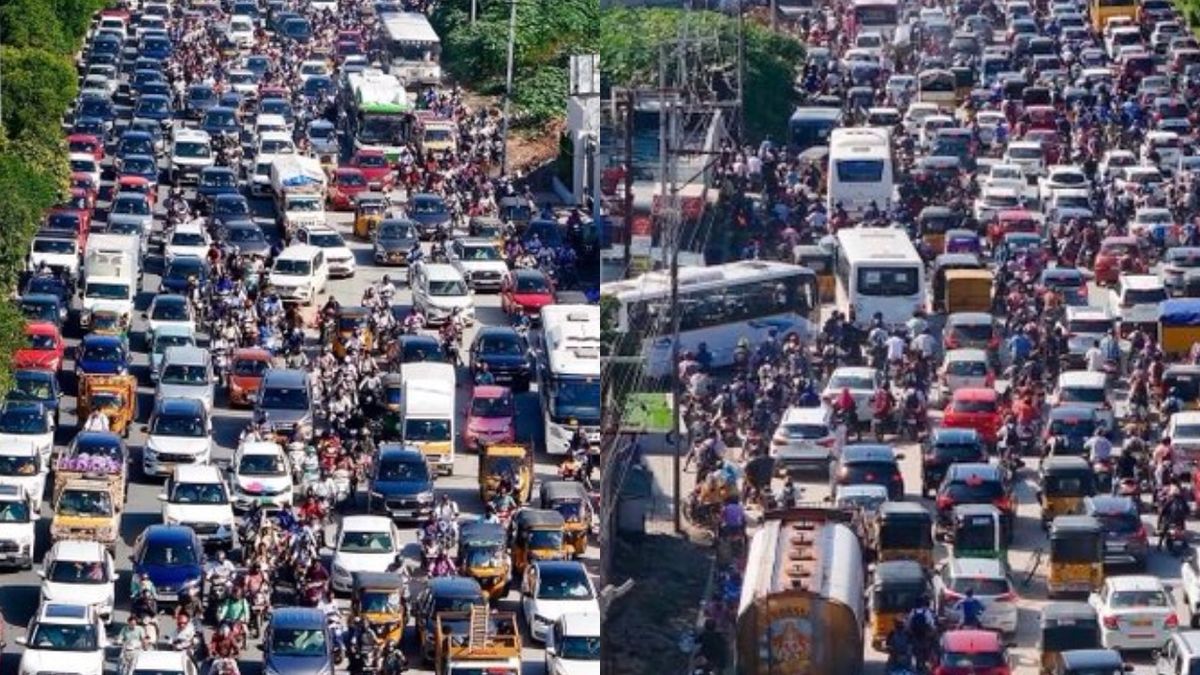
The evidence is overwhelming. Roads are treated as personal domains rather than shared spaces. Traffic signals are suggestions, not rules. Footpaths are encroached upon, public parks vandalised, and government property damaged with impunity. Garbage is dumped wherever convenient, drains are choked with plastic, and public transport is abused rather than respected. These behaviours are not confined to any single class, region, or level of education. They cut across income groups, professions, and cities, revealing a systemic cultural deficit rather than isolated individual failure.
One of the most visible manifestations of this deficit is traffic behaviour. India has some of the world’s most stringent motor vehicle laws on paper, yet remains among the highest contributors to global road fatalities. The reason is not lack of legislation, but lack of compliance driven by civic apathy. Helmets and seat belts are worn to avoid fines, not to value life. Lane discipline is almost non-existent. Emergency vehicles are obstructed, not facilitated. Pedestrians are treated as obstacles rather than rightful users of the road. Law enforcement, overwhelmed and inconsistent, often ends up managing chaos instead of preventing it.
Cleanliness tells a similar story. The Swachh Bharat Mission has undoubtedly improved sanitation infrastructure and raised awareness, but behaviour change has lagged far behind. Public toilets are built, yet misused or vandalised. Dustbins exist, but waste is thrown beside them. Streets are swept in the morning, only to be littered again within hours. The fundamental belief that “cleanliness is someone else’s responsibility” remains deeply entrenched. The irony is stark: individuals demand world-class cities while behaving in ways that make such outcomes impossible.
The roots of this problem lie in a flawed understanding of citizenship. In India, citizenship is often interpreted almost exclusively in terms of rights—entitlements to services, subsidies, protection, and expression. Duties, though constitutionally recognised, are treated as moral suggestions rather than enforceable norms. This imbalance has created a culture where the state is expected to deliver perfection, while citizens reserve the right to ignore rules whenever inconvenient. Governance, under such conditions, becomes reactive rather than transformative.
Colonial history also plays a role. Public property was historically seen as “government property,” distant and unowned by the people. That mindset has not fully disappeared. Even today, damage to public infrastructure does not trigger the same moral outrage as damage to private property. A broken park bench, defaced wall, or vandalised bus is rarely seen as a collective loss. This psychological distance from shared assets erodes accountability at every level.
Education, often cited as the solution, has not delivered expected results. Civic behaviour in India does not improve proportionately with formal education. Highly educated individuals routinely violate traffic rules, litter public spaces, and flout regulations they would strictly follow abroad. This highlights a crucial truth: civic sense is not an academic subject; it is a social habit. It is learned through observation, reinforcement, and consistent consequences. Where rule-breaking is normalised and rarely punished, even the well-educated adapt to disorder.
Urbanisation has further strained civic norms. India’s cities have grown faster than their institutions. Migrants arrive from diverse backgrounds, bringing different social codes into already overstretched urban systems. In the absence of strong local governance and community engagement, anonymity replaces accountability. When no one feels responsible for a neighbourhood, neglect becomes routine. Resident welfare associations, where active, often function as islands of order surrounded by civic chaos.
The media ecosystem has not helped either. While it excels at highlighting failures—garbage heaps, potholes, traffic jams—it rarely sustains attention on behavioural reform. Civic responsibility is framed as a moral sermon, not as a critical pillar of national development. Political discourse mirrors this imbalance. Leaders promise infrastructure, subsidies, and enforcement, but seldom speak about citizen discipline as a prerequisite for progress. When civic issues are raised, they are quickly reduced to administrative lapses rather than shared societal failures.
The environmental consequences of poor civic sense are particularly alarming. Air pollution, water scarcity, and waste management crises are often attributed solely to industry or government policy. Yet individual behaviour—burning waste, excessive vehicle use, water wastage, plastic consumption—plays a decisive role. Environmental degradation is not only a policy failure; it is also a behavioural one. Without widespread civic responsibility, even the most ambitious climate policies will fall short.
The pandemic offered a revealing glimpse into this dynamic. Compliance with public health measures varied dramatically, not because rules were unclear, but because civic trust and responsibility were uneven. Mask-wearing, distancing, and vaccination adherence often depended less on awareness and more on social pressure—or the lack of it. Where civic sense was strong, communities adapted. Where it was weak, enforcement alone could not compensate.
Comparisons with other countries are instructive. Indians often follow rules meticulously when abroad, suggesting that behaviour is shaped less by culture and more by context. Predictable enforcement, social disapproval of rule-breaking, and consistent systems encourage compliance. In India, selective enforcement and social tolerance of violations undermine the incentive to behave responsibly. When rule-breakers face no consequences and are sometimes admired for “managing” the system, civic discipline becomes irrational.
Addressing this crisis requires a multi-layered approach. Enforcement must be consistent, visible, and fair. Laws that are selectively applied breed cynicism. At the same time, punishment alone cannot build civic culture. Positive reinforcement—public recognition of good practices, community-led initiatives, and local ownership of public spaces—must complement deterrence.
Education reform is critical, but not in the conventional sense. Civic education must move beyond textbooks to lived experience. Schools should integrate community service, local governance participation, and environmental stewardship into regular curricula. Children must see civic responsibility practiced by adults, not merely preached in classrooms.
Local governments have a central role to play. Decentralised governance, where citizens can see the direct impact of their behaviour on neighbourhood outcomes, strengthens accountability. When residents participate in waste segregation, water management, or traffic planning, compliance increases because rules feel co-created rather than imposed.
Most importantly, a cultural shift is required. Civic sense must be reframed as a marker of dignity and national pride, not as an inconvenience. Just as economic aspiration has become socially valued, civic responsibility must become aspirational. A society that aspires to global leadership cannot afford everyday disorder as its norm.
India’s development challenge is no longer limited to building infrastructure or drafting policy. It lies in aligning individual behaviour with collective ambition. Without civic sense, the best-designed systems will fail, public trust will erode, and governance will remain trapped in crisis management. With it, even limited resources can achieve extraordinary outcomes.
The question, therefore, is not whether India can build world-class cities, institutions, or economies. It is whether Indians are willing to become world-class citizens. Until that transformation begins at the level of everyday behaviour, the promise of development will remain incomplete—impressive on paper, fragile on the ground.
Civic Sense by the Numbers
|
Everyday Violations We Normalised
Jumping traffic signals and wrong-side driving Throwing garbage beside dustbins Blocking footpaths with vehicles or shops Ignoring queues in public offices and transport Damaging public toilets, parks, and buses
|
Why Laws Alone Don’t Work
Rules are followed mainly to avoid fines, not out of responsibility Enforcement is often selective and inconsistent Social disapproval of violations is weak or absent Civic education remains theoretical, not experiential
|
What Can Change the Behaviour
|


[[comment.comment_text]]