Administration of Jails: A Key Pillar of Indian Criminal Justice System

 9 months, 1 week ago
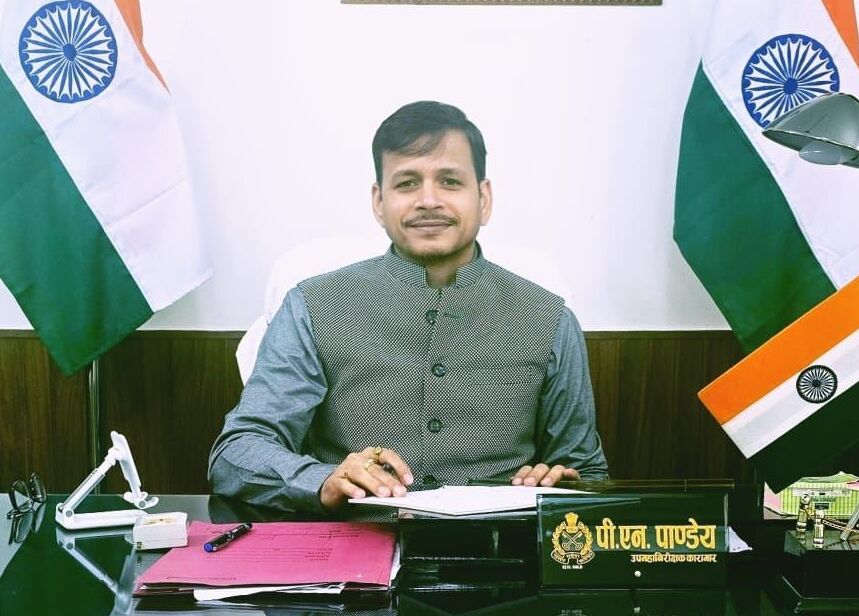
In the structured and often challenging world of prison administration, Mr. P. N. Pandey stands out as an officer whose work reflects discipline, integrity, and a deep sense of public responsibility. Currently serving as the Deputy Inspector General Head Quarter at Lucknow Prisons, he has built a distinguished career marked by both unwavering professionalism and a humane outlook toward correctional governance.
Mr. Pandey is widely admired for his ability to balance strict security protocols with a reform-oriented approach that prioritizes transparency, fairness, and the dignity of inmates. His contribution to strengthening grievance-redressal systems, streamlining prison management processes, and promoting rehabilitative initiatives has earned him recognition across the state.
The Emerging World representative Ankita Mishra interviewed Mr. Pandey for the EW readers to better understand the structure and functioning of our jails, a key pillar of India’s criminal justice system.
Q: What are the main pillars of the criminal justice system?
Mr. Pandey: The four main pillars are Judiciary, Police, Prosecution, and Prisons. Nowadays, forensics is also considered a separate, fifth pillar. Achieving the objectives of the criminal justice system requires good chemistry and synthesis among these five pillars.
Q: How is jail administration different from general administration?
Mr. Pandey: Jail administration is different because:It is the last pillar of the criminal justice system and the conclusion of the whole process.The prison officer directly deal with human beings whom society considers "untoward elements" and who live in their custody.They constantly deal with individuals in custodial institutions, catering to their daily needs, ensuring their rights, and regulating/disciplining them, which is a very human but at a same time tough job. Unlike other departments where interaction with human beings is temporary or deals with files, jail administration controls and governs the day-to-day life of prision and regulated their freedom under the rules, which can generate depression and resistance. Jail administration is purely a State subject under Item 4 in the 7th schedule of the Constitution.
Q: What is the importance and scope of the Jail Manual?
Mr. Pandey The Jail Manual is a collection of rules (called 'Sanghita' in Hindi) that is very elaborative and descriptive. It regulates a vast number of angles and aspects, including: Rules from admission to release.Day-to-day maintenance, food, clothing measurements, obtaining items from outside, prohibited articles.Jail offenses and corresponding punishments etc. Powers and roles of every prision officer,described in a manual.
Q: What are the foundational acts for prisons in India?
Mr. Pandey: The foundational laws of the Prison Act of 1894 and the Prisoner's Act of 1900.
However, the Model Prison Act of 2023 is a suggestive Act made by the Government of India (Ministry of Home Affairs) that states/union territories can adopt and change according to their situation and requirements.The Central Government and courts are insisting on its adoption. The old Act (pre-independence era) was more focused on discipline, punishment, and control.The new Model Act is focused on reformation, corrective measures, sentence planning, use of technology, modernization, digital documentation, and informative treatment.
Q: How are Human Rights followed in prisons and jails?
Mr. Pandey: The implementation of Human Rights is mandatory as it flows from directions and judgments of the Apex Court, (Supreme Court) and various International Covenants to which the India is a signatory.
Q: What is the Supreme Court's observation regarding prisoners?
Mr. Pandey: The Supreme Court holds the view that prisoners go to jail as punishment, not for punishment; going to jail itself is a punishment. Once a person is remanded to jail, their liberty is curtailed through the process of law, but each and every human right stands intact and human dignity must be honored at any cost and cannot be abrogated.
Q: Has the Supreme Court intervened in specific human rights cases?
Mr. Pandey: Yes, the Supreme Court has intervened in many cases concerning the conditions and rights of prisoners, such as the conditions of women and the children living with them,mental and physical wellbeing of prisions,speedy trials and premature relieses of the prisions etc.Q: What is the technical difference between a 'Jail' and a 'Prison'?
Mr. Pandey: Technically:Prisons are meant only for those who have been convicted (post-sentence). They are centers for correctional and industrial activities, training for reintegration into the mainstream.Jails are for under-trial prisoners and short-term convicted prisoners. However, in common usage, they are used synonymously.
Q: What are the main categories of jails?
Mr. Pandey: The rough categories of jails are: Central Jails (Prisons) are generally for convicted prisoners of 7 years and above and District Jails (Prisons) where under-trial prisoners are lodged. Then there are Sub-Jails located in sub-divisions, primarily in states with big districts (like MP). In addition, the
Specialized Institutions include open prisons, special prisons for women, and special prisons for young adults (below 21 and above 18).
Q: What are Open Correctional Institutions?
Mr. Pandey: OCI is the term used by the Supreme Court for variants of open prisons:
Open Colony: Prisoners build houses, live with their families, and earn their own money.
Open Camps: The government provides facilities, and prisoners have to stay there in camps.
Semi-Open Prisons: Inmates stay out during the day and return at night for attendance and accommodation.
Q: Do you think the budget for jails is generally sufficient?
Mr. Pandey: To fulfill the basic needs of the prisoners, the budget is always sufficient. The budget increases or decreases based on prevailing rates, but the basic menu and needs are mandatory and cannot be curtailed. The crisis often arises concerning infrastructural changes. This includes,Making new barracks due to population increases. Renovating old, sometimes very old (British Period Brigades) barracks or structures like kitchens and wiring etc. Requests for this budget are made based on the severity of need (SOS) or requirements.
Q: How is food arrangements done for the prisoners?
Mr. Pandey: Food is given according to a fixed menu defined in the manual, not according to the budget. It specifies the required calories and gram quantities for items like flour, dal, sabji, tea, and biscuits per inmate per day. Additional diet mainly provided to sick,pregnant and lactating mothers on the recommadation of medical officer.
Q: What’s administrative hierarchy in jail system?
Mr. Pandey: Senior Superintendent/ Superintendent is the Senior most officer of the jail. Senior Superintendents are generally in charge of bigger jails or central jails, They are the supervisory and controlling officer. They issue directions based on the jail manual, senior officer guidance, or government circulars and orders.
Jailer/ Deputy Superintendent serves as the Chief Operating Officer (COO) or Chief Executive Officer of the jail. They implement all directions given by the Superintendent.
Deputy Jailer / Assistant Superintendent supports the Jailer and are allocated different branches (e.g., release/admission, law and order, stores, etc.). They are considered the core officer or backbone of the prison administration.
Head Warder / Warder:This is the part of the constabulary of the jail (like police constables). Their duties include counting inmates, searching them, escorting them during movement, and performing duties in specific offices when requisitioned. They are also called 'bandi rakshak' or 'prahari” in some states. The term 'warden' is often mistakenly used by media/outsiders, but the correct term is 'warder' (made from the word 'ward off,' meaning to save).
Q: What are the main challenges in prisons according to you?
Mr. Pandey: The basic challenges, including: Overcrowding.Understaffing (sanctioned posts are old and not fully filled).Treatment of prisoners.Mental health issues (lack of psychiatrists and counsellors). Violation of human rights and corruption. Exploitation of prisoners by other prisoners.Operating criminal activities from inside the jail (e.g., mobile phones, contrabands).Suicide (a big challenge in a state of depression).Law and order problems (e.g., hunger strikes, riots).
Q: What are the special challenges for women prisoners?
Mr. Pandey: Women prisoners face challenges like: Difficulties in reintegrating into society, especially due to social stigma.Challenges during the menstruation period and pregnancy.Issues with keeping children together for up to 6 years and protecting them from negative influences. Mental stress from a lack of family support.
Q: What is 'Sentence Planning' in the Model Prison Act?
Mr. Pandey: Sentence planning is a scientific thing in the Model Prison Act that replaces general lectures. It aims to prevent inmates from relapsing into crime by focusing on individualized, tailored programs. This requires:Gathering the entire history of the prisoner (how the crime was committed, family, background, education, previous experience) beyond just the warrant details.Assessing their interest and motivation to learn. Providing proper training and certification through an institution so they are deemed trustworthy by society and have a trade.
Q: What are the key issues facing rehabilitation/reform programs?
Mr. Pandey: Challenges include: The large population (75-76%) of under-trial prisoners who are not interested in learning because their release time is uncertain and they expect to leave soon.The need to avoid a "one-jacket-fits-all" approach and focus on trades relevant to their background (e.g., not teaching computers to a farmer).Lack of proper correctional employees (psychologists, counselors) and a developed industrial area for training.
Q: What are the necessary steps after an inmate is released?
Mr. Pandey: To prevent a relapse into crime, post-release measures are needed: Post-release monitoring and follow-up (in the Model Vision Act) to track where they went and if they are with the same negative elements. Providing a "half-way home" type of environment where they can get employment if they cannot go home. Giving a composite amount to buy tools and start something new, which is done in some states. Caring for their children who may be dependent bread earners.
Q: What’s the typical experience with NGOs in jails?
Mr. Pandey: Most NGOs are described as casual and temporary, often focusing on photos rather than sustained work. Examples of temporary work include distributing clothes or teaching basic literacy for a short period. For NGOs to be effective, their work needs to be institutionalized, scientific, and planned.
Q: What education opportunities are provided to inmates?
Mr. Pandey: Jails implement various educational programs: Basic Literacy Programs: Such as "Each One Teach One" and "Naya Savera". Basic Education: In states like Uttar Pradesh, there is enrolment in nearest schools for 5th and 8th grades. Higher Education: Private enrolment for 10th and 12th grades. Most states have open university centers (like Indira Gandhi Open University, Rajarsi Purushottam Das Tandon University) in their jails, offering diploma and degree courses.
Q: What are the key challenges in implementing educational programs?
Mr. Pandey: Education ensures that the inmates' precious time is not wasted while they are undergoing trials in jail. Their degree does not mention that it was obtained from jail. Challenges include: Difficulty in posting regular teachers; educated prisoners are engaged, but the theoretical aspect is difficult. Uncertainty about the regularity of the bondage (how long an inmate will be in jail). Difficulties in motivating people and the effectiveness of a leader's motivation. Understaffing and being occupied with other things. Hesitation from a safety and security perspective in taking many people together to a school.
Q: Mechanism of grievance redressal in jails?
Mr. Pandey: A Jail Parade (also called Morning Parade, Assembly Parade, or Grievance Parade) is a formal process in which prisoners are assembled in a designated area, usually the parade ground to enable the Jail Superintendent and senior officers to: Inspect prisoners’ physical and mental condition,
hear their complaints and grievances, review discipline, hygiene, and welfare issues
and ensure transparency in jail functioning.
It is one of the most important mechanisms for grievance redressal and human rights protection inside prisons.
Q: Role of technology (e-monitoring, e-tracking, video conferencing etc)?
Mr. Pandey: The role of technology, such as e-monitoring and video conferencing (VC), is rapidly transforming the jail system. It is a critical component of modernization, as highlighted in the Model Prisons and Correctional Services Act, 2023. The most significant use is to facilitate judicial proceedings, specifically the production of accused persons (under-trial prisoners) before the court for hearings, bail applications, or judicial remand. Video conferencing help us in many ways like :Speedy Trial and Efficiency: VC helps accelerate the legal process, especially for the large population of under-trial prisoners.
Security and Safety: It eliminates the need for physically transporting high-risk or large numbers of inmates to court, significantly reducing security risks, staff burden, and transit-related issues.Legal and Family Visits (VC Calls): VC facilities are being used to allow prisoners to interact with their lawyers and family members remotely, especially during times when physical visits are restricted (like the COVID-19 pandemic), helping to reduce anxiety and isolation.
Similarly, E-monitoring covers various forms of electronic surveillance and tracking to enhance security and accountability: CCTV Surveillance: Monitoring inmate activity along perimeter walls, roof tops, main gates, and high-security barracks. Cameras install in the baric of high risk prisoners are continuously monitoring by various headquarters. Cameras is also used by prison staff in high-security areas to enhance accountability and collect evidence. The Model Prisons Act, 2023 also provides for using electronic tracking devices (e.g., trackable bracelets) as a condition for granting prison leave, parole, or bail to low and moderate-risk under-trial prisoners.



[[comment.comment_text]]