Food Adulteration in India: The Law Is Not Enough

 1 month, 4 weeks ago
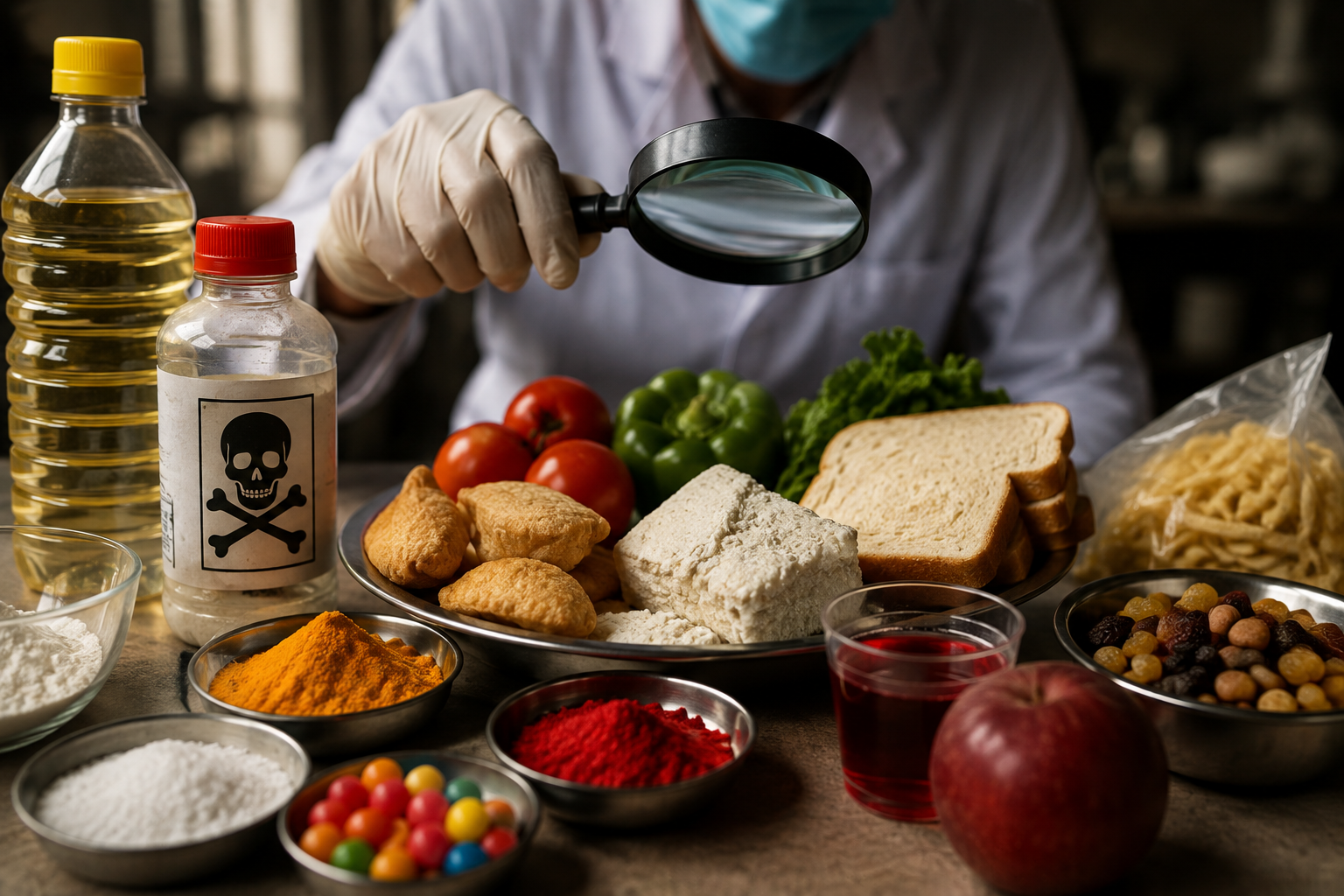
Food adulteration is not a minor regulatory offence. It is an assault on public health. Every day, millions of Indians consume food without knowing whether what is on their plate is genuinely what it claims to be. Adulteration through substitution, dilution, prohibited substances or contamination can cause serious harm. But the larger food-safety crisis goes beyond deliberate adulteration: unsafe water, dirty kitchens, poor storage, contaminated utensils and unhygienic handling can be equally dangerous. The question India must confront is blunt: Why does a country with strong food-safety laws still struggle to guarantee safe food?
Laws Exist but Enforcement Falls Short
India cannot claim that it lacks a legal framework. The Food Safety and Standards Act, 2006 created a comprehensive system, with the Food Safety and Standards Authority of India (FSSAI) setting standards and State authorities responsible for much of the enforcement. Licensing, inspections, sampling, laboratory testing, seizure of unsafe food, penalties, prosecution, labelling and hygiene standards are all part of the regulatory architecture. Yet a law is only as effective as the machinery enforcing it.
The scale of non-compliance is deeply concerning. Government data show that in 2024-25, 1,70,535 food samples were analysed and 34,388 were found non-conforming—roughly 20 per cent of those tested. This does not mean that one in five food items consumed in India is adulterated, because these are enforcement samples and not a random sample of the entire food market. But the numbers nevertheless expose a serious compliance problem. A food-safety regime cannot claim success merely because it has rules on paper.
India’s food economy is simply too vast for conventional inspection to cover every establishment. The chain runs from farmer to manufacturer, processor, transporter, wholesaler, retailer, restaurant and street vendor before reaching the consumer. No Food Safety Officer can stand behind every kitchen or inspect every warehouse. That makes risk-based, intelligence-led and technology-enabled enforcement essential. Where inspection is sporadic and predictable, unscrupulous operators can simply calculate the odds of being caught.
Testing capacity is another critical link. India has expanded its infrastructure, with Government data reporting 252 NABL-notified food laboratories and 24 referral laboratories. But laboratories are useful only when samples are collected intelligently, tests are reliable and results lead to swift action. A violation discovered long after contaminated food has been consumed is a failure of the system, not a victory for regulation.
The Food-Safety Crisis Is Bigger Than Adulteration
India must also stop treating food adulteration as the entire food-safety problem. A restaurant does not have to deliberately adulterate food to endanger its customers. A dirty kitchen, contaminated water, unwashed utensils, rodents, insects, poor personal hygiene, improper refrigeration or cross-contamination can turn perfectly genuine ingredients into hazardous food. Food safety must therefore mean both what is put into food and how that food is handled.
The recent enforcement drive in Maharashtra under FDA Commissioner Tukaram Mundhe is instructive. The Maharashtra FDA’s May 2026 drive involved inspections, arrests, sealing of establishments and seizure of unsafe or prohibited food products. Whatever one’s view of individual enforcement tactics, the larger lesson is important: when regulators are visible, active and willing to act, the law can have teeth. For too long, enforcement in many areas has been perceived as episodic rather than continuous.
The principle must be uncompromising: there can be no VIP category in food safety. A roadside vendor, a five-star restaurant, a government canteen, a hospital kitchen or an institutional mess must meet the same fundamental standards of safety and hygiene. The consumer’s right to safe food cannot depend on the price of a meal or the status of the establishment. But enforcement cannot remain dependent on the energy of one officer. An individual can demonstrate what is possible; only institutions can make it permanent.
The ultimate test of enforcement is therefore not the number of raids, arrests or establishments sealed. Those figures may make headlines, but they do not necessarily make the food supply safer. The real measure is how many businesses comply before the inspector arrives. A mature regulatory system prevents violations instead of merely punishing them afterwards. Compliance must become the culture, not fear of inspection.
From Raids to a Culture of Compliance
Nor should India’s population or growing food demand be used as an excuse for adulteration. India produces enormous quantities of food. The real challenge is ensuring that food reaches consumers with four essential guarantees: quantity, affordability, quality and safety. Better supply chains, storage, cold-chain infrastructure, traceability, packaging, testing and enforcement can reduce the opportunities for adulteration. Small vendors should receive practical hygiene training, easier compliance mechanisms and access to clean water and basic infrastructure. But deliberate and repeated violations must carry consequences strong enough to outweigh the profits of cheating.
Consumers, too, have a role—but they cannot be made the primary regulators. Checking expiry dates and labels, choosing hygienic establishments, retaining bills and packaging, refusing visibly contaminated food and reporting suspected violations can strengthen the final layer of accountability. Technology can make complaints and traceability easier. Yet it would be unfair to expect an ordinary consumer to identify chemical contamination or sophisticated adulteration that even laboratory testing may be required to detect.
The responsibility ultimately rests on four pillars: government, food businesses, consumers and society. Government must regulate, inspect, test and prosecute. Food businesses must recognise that an FSSAI licence is not a lifetime certificate of safety but the beginning of a continuing obligation. Consumers must question and report. And society must stop rewarding dubious practices simply because an adulterated or unhygienic product is cheaper.
There is also an economic argument for tougher enforcement. Adulteration rewards the dishonest producer by allowing inferior or cheaper inputs to be sold as genuine products, while the honest producer bears the cost of compliance. Weak enforcement therefore punishes responsible businesses and creates a race to the bottom. Strong food regulation is not anti-business; it is essential for a fair market in which compliance is rewarded rather than treated as a competitive disadvantage.
India has enough laws. It has a national regulator. It has State enforcement agencies. It is expanding its laboratory network. What remains dangerously inadequate is the bridge between regulation and reality. The Maharashtra experience shows that determined enforcement can make the law reach the street. But the larger goal must be to make such enforcement routine rather than exceptional.
The ultimate measure of India’s food-safety system should be brutally simple: not how many raids are conducted after people are put at risk, but how few violations occur in the first place. Safe food cannot be a privilege available only to those who can afford trusted brands or expensive restaurants. Nor can hygiene be left to the discretion of individual vendors. Every Indian has the right to expect that the food reaching the plate is safe. The country does not need more symbolic enforcement. It needs a culture in which adulteration is costly, compliance is routine and food safety is treated as a public-health obligation—not merely another box to be ticked by the regulator.
(The author, an NGO activist, is a commentator on socio-cultural and governance issues.)







[[comment.comment_text]]