Beyond the Numbers: Reimagining Empowerment for Women in Politics

 5 months, 2 weeks ago
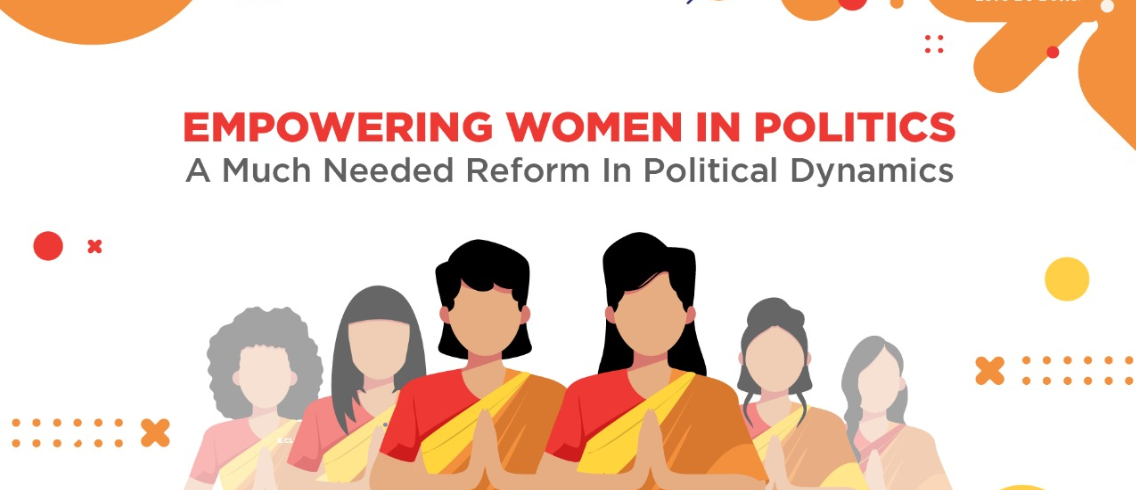
The push for the Women’s Reservation Bill has reignited a crucial national conversation about representation in our highest law-making bodies. As we strive for a parliament that better reflects our diverse citizenry, the legislative goal—to secure a greater voice for women—is undeniably progressive. However, a vital question emerges from the lived reality of those already navigating these corridors of power: Are we focusing on the architecture of presence while ignoring the foundation of safety?
For too long, the discourse has centered on the "percentage" of women in the Lok Sabha, which currently lingers around 14%. While numbers are a metric of progress, they cannot be the sole indicator of empowerment. True representation requires more than just a seat at the table; it requires a seat that is secure, respected, and free from the pervasive culture of indignity that has long haunted political life.
The history of our legislative bodies is marred by instances that contradict our cultural ethos of reverence for women. We cannot forget, nor should we sanitize, incidents like the 1989 Tamil Nadu Legislative Assembly crisis, where the dignity of a woman leader was shattered within the very institution tasked with upholding the law. When a leader in the highest seat of power is subjected to such treatment, it sends a chilling signal to the rest of the nation. It suggests that for all our talk of protection, the legislative floor remains a hostile environment where a woman’s dignity is often the first casualty of political friction.
This hostility is not confined to physical incidents. It is woven into the fabric of daily political discourse. Women leaders are frequently subjected to a scrutiny that their male counterparts escape—judged on their appearance, their personal lives, and their temperament rather than the merit of their ideas. In rallies and debates, derogatory language is often normalized as "political heat," effectively turning a woman’s dignity into a tactical tool for disparagement.
Furthermore, the rise of digital vitriol has added a new, menacing layer to this landscape. The coordinated online abuse and intimidation faced by women who hold firm political stances serve as a deterrent, discouraging capable, thoughtful individuals from entering the public sphere. When the environment itself is corrosive, representation risks becoming merely symbolic—a performative quota rather than a substantive shift in governance.
If we are to create a truly inclusive democracy, our approach must be two-fold. Yes, we must champion the Women’s Reservation Bill to increase the headcount. But concurrently, we must establish, codify, and enforce a robust framework of safety and conduct.
Empowerment is hollow if it is not accompanied by an environment where a woman can speak, disagree, and lead without fear of being silenced or degraded.
This requires moving beyond rhetoric to structural change. We need:
• Strict, Enforceable Codes of Conduct: Guidelines that go beyond suggestion, carrying real-world consequences for derogatory remarks or harassment within the Parliament and Assemblies.
• Independent Accountability Mechanisms: Systems for addressing grievances that are immune to political convenience, ensuring that an act of disrespect is met with swift, non-partisan action.
• Cultural Shifts in Debate: An institutional commitment to ensuring that political rivalry remains a contest of ideas, not a platform for character assassination.
For the young girl watching from home, the message must be clear: the halls of power are not a place where she must sacrifice her dignity to be heard. If we want her to aspire to lead, we must ensure the path she walks is safe.Empowerment is not just about the space a woman occupies; it is about the experience she has while occupying it. It is time we recognize that a truly empowered parliament is not just one that has more women, but one that has the courage to protect them. Only then will our numbers reflect our values, and only then will our democracy truly fulfill its promise to every woman in this nation.
(Author is a story teller and author. She has written the book “The Doc and Dreamer”, and has received Atal Mithila Samman.)





[[comment.comment_text]]