Hormuz Tensions Keep Energy Flows on Edge

 5 months, 3 weeks ago
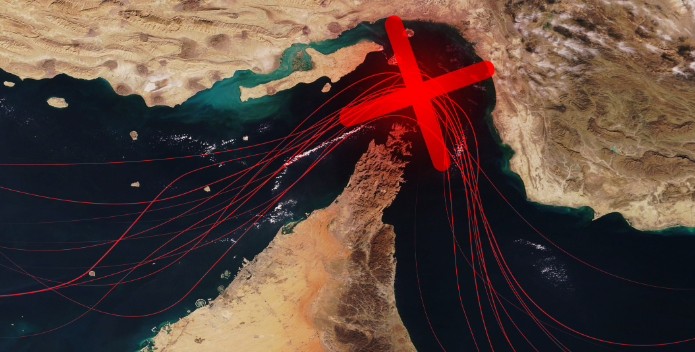
Uncertainty continues to define the situation in West Asia, where ongoing conflict has placed renewed pressure on global energy routes, particularly through the Strait of Hormuz. For India, which relies heavily on imported crude, the concern is not only about the availability of oil but also about the cost and safety of transporting it. Even if hostilities were to subside soon, two critical factors—damaged oil and gas infrastructure in the region and sharply rising insurance premiums for shipping—are unlikely to return to normal immediately, prolonging the economic strain.
What is unfolding is not a complete halt in maritime traffic but a more complex disruption where risks have multiplied and costs have escalated. Oil continues to move, but under tighter margins and greater uncertainty. Attacks or threats to energy installations in the Gulf have already constrained production capacity, and restoring these facilities will take time, given the technical and financial demands involved. For countries like India, this means that supply pressures may persist even after the geopolitical situation stabilises on the surface.
At the same time, the surge in war-risk insurance premiums has emerged as a more immediate and tangible challenge. Shipping companies are being forced to pay significantly higher premiums to operate in the region, making voyages through the Strait increasingly expensive. In some cases, these costs are approaching levels that threaten the viability of shipments altogether. This has a cascading effect: higher transportation costs translate directly into higher landed prices of crude oil, which in turn place pressure on domestic fuel prices and inflation.
India’s response reflects a recognition that while it cannot influence the pace of recovery in West Asia’s oil and gas sector, it can attempt to manage the financial barriers affecting supply chains. The Centre’s move to introduce a sovereign guarantee-backed Bharat Maritime Insurance Pool is aimed precisely at this constraint. By stepping in to underwrite a portion of the risk, the government seeks to reduce the burden of high insurance premiums on shipping companies, ensuring that essential fuel supplies continue to reach Indian ports without prohibitive cost escalations.
This intervention is, in many ways, a pragmatic workaround. It does not address the root causes of the disruption—namely, geopolitical tensions and physical damage to infrastructure—but it helps maintain the flow of trade under strained conditions. The idea is to stabilise one part of the equation so that the broader system does not seize up entirely. For an economy as large and energy-dependent as India’s, even temporary disruptions can have wide-ranging consequences, from fiscal pressures to industrial slowdowns.
However, such measures also come with inherent limitations. Insurance pools backed by sovereign guarantees can absorb risk only up to a point, and their effectiveness depends on the scale and duration of the crisis. If tensions escalate further or incidents at sea increase, the financial exposure could rise significantly. Moreover, the underlying issue of supply constraints will continue to exert pressure on global oil markets, limiting the overall impact of any logistical intervention.
The current situation highlights a deeper structural reality: energy security today is not just about securing supplies but also about ensuring the resilience of the systems that deliver those supplies. Maritime routes, insurance frameworks, and financial mechanisms have become as critical as oil fields and refineries. India’s approach, therefore, signals an evolving understanding of energy policy—one that goes beyond traditional concerns and focuses on managing risk in an increasingly uncertain world.
For now, the Strait of Hormuz remains open, but it is operating under conditions that reflect the volatility of the region. India’s insurance-backed strategy may not eliminate the risks, but it offers a degree of stability at a time when predictability is in short supply.








[[comment.comment_text]]