Belonging: A Journey of Love — Sonia Gandhi’s Story of Love, Loss and Political Power

 11 minutes ago
The memoir’s greatest strength lies in its personal narrative. Her early life in Italy, her meeting with Rajiv Gandhi at Cambridge, their courtship and subsequent marriage provide an intimate account of a relationship that would eventually become inseparable from India’s political history.
- A memoir that opens a window into a remarkable personal journey, but leaves several chapters of India’s political history waiting for answers
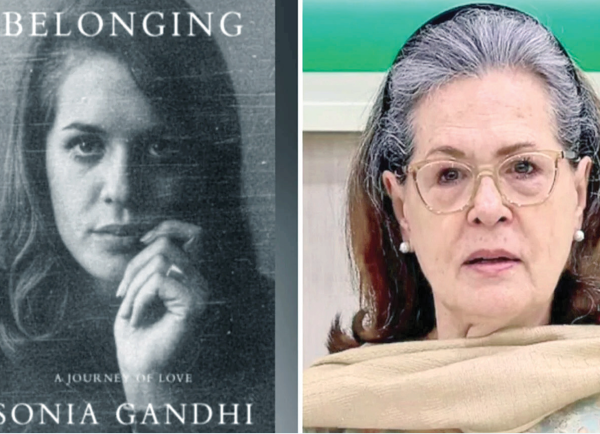
Few political lives in contemporary India have been as unusual, consequential and contested as that of Sonia Gandhi. Her journey from a small Italian town to the centre of India’s political establishment is an extraordinary story of personal transformation, emotional endurance and political influence. In Belonging: A Journey of Love, her much-awaited memoir, Sonia Gandhi finally attempts to reclaim her own narrative after decades of being interpreted, scrutinised and frequently vilified by political opponents.
The title is significant. Belonging is not simply about geographical identity or citizenship. It is about emotional attachment, cultural assimilation, acceptance and the difficult process of making an unfamiliar land one’s own. For Sonia Gandhi, India became home through marriage, family, personal tragedy and, eventually, political responsibility.
The memoir’s greatest strength lies in its personal narrative. Her early life in Italy, her meeting with Rajiv Gandhi at Cambridge, their courtship and subsequent marriage provide an intimate account of a relationship that would eventually become inseparable from India’s political history. What begins as a youthful romance develops into a lifelong association with one of the country’s most influential political families.
Her account of adjusting to Indian social customs, food, family traditions and the demanding environment of the Nehru-Gandhi household is particularly revealing. The reader encounters a young woman negotiating a new culture while gradually developing an emotional relationship with the country she had chosen to call home.
One of the memoir’s most engaging portraits is that of Indira Gandhi. Sonia presents her not merely as a formidable Prime Minister but as a mother-in-law with personal vulnerabilities, domestic habits and an affectionate side that remained largely invisible to the outside world. This human dimension adds considerable value to the book. It offers glimpses of the private individual behind the imposing public personality.
The narrative acquires a profoundly tragic dimension when it reaches the assassinations of Indira Gandhi in 1984 and Rajiv Gandhi in 1991. These two national tragedies transformed Sonia’s personal existence and altered the course of her family’s relationship with Indian politics. Her recollections of Indira’s final moments and the devastating loss of Rajiv are among the most emotionally powerful passages.
The memoir communicates the fear, insecurity and psychological burden that accompanied life under constant threat. Her reluctance to enter politics after Rajiv’s assassination appears understandable in this context. Politics was not, according to her account, an ambition nurtured over the years; it was a responsibility she eventually accepted under extraordinary circumstances.
Her subsequent emergence as Congress president in 1998 and her role in the formation and functioning of the United Progressive Alliance governments represent another remarkable transition. She became one of the most influential political figures in the country, despite having initially resisted the political life that eventually came to define her public identity.
Her decision to decline the office of Prime Minister in 2004 remains one of the defining moments of her political career. She explains this decision through personal conviction and a larger sense of responsibility. Whether viewed as political prudence, sacrifice or a calculated exercise in political leadership, it remains an episode that deserves its place in India’s contemporary political history.
Yet this is precisely where the memoir becomes less compelling as a political document.
A reader expecting a comprehensive examination of the Congress party’s evolution, India’s political transformations and the exercise of power during the UPA years may find the account insufficiently probing. The Emergency of 1975, the Bofors controversy, Operation Blue Star, the anti-Sikh violence of 1984, the Babri Masjid demolition and the larger institutional questions surrounding Congress leadership receive less critical examination than their historical significance warrants.
These were not incidental episodes. They shaped the Republic’s political institutions, communal relations, democratic culture and public trust. A memoir by someone who occupied such an influential position in national politics carries an obligation, even if self-imposed, to confront these questions with candour.
The question of dynastic politics also remains insufficiently examined. Sonia Gandhi’s leadership helped preserve the Congress as a national political force during a difficult period, but it also reinforced the perception that the party’s leadership remained closely tied to one political family. The memoir could have offered a deeper reflection on the implications of hereditary political authority within a constitutional democracy.
Similarly, the relationship between the Congress president and Prime Minister Manmohan Singh during the UPA years deserved greater institutional scrutiny. The distinction between political authority, constitutional responsibility and the exercise of influence from outside the government was a significant feature of that period. It remains an important subject for students of parliamentary democracy.
The book also acquires contemporary relevance through its reflections on political identity and the debate surrounding her foreign origins. Sonia Gandhi faced sustained attacks questioning her suitability to lead an Indian political party because of her Italian birth. Her response, rooted in her personal attachment to India, raises a larger constitutional question: should belonging in a democratic republic be determined by ancestry, cultural origin or constitutional citizenship?
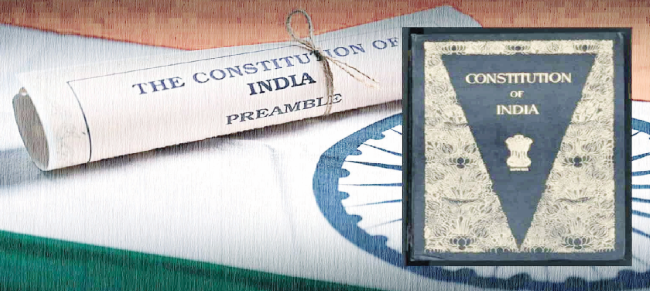
India’s constitutional conception of citizenship rests on equality and legal status, not inherited cultural credentials. A person’s right to participate in democratic politics must be judged within the framework of the Constitution. In that sense, her story transcends an individual political controversy and touches upon the larger idea of India as an inclusive constitutional democracy.
The memoir’s title therefore acquires a meaning beyond its author’s personal journey. It invites reflection on the relationship between identity and nationhood, and on whether a democratic society can accommodate differences of origin, language, culture and belief without diminishing the equal citizenship of individuals.
There is, however, a larger historical opportunity that the memoir only partially fulfils. Sonia Gandhi was not simply a witness to contemporary Indian politics. For more than two decades, she was one of its principal architects and power centres. Her account could have offered a more searching assessment of why the Congress lost its once-dominant position, why its organisational foundations weakened and how Indian politics underwent a fundamental transformation.
Ultimately, Belonging: A Journey of Love is more successful as an intimate family memoir than as a definitive political autobiography. Its emotional honesty, recollections of personal tragedy and portrayal of the Nehru-Gandhi household make it engaging. Its reluctance to confront difficult political questions, however, limits its historical depth.
Sonia Gandhi has finally spoken in her own voice after years of public speculation and political commentary. That is significant in itself. But history demands more than personal recollection. It requires introspection, acknowledgement and the courage to confront uncomfortable truths.
The memoir tells us how Sonia Gandhi came to belong to India. It tells us considerably less about how she helped shape the India that emerged during her years at the centre of political power.
That distinction is ultimately the book’s greatest strength as a personal narrative—and its most consequential limitation as a political memoir.
(Author is a Senior Advocate, Supreme Court of India, Constitutional Thinker and a Public Intellectual.)





[[comment.comment_text]]