Matrix of Numbers and Gender: Balancing Parliament's Size with Women's Representation

 3 months, 1 week ago
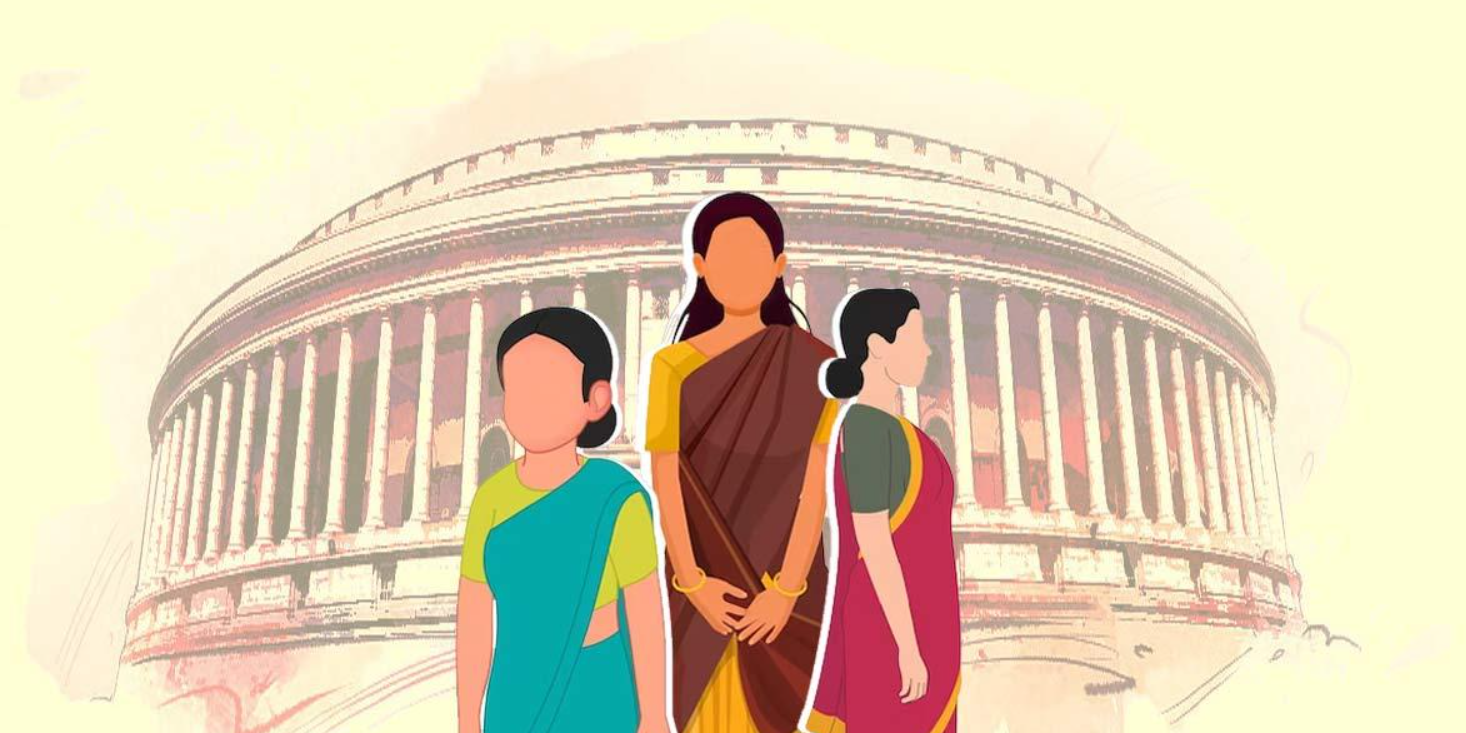
Women's reservation promises to reshape Indian democracy, shifting the public debate from whether women deserve greater political space to how that promise should be fulfilled. The core challenge is not simply boosting numbers, but ensuring that electoral reforms simultaneously strengthen representation, accountability, and institutional efficiency. As India prepares for this historic shift, a critical question emerges: should greater representation necessarily require a larger Parliament?
Indian democracy derives its strength from representing one of the world's most diverse societies; yet, women's legislative presence has remained disproportionately low, despite their active role as voters. Reserving one-third of seats for women is a landmark democratic reform that goes beyond gender justice; it is an effort to make legislative institutions more inclusive and responsive. However, implementation opens a sharp constitutional debate over whether the number of Lok Sabha seats must substantially increase to accommodate this shift, or if it can be achieved within the existing strength of 543 elected members.
This issue extends far beyond mere electoral arithmetic, directly impacting public expenditure, parliamentary efficiency, federal balance, and constitutional design. To navigate it clearly, public discourse must separate two frequently conflated issues: Women's reservation (the allocation of seats for female candidates) and delimitation (increasing or redrawing constituencies based on demographic shifts). While legally distinct, these two tracks have become deeply intertwined because the reservation provisions are scheduled to take effect only after the upcoming delimitation exercise.
For many citizens, a simple question arises: if the purpose of reservation is to ensure that women occupy one-third of parliamentary seats, why should the size of Parliament necessarily increase? After all, democracy is not measured solely by the number of elected representatives. The effectiveness of a democratic institution depends far more on the quality of legislative debate, the accountability of elected members, the scrutiny of government policies, and the ability of Parliament to address the concerns of citizens. If increasing the number of legislators automatically strengthened democracy, countries with the largest legislatures would invariably have the strongest democratic institutions. Experience across the world suggests otherwise.
India today faces multiple developmental challenges that directly affect the daily lives of its citizens. Millions continue to struggle with access to quality education, affordable healthcare, employment opportunities, agricultural distress, urban infrastructure and basic public services. Against this backdrop, any proposal to expand the size of Parliament naturally raises questions about priorities. Citizens are entitled to ask whether a larger Parliament would necessarily result in better governance or simply increase public expenditure.
Each Member of Parliament represents not only a legislative office but also a significant administrative commitment. Salaries, constituency offices, staff, accommodation, travel, security arrangements and parliamentary infrastructure all require public resources. Expanding the Lok Sabha would inevitably require larger investments in administrative support, office space and institutional capacity. At the same time, public discussions on the financial implications often include exaggerated or inaccurate claims regarding the cost of maintaining Members of Parliament. Any serious debate must therefore rely on verified government data rather than speculation or political rhetoric. Democratic policymaking must be guided by evidence, not assumptions.
Supporters of women's reservation present a compelling argument. They point out that political parties have consistently failed to nominate adequate numbers of women candidates despite repeatedly committing themselves to gender equality. Historical data strongly supports this claim. Across elections, women have received only a limited share of party nominations, even though female voter participation has steadily increased and, in several states, now equals or exceeds that of men. Without a constitutional guarantee, advocates argue, meaningful gender representation is unlikely to materialise.
This argument is both persuasive and grounded in decades of political experience. Reservation has the potential to correct a structural imbalance that voluntary political commitments have failed to address. A greater presence of women in legislatures could enrich policymaking by bringing wider perspectives on education, healthcare, nutrition, child welfare, social justice, women's safety and community development. International experience suggests that legislatures with stronger female representation often devote greater attention to issues directly affecting families and vulnerable communities.
Yet another concern deserves equal attention. Will the benefits of reservation reach women from diverse social and economic backgrounds, or will they remain concentrated among politically influential families and established elites? Electoral politics in India remains heavily resource-intensive. Contesting elections requires substantial financial resources, organisational support and political networks. Consequently, there is a legitimate concern that political parties may continue to favour candidates from influential political families, economically powerful backgrounds or those with established public profiles. If this pattern continues, reservation may increase the number of women in Parliament without necessarily broadening the diversity of women's representation.
The challenge, therefore, extends beyond reservation itself. It reflects deeper structural issues within Indian politics. Genuine political empowerment cannot be achieved solely through constitutional provisions if political parties do not simultaneously democratise their internal functioning. Most parties publicly advocate women's empowerment, yet women remain underrepresented in organisational leadership, decision-making bodies and ticket distribution. If political parties genuinely wish to strengthen democracy, they must create leadership opportunities for women at every organisational level rather than viewing reservation as the only mechanism for inclusion.
Another important dimension of this debate concerns India's federal structure. Any future delimitation exercise based on population changes is likely to alter the distribution of parliamentary seats among states. States with higher population growth may gain greater representation, while those that have successfully stabilised population growth could see their relative political influence decline. This has long been a subject of debate among constitutional experts and state governments. Consequently, any proposal to increase the size of the Lok Sabha cannot be viewed merely as an administrative adjustment. It has implications for India's federal balance and therefore requires broad national consensus rather than narrow political calculations.
Equally significant is the question of public confidence in democratic institutions. In recent years, concerns have grown regarding frequent parliamentary disruptions, limited discussion on legislation, increasing political polarisation and declining legislative scrutiny. Many citizens increasingly judge Parliament not by the number of its members but by the quality of its functioning. If public confidence in legislative institutions is already under strain, strengthening accountability may deserve greater priority than simply expanding numerical representation.
The effectiveness of Parliament depends on the seriousness of debate, the performance of parliamentary committees, the transparency of lawmaking and the responsiveness of elected representatives to their constituencies. More Members of Parliament do not automatically produce better governance. Institutional reforms aimed at improving legislative efficiency, encouraging evidence-based policymaking and enhancing parliamentary oversight may contribute more to democratic strengthening than numerical expansion alone.
None of these concerns diminish the importance of women's reservation. On the contrary, increasing women's participation remains essential for making Indian democracy more representative and inclusive. Numerous studies across democracies indicate that women legislators often bring different policy priorities, emphasising education, public health, nutrition, social welfare and community development alongside traditional economic and security issues. A more gender-balanced Parliament is therefore likely to enrich policymaking rather than merely diversify its composition.
However, representation must not become symbolic. Women should not only be elected to legislatures but should also occupy meaningful positions within parliamentary committees, ministerial councils, constitutional bodies, policy institutions and party leadership structures. True political empowerment is measured not simply by presence but by influence over decision-making.
This brings the discussion back to the central question: can the objective of 33 per cent reservation be achieved within the existing strength of the Lok Sabha? If constitutional and administrative mechanisms permit such an arrangement, it deserves serious consideration. It would simultaneously enhance women's representation while avoiding the immediate financial and administrative implications of expanding Parliament. On the other hand, if future delimitation makes an increase in seats constitutionally necessary, the government should clearly explain the rationale, expected benefits and financial implications through transparent public communication. Citizens are more likely to support institutional reforms when they understand the reasoning behind them.
Healthy democracies are strengthened by informed debate rather than unquestioning agreement. Supporting women's reservation while raising legitimate questions about its implementation is not contradictory; it is an expression of democratic engagement. Likewise, supporting or opposing an expansion of Lok Sabha seats should be based on constitutional principles, empirical evidence and public interest rather than partisan narratives.
India's democratic future requires more than numerical expansion. It requires institutions that are representative, accountable, efficient and trusted by the people. Women's reservation has the potential to make Indian democracy more inclusive and responsive. Yet its success will ultimately depend on how thoughtfully it is implemented and whether it is accompanied by broader political reforms that promote transparency, internal party democracy and genuine leadership opportunities for women.
The debate over women's reservation should never be reduced to a contest over arithmetic. The true test of this historic reform will not be how many seats are created or redistributed, but whether it produces a Parliament that is more representative, more accountable and more responsive to the aspirations of ordinary citizens. India has an opportunity to redefine democratic participation by ensuring that women are not merely present in legislative chambers but are equal partners in shaping national policy and governance. Whether this objective is achieved within the existing strength of the Lok Sabha or through a future expansion linked to delimitation, the guiding principles must remain constitutional fairness, fiscal responsibility and public trust. Lasting democratic reforms are those that strengthen institutions without weakening accountability. As India moves toward the next phase of its democratic evolution, the goal should not simply be a larger Parliament, but a better Parliament—one where diversity is matched by competence, representation by responsibility, and political inclusion by meaningful participation. That alone will honour both the spirit of the Constitution and the aspirations of a new India.






[[comment.comment_text]]