India Summons Iranian Envoy; Lodges Strong Protest After Missile Strike Kills Indian Seafarer
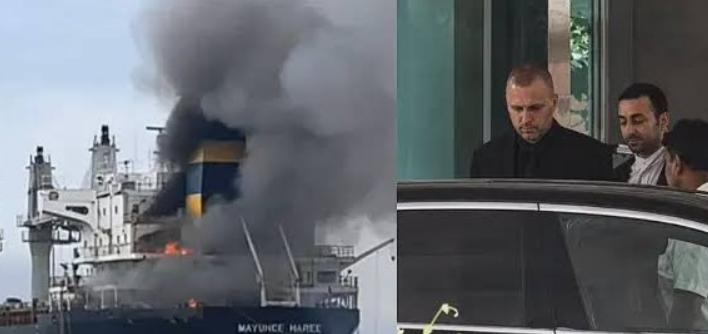



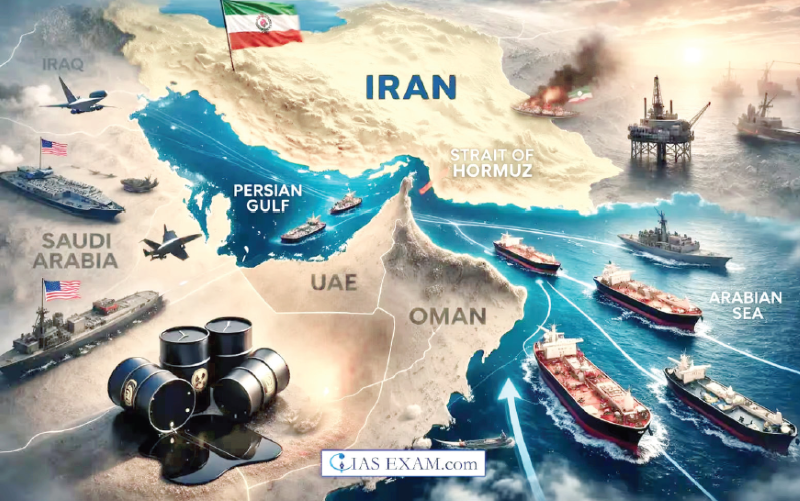
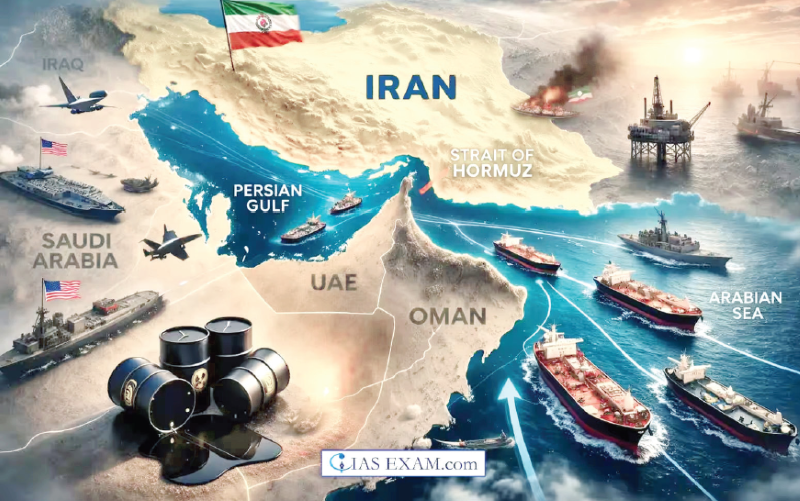
New Delhi: India on Tuesday summoned Iran's Deputy Chief of Mission in New Delhi and lodged a strong protest after attacks on two commercial vessels transiting the Strait of Hormuz left an Indian seafarer dead and 10 others injured, strongly condemning the targeting of civilian shipping.


Protest and condemnation came for the attacks on merchant vessels MT Al Bahiyah and MT Mombasa in the Strait of Hormuz, in which one Indian seafarer was killed and 10 others were injured.

In a statement, the Ministry of External Affairs (MEA) said it was "deeply concerned" over the attacks on the two vessels during their transit through the strategic waterway.


"India is deeply concerned by the attacks on two vessels, MT Al Bahiyah and MT Mombasa, during their transit through the Strait of Hormuz today. Both the vessels were carrying 30 Indian seafarers, among their combined crew of 46."


"Of the 12 Indian nationals onboard MT Al Bahiyah, one has tragically lost his life and another has been injured. Of the 18 Indian nationals onboard MT Mombasa, 9 have sustained injuries, including 2 who are reported to be seriously injured."


The MEA expressed condolences to the family of the deceased sailor and said Indian missions in the UAE were coordinating with local authorities to assist the affected crew members.

"We extend our deepest condolences to the family of the deceased Indian national and wish speedy recovery to those injured. Our Mission and Post in the UAE are closely monitoring the situation and are in touch with the UAE authorities to ensure all possible assistance to the affected Indian seafarers."


The ministry said the Deputy Chief of Mission of the Iranian Embassy in New Delhi was summoned earlier in the day and a strong protest was conveyed.

"The Deputy Chief of Mission of the Embassy of Iran in New Delhi was summoned this morning by the Ministry of External Affairs and a strong protest against these attacks was lodged with him."


Along with the condemnation of  the attacks, India called for an immediate end to violence and urged a return to dialogue to restore peace, security and free navigation in the region.

"We strongly condemn these attacks and acts of violence targeting seafarers and disrupting free and safe navigation through international waterways like the Strait of Hormuz. We also reiterate our deep concern on account of the resumption of attacks and escalation of hostilities in the West-Asian region and call for immediate cessation of violence and a return to dialogue and diplomacy in the interests of peace, security and stability in the region. In particular, the targeting of commercial shipping and civilian infrastructure in the region must cease in order that free and unimpeded navigation and commerce through international waterways in the region, in keeping with international law, can be restored at the earliest," the statement added.


HEATWAVE CONDITIONS AND STATES’ FAILURE TO CONSERVE & PLANT TREES

Temperature soared across the entire European continent in the latter half of June and early July. France, the Netherland and Belgium recorded 3700 excess human deaths and authorities warned that these numbers are preliminary and may even rise. People above 50 years of age accounted for larger proportion of the deaths. Several deaths are reported due to persons drowning in water bodies; those who did not know swimming also jumped in deep water to beat the heat and perished. Experts have found that the current heat waves in Europe is worst recorded in its history.

B. K. Singh   |  1 day ago

Revisiting Religious History In India: Temples, Myths, and the Politics of Memory

The contemporary struggle over religious monuments in India cannot be understood without revisiting the deeper historical questions that underlie it: the nature of “Hinduism” in the past, the evolution of temple architecture, the role of Buddhism under state patronage, and the present-day politicisation of Islamic-period monuments. Taken together, these questions reveal not only a contested past but also a deliberate project of mythmaking in the present, designed to forge a unified religious-national identity by cultivating hostility toward Muslims.

R C Ganjoo   |  3 days, 2 hours ago

When Citizens Become Guinea Pigs

Can governments introduce sweeping policy reforms without adequate public consultation? This opinion piece examines the democratic implications of E20 ethanol, governance, accountability, and citizen participation, arguing that lasting public trust depends on transparency, evidence-based policymaking, and meaningful consultation rather than one-way administrative decisions.

NIRAJ KRISHNA   |  4 days, 4 hours ago

Ethanol in India's Fuel Tank: A Green Revolution or a Growing Dilemma?

An analytical look at India's ethanol blending programme, examining its impact on energy security, farmers, fuel prices, food security, water resources and the country's clean energy transition.

Sanjay Pandey @ EW•NN   |  4 days, 21 hours ago

The Changing Standards of Societal Morality: A Critical Look at Contemporary Ethics

Fourteen points Memorandum of understanding (MoU) signed between US President Trump and Iranian President Masud Pezeshkian on 18th June had temporarily halted the military operations and opened the transit of commercial vessels through Strait of Hormuz, without any fee, till final agreement is reached within 60 days. A few rounds of negotiations at Qatar and Pakistan to obtain final reaffirmation from Iran that it shall not procure or develop nuclear weapons and dispossess enriched stockpile on mutually agreed terms took place without any outcome.

B. K. Singh   |  5 days, 18 hours ago

Taj Mahal, Truth and the Temptation of Myth: History, Law and the Politics of Manufactured Memory

As fresh litigation seeks to reopen the Taj Mahal’s past, the debate is no longer merely about a monument—it is about whether historical evidence or political mythology will define India’s civilisational inheritance. Few monuments in the world command the reverence, recognition and emotional appeal of Agra’s Taj Mahal. A UNESCO World Heritage Site and one of the Seven Wonders of the Modern World, it has stood for nearly four centuries as an architectural masterpiece and a symbol of India’s rich and diverse cultural heritage. Yet, increasingly, it has become the object of relentless attempts to recast history through litigation and ideology.

Hasnain Naqvi   |  5 days, 18 hours ago

Comments

YOU MIGHT ALSO LIKE

View More

By NIRAJ KRISHNA   |   4 days, 4 hours ago
When Citizens Become Guinea Pigs
By Sanjay Pandey @ EW•NN   |   4 days, 21 hours ago
Ethanol in India's Fuel Tank: A Green Revolution or a Growing Dilemma?