India–China Reset Amid Global Shifts

 1 year, 1 month ago
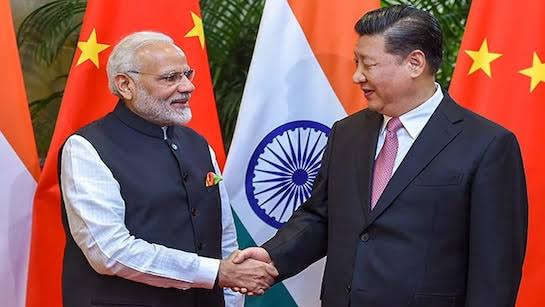
The recent engagement between senior Indian and Chinese leaders has underscored a quiet recalibration of ties between Asia’s two largest powers, at a time when global alignments are being tested. With Prime Minister Narendra Modi preparing to travel to China for the upcoming Shanghai Cooperation Organisation (SCO) Summit, the tone and outcomes of the latest meetings in Delhi between Chinese foreign minister Wang Yi, national security adviser Ajit Doval, and external affairs minister S. Jaishankar have gained added weight.
What makes this development significant is not just the diplomatic symbolism of renewed high-level exchanges but the tangible progress that both sides have agreed upon. The decisions to explore new measures for delimiting and managing the disputed border, to reopen key border trade points, and to resume direct flights at the earliest mark a decisive shift from the prolonged freeze that followed the bruising standoff at the Line of Actual Control (LAC). For nearly three years, the LAC issue had cast a long shadow over every aspect of the bilateral relationship, pushing trade discussions, connectivity, and even cultural exchanges into the background.
The present thaw is emerging against the backdrop of strains in India’s relations with the United States. Frictions with Washington—rooted in differences over trade, technology controls, and diverging approaches to Russia and West Asia—have complicated India’s balancing act in its foreign policy. This makes the outreach to Beijing especially notable, as it signals New Delhi’s intent to avoid overdependence on any single partner and instead maintain room for maneuver in an increasingly multipolar environment.
At the core of the talks lies an acknowledgment on both sides of the futility of letting boundary disputes dictate the overall trajectory of ties. While the border issue remains unresolved and politically sensitive in both countries, the agreement to focus on “managing” rather than prematurely “settling” it shows a pragmatic recognition of realities. This approach has echoes of earlier phases in India–China relations, when mechanisms for confidence-building were prioritized even without breakthroughs on sovereignty. The resumption of trade links and transport connectivity serves not only economic purposes but also provides constituencies of interdependence, making future escalations more costly and less attractive.
The economic dimension cannot be overstated. Despite political tensions, China remains one of India’s largest trading partners. Indian exports of pharmaceuticals, agricultural products, and IT services, alongside critical imports of electronics and intermediate goods from China, highlight the complementarity that neither side can afford to ignore. The decision to reopen trade points—particularly in sensitive border regions—suggests a recognition that local economies and livelihoods must not remain hostage to strategic rivalry.
Equally important is the messaging to the wider international community. By moving to normalize ties, both India and China are signaling to their respective partners that they retain agency to stabilize their relationship independently of external pressures. For Beijing, this softening helps counterbalance its increasingly fraught ties with the West. For New Delhi, it reassures regional actors that India’s strategic posture is not locked into a binary choice between Washington and Beijing.
Still, caution is warranted. The history of India–China relations is replete with cycles of engagement and disruption. Trust remains low, especially after the deadly clashes of 2020, and progress on the ground will be the real test of intent. Symbolic gestures—such as Wang Yi’s meetings in Delhi and Modi’s forthcoming visit—must be matched with sustained de-escalation at the LAC and transparent mechanisms for dispute management. Without that, the reset risks being seen as tactical rather than strategic.
When Prime Minister Modi underlined that “stable, predictable, and constructive ties between India and China will contribute significantly to regional and global peace and prosperity,” he encapsulated the larger logic behind this outreach. For two rising powers with overlapping spheres of interest and influence, antagonism is too costly and cooperation too necessary to be ignored. Yet, whether this engagement evolves into a genuine resetting of ties or remains a pause in an otherwise adversarial trajectory will depend on the political will to institutionalize trust.
In that sense, the current dialogue marks less an end-state than a potential inflection point. Both countries have chosen pragmatism over paralysis, recognizing that their futures—and that of Asia at large—are better served by stability than by confrontation. The SCO Summit may thus become more than a multilateral gathering: it could be the stage where India and China signal that even amid global fractures, constructive coexistence remains possible.
(Author is a Mumbai-based business executive.)







[[comment.comment_text]]