How Resumption of U.S.-Iran War Shatters Global Economy

 3 months, 1 week ago
The collapse of the brief, 60-day interim maritime peace window and the sudden return to all-out conflict between the United States and Iran have shattered any remaining illusions of a swift, localized containment. President Donald Trump’s declaration of the U.S. as the "Guardian of the Hormuz Strait"—complete with a highly controversial 20% security toll on all transiting cargo—is less a stabilizing measure and more a jarring acknowledgment of permanent volatility. By embedding a heavy militarized premium into the heart of the world's most critical energy chokepoint, the conflict has officially evolved from an acute regional flashpoint into a chronic drag on global growth. The compounding uncertainties generated by this prolonged warfare are no longer just a temporary market shock; they are actively reshaping the global economy's landscape for years to come.
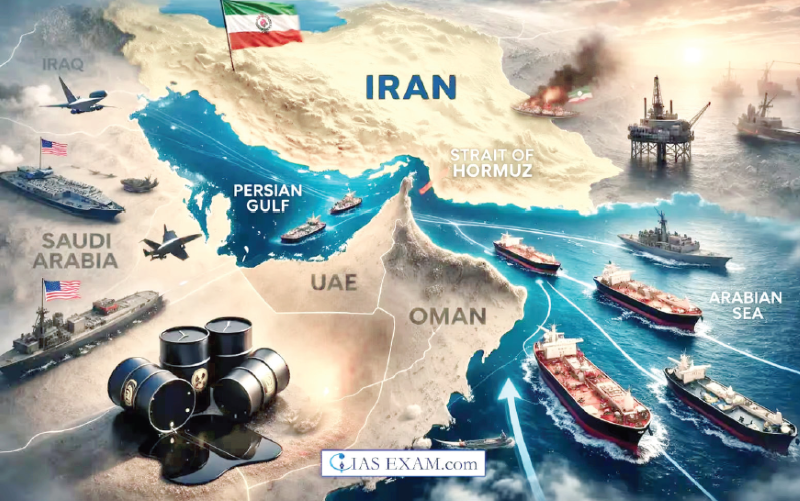
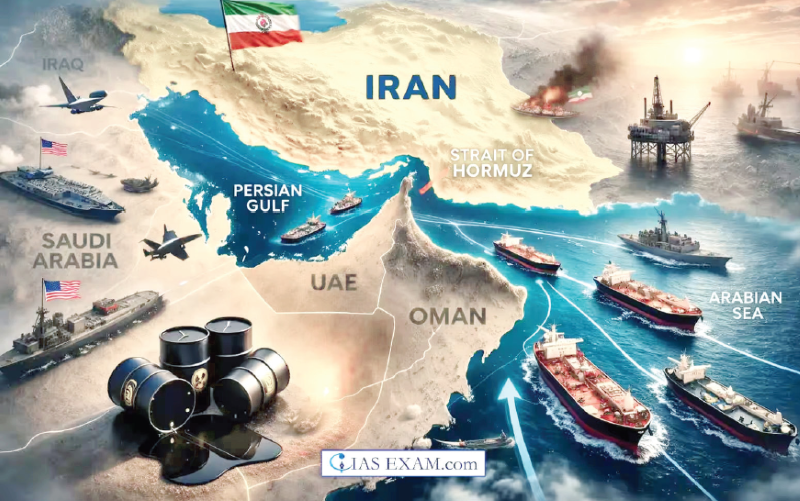
At the epicenter of this economic unraveling is the severe structural fracture of global energy security. The Strait of Hormuz is a vital maritime choke point responsible for the transit of roughly one-fifth of global oil and liquefied natural gas (LNG) supplies. Even as alternative logistics are desperately engineered, the structural damage is done. Brent crude futures immediately leaped by nearly 5% following the breakdown of the maritime truce, reawakening the specter of 1970s-style stagflation. European manufacturing sectors, already reeling from historically depleted energy reserves, are bracing for compounding surcharges on raw inputs, signaling an alarming, potentially irreversible wave of deindustrialization across the West.
The mechanics of the proposed 20% U.S. tariff add an unprecedented layer of financial strain to an already volatile market. Analysts warn that a 20% levy translates to an additional cost of roughly $16 on every single barrel of crude oil passing through the strait, or a staggering $32 million fee for a fully laden very large crude carrier (VLCC). This eclipses any previous transit or insurance fees historically managed in the region. By transforming an international waterway into a paid security zone, the U.S. administration is effectively imposing a massive new tax on global energy flows, forcing corporations to rethink the fundamental viability of standard shipping routes.
Beyond the immediate panic of the oil terminals, the true multi-year danger lies in the invisible erosion of corporate and consumer confidence. Markets thrive on predictability, but the modern supply chain cannot plan around a fluid naval blockade. Companies are no longer dealing with standard cyclical downturns; they are facing an environment where a single drone strike or an aggressively levied transit fee can overnight upend the cost of electronics, synthetic fertilizers, and industrial chemicals. This deep-seated uncertainty forces multinational corporations to permanently shelve long-term capital investments and divert capital toward building redundant, highly inefficient supply networks. When corporate giants prioritize mere survival and insular security over cross-border innovation, global productivity stagnates.
Simultaneously, this conflict has completely disrupted the playbook for global central banks, trapping monetary policy in a paralyzing vice. Financial institutions were tentatively navigating path corrections toward normalized interest rates. Now, forced to confront supply-side inflation that cannot be cured by tinkering with domestic borrowing costs, policymakers face a miserable paradox. Raising interest rates further to suppress energy-driven inflation risks crushing economies already hollowed out by high costs, while cutting rates to stimulate growth could cause inflation to spiral entirely out of control. This policy gridlock ensures that high capital costs will persist globally, suffocating the housing, technology, and emerging-market sectors that rely on affordable credit.
The economic fallout is particularly devastating for major Asian economies, which consume three-quarters of the energy transiting the strait. Countries like India, South Korea, and Thailand find themselves intensely vulnerable to these elevated import costs. India, for example, relies on imports for over 88% of its oil, with nearly half of its crude historically sourced from the Gulf. For these developing and manufacturing-heavy nations, every sustained dollar increase in the price of a barrel adds billions to national import bills, widening current account deficits and exerting downward pressure on domestic currencies. The crisis forces these states to aggressively hunt for alternative, politically fraught alliances to secure their foundational energy needs.
Adding to the chaos is the systemic inflation of secondary maritime costs, which economists argue could pose an even greater risk than the toll itself. Following recent missile strikes on commercial tankers, maritime insurance underwriters have exponentially raised war-risk premiums. Even if a shipping company avoids paying the U.S. transit fee directly, it must absorb astronomical freight rates demanded by vessel operators risking deployment to a volatile combat zone. These compounding logistical expenses inevitably trickle down to the consumer, inflating the baseline cost of everyday goods globally and ensuring that the financial impact of the war extends far beyond the gas pump.
Furthermore, the legal and diplomatic gridlock surrounding the U.S. mandate threatens to paralyze international maritime commerce altogether. The United Nations’ International Maritime Organization (IMO) has firmly pushed back against the plan, reiterating that there is zero legal basis under international maritime law to introduce mandatory tolls for transiting an international strait. If the U.S. military begins actively detaining or blocking commercial vessels that refuse to pay the 20% "reimbursement," it will trigger unprecedented legal disputes and retaliatory trade measures from allied and adversarial nations alike. Shipping lines may find themselves caught in an impossible crossfire between American enforcement and international law.
Iran’s fierce rejection of the U.S. mandate guarantees that the security environment will remain highly volatile. Tehran has dismissed the U.S. declaration, with Iranian officials sarcastically mocking the fee while asserting that Iran remains the true historical guardian of the waterway. More critically, Iran's military command has warned that any cooperation by neighboring Gulf states with the U.S. operation will be treated as an act of war. This escalatory posture heightens the risk of miscalculation, guaranteeing that asymmetric warfare—including drone swarms, cyberattacks on energy infrastructure, and sea-mine deployments—will remain a constant threat to global trade routes.
Ultimately, the long-term fallout of the U.S.-Iran war is accelerating a messy, polarized disintegration of the global order. As nations realize that standard international maritime protections can be abruptly replaced by unilateral blockades and mandatory "tributes," the foundational trust underpinning open globalization is dissolving. Major powers are pivoting toward protectionism, resource hoarding, and localized supply chains to shield themselves from external chokepoints. The economic scars of this war will outlast the current deployment of naval fleets; by the time the smoke clears over the Strait of Hormuz, the world will be left with a permanently more expensive, fragmented, and volatile global marketplace.








[[comment.comment_text]]