CBI probes FCRA violation against Sonam Wangchuk’s institution in Ladakh

 1 year ago
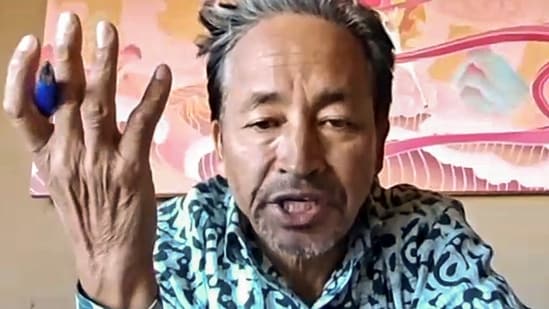
A Day after violence rocked Ladakh’s capital Leh leading to at least four deaths, the Centre seems to have asked the Central Bureau of Investigation (CBI) to make it official that it is holding an investigation against Climate activist Sonam Wangchuk’s institution over alleged FCRA violations.
Sources said that the Modi government caught napping with the popular protests in Leh has decided to deal with the issue in its typical style of defaming leaders. On the pattern of the farmers’ agitation, CAA protests and outbreak of ethnic violence in Manipur, the Modi-Shah duo is once again applying the same method of dealing with a popular protest. Instead of talking with the protesters, the Home Ministry has decided to defame Wangchuk and unleash force against protesters and agitators.
Unfortunately, the BJP led NDA government has not learnt any lesson from its mast mistakes and continue to use force against popular protests defaming its leaders, a senior BJP leader said.
An official of the investigation agency said the CBI has launched a probe into alleged violation of the Foreign Contribution (Regulation) Act against an institution founded by Sonam Wangchuk. The official added that the probe is not new and has been going on for some time; however, an FIR has yet to be filed in the case.
On the other hand, Wangchuk on today said that his imprisonment could create more problems for the government than his freedom and called the Home Ministry's act of blaming him for recent violent protests in Ladakh a "scapegoat tactic".
Reacting to the MHA's statement, which had blamed him for provoking the mob violence on Wednesday, Wangchuk said he is prepared to be arrested under the stringent Public Safety Act (PSA).
"I see they are building up a case to bring me under the Public Safety Act and throw me in jail for two years," he told media that "I am ready for that, but Sonam Wangchuk in jail may cause them more problems than free Sonam Wangchuk." The climate activist also said, "To say it (the violence) was instigated by me, or sometimes by Congress, is to find a scapegoat, rather than addressing the core of the problem, and this will lead us nowhere.
"They may be clever in making somebody else a scapegoat, but they are not wise. At this time, we all need wisdom rather than 'cleverness' because youths are already frustrated," said Wangchuk.
The activist strongly attributed the eruption of violence to anger over long-standing grievances, primarily the frustration among the region's youth and reasoned that the real cause is the "frustration of six years of unemployment and unmet promises at every level." He accused the government of misleading the public by claiming success on partial job reservations, noting that the main demands for Statehood and the extension of the Sixth Schedule to protect Ladakh's tribal status and fragile environment remain "untouched after five years of peaceful appeals.
Wangchuk said that by employing the "scapegoat tactic," the government is "not actually taking measures for peace," but instead taking steps that will "further aggravate" the situation by diverting attention from the people's core demands.
The statehood for Ladakh movement led by Wangchuk descended into violence, arson and street clashes in Leh on Wednesday, leaving four people dead and at least 80 injured, including 40 police personnel, officials said.
As the sun set on what is arguably the worst day of violence since 1989 in the cold desert region, Wangchuk called off his fortnight-long hunger strike to press for the demands, while authorities clamped curfew in the Leh district.
Earlier in the day, groups of youths, indulging in arson and vandalism, targeted the headquarters of the BJP and the Hill Council and set vehicles ablaze. Police and paramilitary forces, deployed in strength across the town, lobbed teargas shells to bring the situation under control, the officials said.
n a statement last night, the Union home ministry alleged that the mob violence was guided by the "provocative statements" of activist Wangchuk and certain "politically motivated" individuals, who were not happy with the progress made in the ongoing talks between the representatives of the government and Ladakhi groups. The Ministry said barring a few unfortunate incidents that happened early on Wednesday, the situation was brought under control by 4 pm and asked everyone not to circulate old and provocative videos in the media and social media.
"It is well known that the Government of India has been actively engaged with the Leh Apex Body and Kargil Democratic Alliance. Series of meetings were held with them through formal channel of High Powered Committee (HPC) as well as sub-committee and multiple informal meetings with leaders," the statement issued on Wednesday had said.
"However, certain politically motivated individuals were not happy with the progress made under HPC and have been trying to sabotage the dialogue process," it said.
The next meeting of the High Powered Committee has been scheduled for October 6. Meetings are also planned for September 25 and 26, with leaders from Ladakh.
Terming the events as heart-wrenching, Lt Governor Kavinder Gupta had said everyone has the right to speak up in a peaceful manner in a democratic system, but what happened was not spontaneous and was the result of a conspiracy. “We will not spare those people who have spoiled the atmosphere here.” Curfew has been imposed as a precautionary measure to prevent more casualties, he had said.


[[comment.comment_text]]