Adulteration: Food Market Unsafe Despite Stringent Laws

 an hour ago
The seizure of thousands of quintals of synthetic khoya, adulterated paneer, ghee and contaminated sweets across the country ahead of Diwali has exposed serious weaknesses in India's food safety system. Raids and confiscations may avert immediate danger, but the real challenge is to create a regulatory environment in which adulterated products have no place in the market.
Festivals in India are synonymous with joy, warmth and shared celebrations. During Diwali, exchanging sweets is not merely a tradition; it is an expression of affection, goodwill and social harmony. Yet, ironically, the very sweetness that makes these celebrations special is increasingly being tainted by the poison of food adulteration.
It is becoming increasingly difficult for consumers to trust the quality of sweets displayed in markets, the snow-white khoya, attractive-looking paneer and products sold in the name of pure ghee. The large-scale seizures of fake and contaminated food products during pre-festival inspections across different parts of the country are not simply instances of criminal misconduct by a handful of traders. They point to a serious public health crisis involving weaknesses in food safety regulation, administrative oversight and consumer protection.
Special enforcement drives conducted ahead of Diwali 2026 by state Food Safety and Drug Administration (FSDA/FDA) departments and under the regulatory framework of the Food Safety and Standards Authority of India (FSSAI) have exposed the alarming scale of the problem. Thousands of quintals of khoya, paneer, sweets, ghee and other food products were seized across Delhi, Uttar Pradesh, Haryana, Maharashtra, Bihar, Rajasthan and Madhya Pradesh.
In some places, consignments of rotten khoya were discovered; elsewhere, sweets were being prepared amid flies and mosquitoes. Investigations also exposed the sale of vegetable fat as pure ghee and the repackaging of expired food products for resale. This raises a fundamental question that when India already has food safety laws, regulatory institutions and a network of testing laboratories, why does the food reaching ordinary households, particularly during festivals, remain unsafe?
The Business of Adulteration Behind Festival Sweets
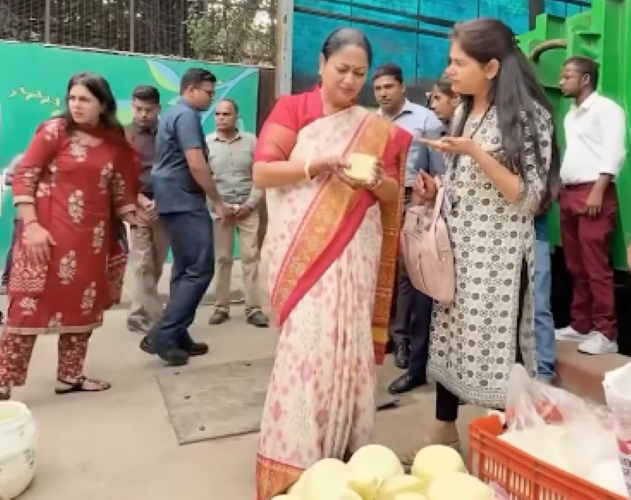
The crackdown at Delhi's Mori Gate Khoya Mandi illustrates the gravity of the problem. During an inspection, food safety officials seized and destroyed approximately 7,000 kg of rotten and foul-smelling khoya. Reports indicate that a total of 10,660 kg of fake and substandard khoya has been destroyed in the capital. Of the 44 samples sent for testing, 35 reportedly failed to meet prescribed standards. This means nearly 80 per cent of the samples examined were non-compliant.
Uttar Pradesh witnessed similarly extensive enforcement operations. In Baghpat, a consignment of 30 quintals of synthetic khoya being transported to Delhi was intercepted. In Ghaziabad, officials seized and destroyed 1,200 kg of spoiled paneer and 1,600 kg of adulterated khoya near a toll plaza. Another 1,750 kg of substandard gram flour was found in Dhaulana.
In Noida, more than 760 kg of sweets stored under unhygienic conditions were destroyed, while 450 kg of boondi was seized. Kanpur authorities recovered nearly 12 quintals of spoiled sweets prepared using artificial colours. In Lucknow's Para area, an illegal manufacturing unit was sealed after 802 kg of synthetic khoya was recovered. A further consignment of 300 kg of suspicious paneer was seized in Deoria
These incidents demonstrate that food adulteration is neither confined to a particular city nor restricted to individual markets. It operates through extensive networks involving production, storage, transportation and distribution.
In Haryana, a statewide campaign reportedly resulted in the destruction of more than 50,000 kg of adulterated sweets and fake paneer. Testing found 30 samples unsafe and another 140 substandard. In Rajasthan's Sri Ganganagar district, 16,394 litres of fake ghee were seized.
In Patna, Bihar, inspections across areas such as Boring Road, Fraser Road, Buddh Marg, Kankarbagh and Bairiya uncovered stale paneer, burnt refined oil, suspicious ghee and food products being sold by unlicensed establishments. Approximately 360 kg of ghee was also seized during these operations.
Maharashtra's situation deserves particular attention. The state Food and Drug Administration reported seizing more than 3,098 tonnes of suspected and adulterated food products valued at approximately Rs 63.45 crore across different divisions. A total of 9,667 food establishments were inspected. As many as 954 licences were suspended and 25 cancelled for regulatory violations.
In Bhiwandi, Ambernath and Padgha, authorities acted against warehouses involved in repackaging expired food products for sale in the market, resulting in the arrest of 34 accused persons. The production of synthetic khoya, the sale of vegetable fat as ghee and the use of aluminium foil in place of silver leaf on sweets expose the extent to which commercial greed has compromised food safety.
These figures cannot be viewed merely as evidence of administrative success. Every seized consignment is also an indication that unsafe food had entered, or was about to enter, the supply chain and reach unsuspecting consumers.
Food Adulteration Is More Than Fraud
Food adulteration is often treated as an economic offence or an instance of consumer fraud. Its actual consequences, however, are far more serious. Consuming rotten khoya, contaminated paneer, fake ghee and sweets prepared in unhygienic conditions can cause anything from acute food poisoning to long-term health complications. Harmful bacteria, viruses, fungi, chemicals and toxic substances can enter the human body through contaminated food, causing diarrhoea, vomiting, infections and other serious illnesses. Certain chemical adulterants may have gradual effects, damaging vital organs over prolonged periods.
According to the World Health Organization (WHO), contaminated food causes approximately 600 million illnesses and 420,000 deaths worldwide every year. Children under five account for nearly 40 per cent of the total burden of foodborne diseases. The consequences extend beyond individual health. Foodborne illnesses place additional pressure on families, increase public healthcare expenditure and reduce economic productivity. Food safety, therefore, must be recognised as an essential component of public health rather than merely a matter of commercial regulation.
Strong Laws, Weak Enforcement
India does not lack a legal framework for food safety. The Food Safety and Standards Act, 2006, sought to consolidate several fragmented food laws under a comprehensive regulatory structure. It established the FSSAI, responsible for laying down science-based standards and regulating the manufacture, storage, distribution, sale and import of food products. Its central objective is to ensure that consumers have access to safe and wholesome food.
The regulatory framework involves both the Centre and state governments. While the FSSAI establishes national standards and regulatory guidelines, state food safety departments are responsible for inspections, sample collection, seizures and enforcement at the local level. The law also provides for licensing and registration of food businesses, laboratory testing of samples and penalties and prosecution for violations. However, the existence of legislation and its effective implementation are two different matters.
According to government figures, 170,535 food samples were analysed across the country during the financial year 2024-25. Of these, 34,388 failed to meet prescribed standards. In other words, approximately 20.2 per cent of the samples examined were found to be non-compliant.
Section 59 of the Food Safety and Standards Act provides penalties for the manufacture, storage, sale and distribution of unsafe food. Depending on the seriousness of the offence and the harm caused, the law provides for imprisonment and fines. Where serious injury is caused, imprisonment can extend to six years. In cases resulting in death, the punishment ranges from a minimum of seven years to life imprisonment.
If food adulteration continues to surface repeatedly despite such provisions, the problem lies less in the absence of legislation and more in weaknesses in enforcement, monitoring and prosecution.
Raids Are Necessary, but They Cannot Be a Permanent Solution
Large-scale inspections ahead of festivals serve an important purpose. They prevent contaminated products from entering the market and create a deterrent against violations. However, limiting food safety enforcement to special campaigns during festive seasons is neither a sustainable nor a forward-looking policy. If inspections slow down once the festive season ends, adulteration networks may simply return to business as usual.
Maharashtra offers an important example. The inspection of 9,667 establishments, suspension of 954 licences and cancellation of another 25 indicate extensive administrative action. But the real success of the campaign will depend on whether permanent improvements have been made, whether legal proceedings against offenders have been completed and whether the same violations recur in these establishments. The long-term impact of enforcement matters far more than the number of raids conducted.
India's food supply chain is extensive and complex. Food products pass through several stages, from village-level milk collection centres to wholesale markets, processing units, warehouses and retail outlets. Khoya manufactured in one state can easily find its way into markets in another. The seizure of synthetic khoya being transported from Baghpat to Delhi illustrates the interstate dimension of this network.
This requires strengthening food traceability systems so that the origin and movement of food products can be tracked at every stage. Digital records and effective information-sharing mechanisms between food safety departments of different states are essential. Whenever an adulterated consignment is detected, the entire network behind it should be identified and investigated.
More Laboratories, but Greater Reliability Is Essential
The government has taken steps to expand the food testing infrastructure. According to information presented in Parliament in March 2026, the FSSAI had notified 252 food testing laboratories for analysing food samples. In addition, 24 referral laboratories were available for testing appellate samples. A network of 305 mobile food testing vehicles, known as 'Food Safety on Wheels', had also been deployed across 35 states and Union Territories. This is undoubtedly a positive development.
Samples collected from rural and remote areas must be tested without unnecessary delays. Reports should be delivered promptly, and the findings must translate into effective action against offenders. Mobile testing laboratories can play a particularly useful role in this process. They can facilitate preliminary testing in markets, wholesale mandis, fairs and local food establishments. However, preliminary screening should not be treated as conclusive scientific evidence. Wherever necessary, samples must be sent to notified laboratories for detailed analysis.
The Challenge of Honest Business
Food adulteration is driven not merely by the intention to deceive consumers but also by an economic model built around minimising costs and maximising profits. Producing khoya and sweets from pure milk requires time, labour and investment. In contrast, products manufactured using inferior raw materials, vegetable fats and synthetic substances can be brought to market at significantly lower costs.
When consumers are presented with two similar-looking products and make purchasing decisions primarily on price, adulterators gain an unfair competitive advantage. The biggest losers are often honest businesses that invest in hygiene, quality ingredients, testing and safe storage. Effective food regulation, therefore, is not anti-business. It is fundamental to ensuring a fair and competitive marketplace.
Accountability Must Extend Beyond the Government
Obtaining an FSSAI licence or registration does not mean that a food business has fulfilled its obligations. In reality, its responsibilities begin there. Ensuring the quality of raw materials, access to clean water, hygienic production facilities, personal hygiene among employees, temperature control, safe packaging and compliance with expiry dates must be integral to every food business.
Consumers also have an important role to play. While purchasing sweets, they should check packaging, manufacturing and expiry dates, and details of the manufacturer. They should avoid products displayed in unhygienic conditions, sweets with unusual colours or smells and food prepared in suspicious surroundings. However, consumer awareness cannot become an excuse for the government to dilute its regulatory responsibilities. Ordinary citizens neither have the scientific expertise to test every food product nor the means to obtain complete information about the supply chain.
Safe Food Is a Right, Not a Privilege
India's food safety challenge must be understood in the context of an essential principle that safe food is not a privilege reserved for affluent consumers or those who dine in expensive establishments. A daily-wage worker buying food from a roadside vendor, a small shopkeeper, a rickshaw driver or a low-income family has exactly the same right to safe food as someone dining in an upscale restaurant. Low prices cannot become a justification for poor quality or unsafe products.
The WHO has warned that contaminated food can cause more than 200 diseases worldwide. Food safety, therefore, is inseparable from public health, nutrition, social justice and economic development.
The success of India's food safety system should not be measured by how many thousand quintals of khoya are destroyed before Diwali, how many shops are sealed or how many licences are suspended. True success will come when such extensive raids are no longer necessary during every festive season.
It will be achieved when consumers can purchase sweets without apprehension, trust the quality of milk and dairy products, and when food businesses understand that adulteration will neither allow them to evade the law nor give them an unfair advantage over honest competitors. Strict action against those who poison the sweetness of festivals is essential. But an even greater priority is to build a food safety culture in which adulteration is treated not as an ordinary business risk but as a serious social offence.
Food is not merely a means of satisfying hunger, yet it is the foundation of life and health. In a country where food is so deeply connected with culture, tradition and social relationships, compromising its purity cannot be acceptable. The lamps lit in Indian homes during Diwali will truly symbolise prosperity and happiness only when the sweets served at the dining table are equally safe.
(The writer is a senior Delhi-based journalist and political analyst. Views are personal.)






[[comment.comment_text]]