The Erosion of Collegiality: How the Supreme Court’s Form 6 Disavowal Exposes an Institutional Crisis

 an hour ago
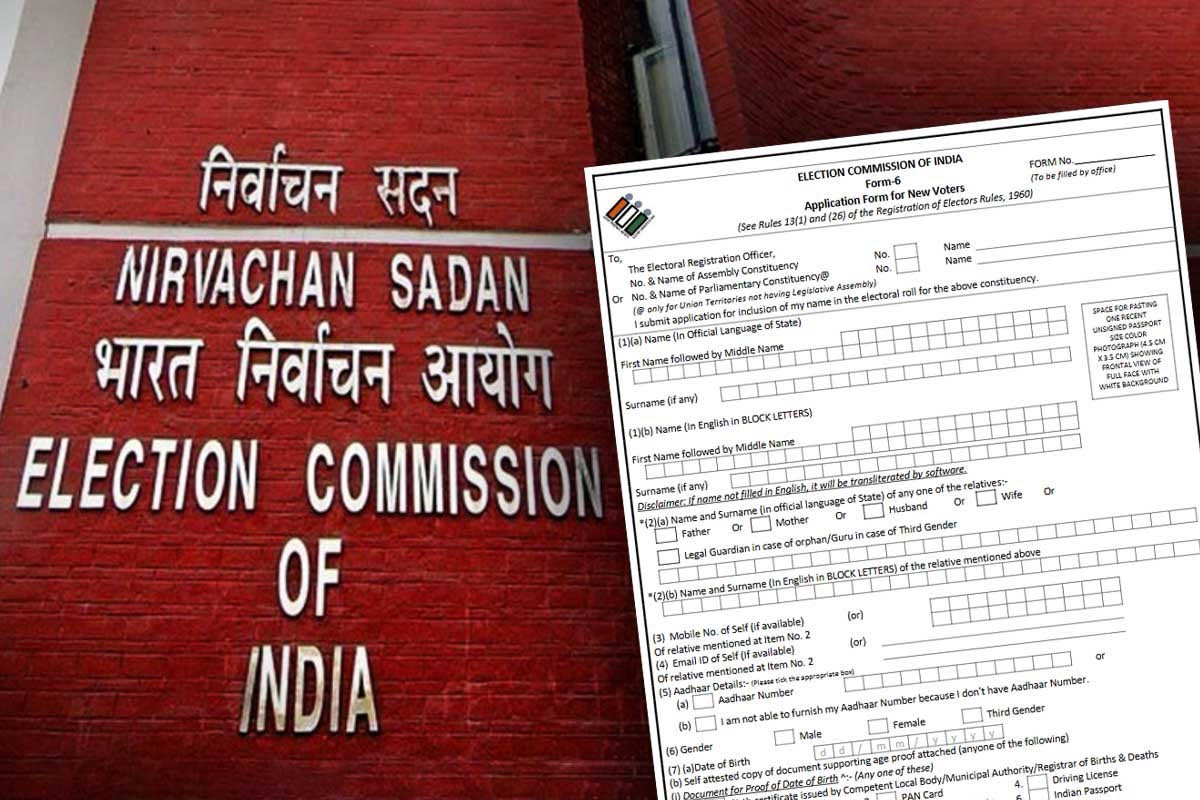
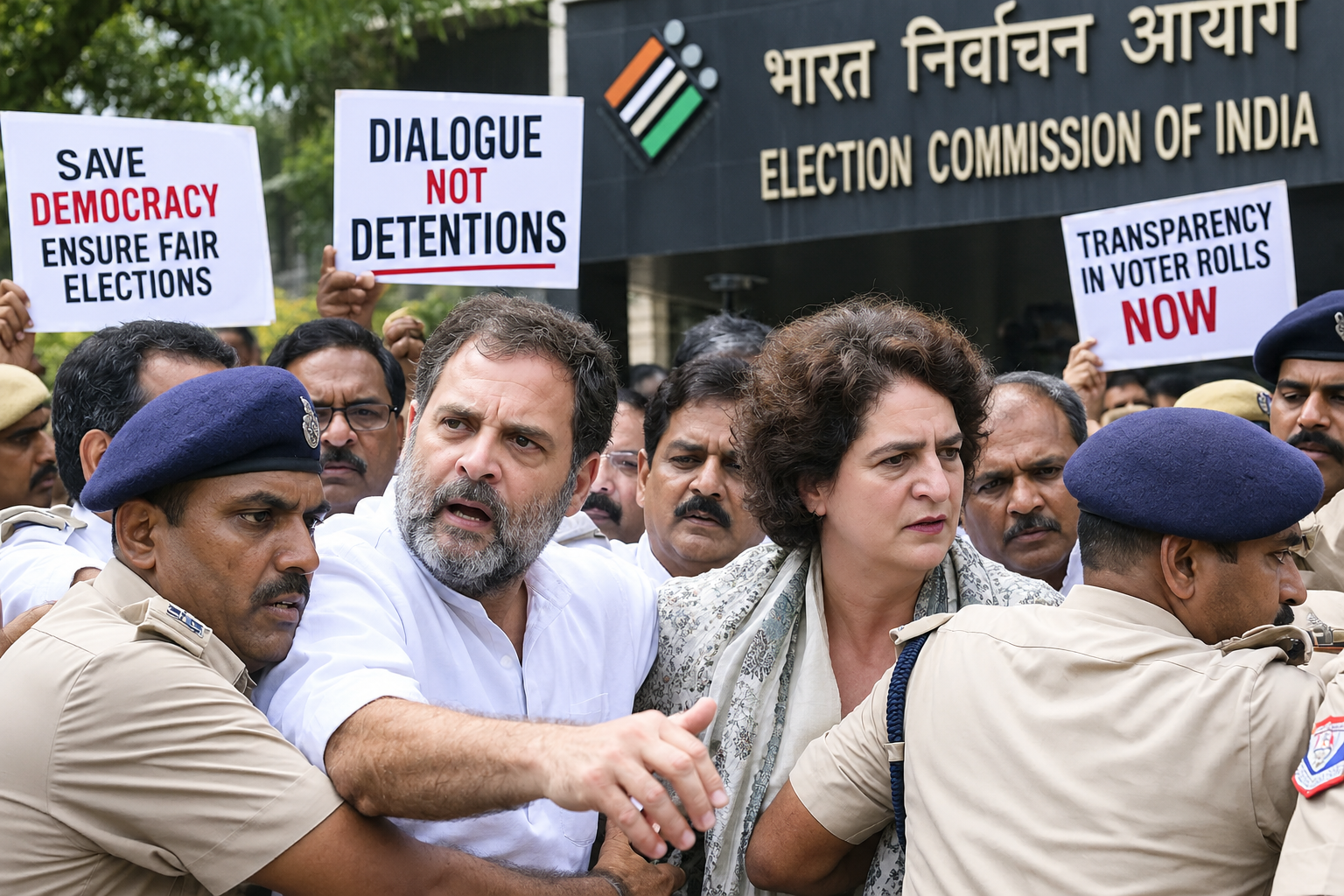
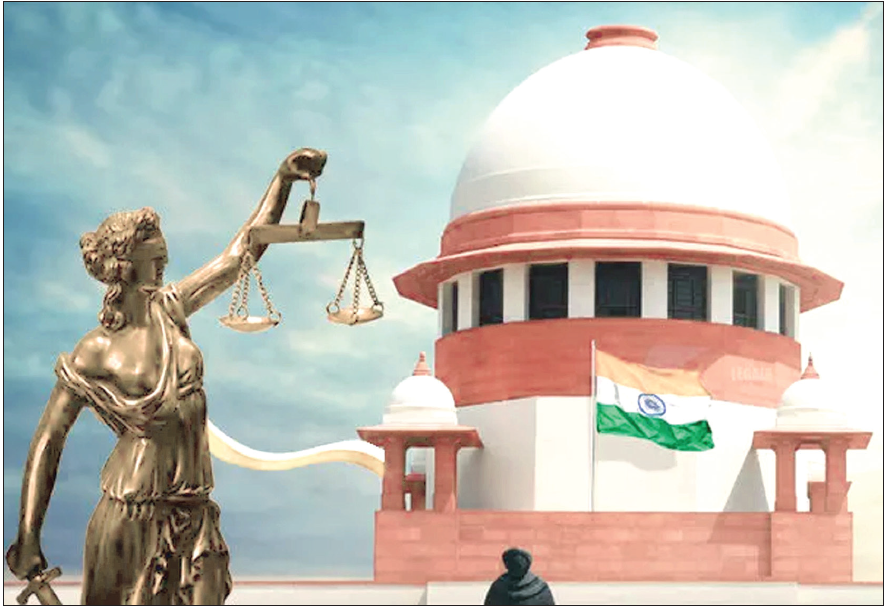
The foundational architecture of modern democracies rests on a delicate premise: the institutions tasked with managing public trust must themselves operate with absolute structural integrity. When the inner workings of such bodies begin to fracture, the tremors are felt across the entire constitutional framework. This reality took centre stage as a three-judge bench of the Supreme Court, led by Chief Justice of India Surya Kant, delivered a sharp, unambiguous oral observation that dismantled a core institutional defence. The apex court explicitly distanced itself from controversial alterations made to Form 6—the gateway application form used by citizens to register as new voters.
In a firm and clarifying declaration, the bench stated, "We are making it clear, any modifications to Form 6 have not been made by us." This judicial disavowal does far more than correct a bureaucratic misstatement. It exposes deep internal rifts, raises urgent questions about unilateral decision-making at the highest levels of election management, and challenges the procedural legalities surrounding the ongoing Special Intensive Revision (SIR) of electoral rolls.
The Background of Internal Dissent
The controversy over Form 6 cannot be understood in isolation from the internal friction brewing within the Election Commission of India over the past year. Serious questions began surfacing following detailed disclosures regarding systemic internal objections within the multi-member commission. These accounts revealed that Election Commissioners Dr. Sukhbir Singh Sandhu and Dr. Vivek Joshi had repeatedly recorded formal, written dissents on at least 14 separate occasions spanning a ten-month period between November 2025 and August 2026.
At the centre of their objections were decisions, software alterations, and administrative guidelines executed during the SIR process without the knowledge, recommendation, or collective concurrence of the full commission. Crucially, reports highlighted that for a period of over four months—from May to September 2026—no formal full-commission meetings were convened. Instead, orders were routinely issued unilaterally, bypassing the standard operational protocols of circulating predefined agendas and recording official post-meeting minutes. The modification of Form 6 to include new, unapproved questions linked directly to the intensive revision process became the flashpoint of this administrative overreach, drawing severe criticism regarding the legality of the process followed.
A Disowned Defiance and the Press Release Puzzle
In the wake of public and political scrutiny regarding internal dissent, the poll panel attempted to mount a defensive narrative. In a formal press release, the commission asserted that the modified declaration attached to Form 6 had been explicitly upheld and validated by the apex court, pointing back to a prior judgment concerning the Special Intensive Revision exercise in Bihar. This assertion sought to weaponize judicial authority as a shield against accusations of procedural deviation.
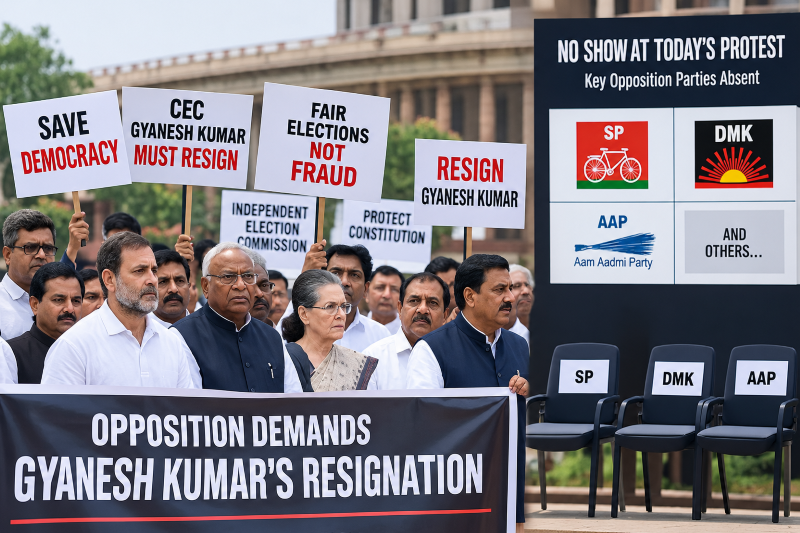
However, during the recent writ petition hearings challenging the administrative actions and seeking the suspension of Chief Election Commissioner Gyanesh Kumar, this narrative collapsed. By explicitly clarifying that the modified Form 6 had received no such judicial stamp of approval, the Supreme Court effectively dismantled the commission's public defense. The court’s rejection of this claim transforms the issue from a dispute over administrative formatting into a much more serious inquiry into institutional truthfulness. The apex court's refusal to let its prior rulings be used to justify unauthorized bureaucratic changes shifts the burden of proof entirely back onto the poll body's leadership.
Decoding the Statutory Principle of Unanimity
The legal arguments presented before the bench strike at the very concept of a multi-member commission. Petitioners raised fundamental questions about whether a Chief Election Commissioner possesses the statutory authority to act entirely alone when altering constitutional instruments like voter registration forms. Under Section 18 of the Chief Election Commissioner and other Election Commissioners Act, the law dictates a clear cooperative framework: the commission must consistently strive to make decisions unanimously. In cases where a consensus cannot be reached among the three members, the statute mandates that the matter must be decided by a clear majority.
By allegedly sidelining the written objections of two sitting commissioners and freezing out full-commission meetings, the operational methodology under scrutiny appears to have turned this statutory mandate on its head. The Supreme Court took cognizance of this structural distortion, reinforcing that the law requires joint institutional decision-making rather than individual command. To ascertain exactly how these changes were integrated into the online registration systems, the bench has directed the commission to produce its official internal records and files, signalling a deep judicial intent to uncover who authorized the modifications.
Future Implications for the Supreme Court Hearings
The immediate fallout of the Supreme Court's observations will heavily influence the trajectory of the ongoing legal battles. While the bench declined an interim plea to suspend the Chief Election Commissioner at this initial stage, it has opened a broad avenue of accountability by issuing formal notices to both the Election Commission and the Central Government. The ongoing hearings will now inevitably transition into an intense, evidence-based scrutiny of the poll panel's internal records.
Furthermore, this case will force a critical judicial examination of Section 18 of the newly amended Act, particularly focusing on the clauses that seek to grant blanket immunity from prosecution to election officials for actions taken during their tenure. Petitioners have strongly argued that arbitrary modifications resulting in voter deletions and subsequent disenfranchisement cannot fall under the umbrella of official immunity. They contend that actions lacking multi-member authorization constitute a distinct category of personal liability. If the court ultimately rules that unilateral actions void the protections of official immunity, it could fundamentally redefine the scope of administrative accountability for top bureaucrats.
Restoring Constitutional Equilibrium
Beyond the immediate legal manoeuvres, the broader implications of this case concern the constitutional health of the republic. The electoral roll is not merely an administrative database; it is the definitive catalogue of sovereign citizens. Any unauthorized, legally questionable alteration to the mechanism by which a citizen claims their right to vote risks undermining the democratic mandate.
The Supreme Court’s refusal to act as a convenient cover for questionable administrative changes serves as an essential check against institutional drift. By demanding records and reaffirming the necessity of collective decision-making, the judiciary has signaled that wide constitutional discretion is not a licence for unregulated authority. As the hearings progress, the focus must remain on restoring complete transparency, enforcing statutory compliance, and ensuring that the body tasked with guarding Indian democracy operates in strict accordance with the law.
(The author is a former member of the history faculty at St. Xavier’s College, Mumbai.)


[[comment.comment_text]]