Balendra Shah’s Brief India Visit: What Did Nepal Gain?
 39 minutes ago
Balendra Shah, a structural engineer, former rapper and former Mayor of Kathmandu, assumed power in March 2026, riding a wave of youth-led protests that brought down the controversial government of K.P. Sharma Oli. The decisive mandate secured by his Rastriya Swatantra Party (RSP), which had earlier been an ally of the Maoist government led by Pushpa Kamal Dahal (Prachanda), reflected the growing frustration among Nepal’s Gen-Z population with traditional political leadership.
The younger generation had become increasingly disillusioned with politicians accused of pursuing vested interests while neglecting critical issues such as corruption, unemployment, inflation, economic stagnation and the migration of young Nepalese to India, the Middle East and other countries in search of livelihoods.
Shah first attracted public attention through his anti-corruption themes as a rapper. Later, during his nearly four-year tenure as Kathmandu’s Mayor, he earned a reputation for taking unconventional initiatives. His political rise symbolised a challenge to Nepal’s established political order and raised expectations of a new approach to governance.
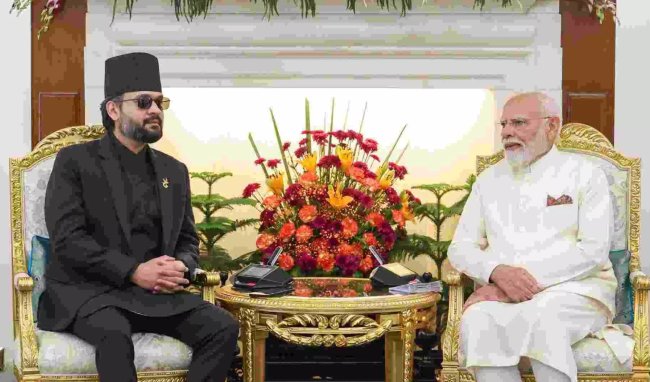
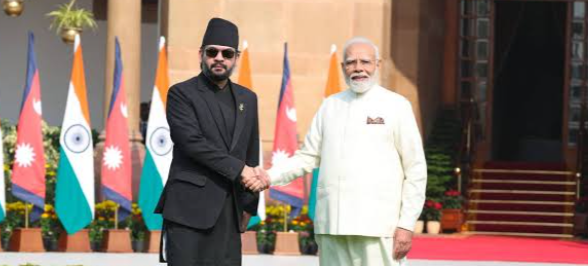
His visit to India marked his first bilateral meeting with Prime Minister Narendra Modi since assuming office. The two leaders had, however, spoken over the telephone on a few occasions, including during the devastating floods in Nepal in August. Lasting barely 26 hours, Shah’s visit was among the shortest by a Nepalese Prime Minister to India. The reasons for the compressed schedule remain unclear. He also chose not to visit his alma mater in Bengaluru.
External Affairs Minister S. Jaishankar’s meeting with Shah soon after his arrival was an important diplomatic curtain-raiser. Jaishankar reiterated India’s commitment to its special friendship with Nepal and expressed confidence that the discussions with Prime Minister Modi would provide fresh momentum to bilateral relations. Several agreements, virtual inaugurations and foundation-stone ceremonies were also scheduled.
A BROAD AGENDA FOR BILATERAL COOPERATION
India remains Nepal’s largest trading, transit and investment partner. Accordingly, the bilateral agenda covers several areas, including energy cooperation, disaster management, hydropower development, infrastructure, connectivity, railway and air services, and educational opportunities through a proposed new IIT campus in Nepal.
Other priorities include strengthening the startup ecosystem, developing infrastructure and expanding sporting exchanges. Nepal also enjoys duty-free access to the Indian market, an important advantage for its economy. The challenge before both governments is to translate these opportunities into tangible outcomes that improve the lives of ordinary citizens.
THE BACKGROUND TO THE DELAYED VISIT
Traditionally, newly appointed Nepalese Prime Ministers have visited India soon after assuming office, although some have occasionally chosen China for their first foreign engagement. Shah, however, appeared reluctant to undertake overseas visits during his initial months in office. His ministers and senior officials also maintained a cautious approach towards foreign engagements.
The diplomatic process consequently required considerable patience. Shah reportedly declined even a meeting with the visiting Indian Foreign Secretary, creating uncertainty about the direction of bilateral relations. His subsequent meeting with External Affairs Minister Jaishankar during his first foreign visit was therefore significant. It helped break the ice and opened the way for substantive engagement with India’s political leadership.
NEPAL’S MESSAGE AT THE UNITED NATIONS
Before travelling to India, Shah visited New York to attend the annual United Nations General Assembly session. He also sought to draw international attention to the devastating glacier-related floods that had struck Nepal in August.
He argued that climate-related disasters often originate beyond the borders of countries that suffer their consequences and that affected nations should not be left to bear the entire financial burden. His emphasis on climate justice and compensation for vulnerable countries was an important intervention. For a mountainous country like Nepal, particularly exposed to global warming and glacial lake outbursts, the issue has considerable national and international relevance.
DEVELOPMENT ASSISTANCE: A SIGNIFICANT OUTCOME
Nepal was reportedly seeking financial assistance of US$1-2 billion from India or international development agencies. Discussions ahead of Shah’s Delhi visit reportedly covered grants, loans and possible lines of credit. The Government of India ultimately announced a financial assistance package of Rs 15,000 crore, equivalent to approximately Rs 24,000 crore in Nepalese currency. This emerged as one of the significant outcomes of the visit.
Both Prime Ministers reaffirmed the historic people-to-people relationship between the two countries, rooted in shared history, faith, culture and civilisational connections. The ten pillars of a proposed Joint Vision Document are expected to provide a framework for expanding bilateral cooperation. The assistance package is particularly important for Nepal, whose developmental requirements are substantial and whose geographical limitations make infrastructure development and access to international markets challenging.
INDIA’S CONSISTENT SUPPORT TO NEPAL
India has traditionally responded promptly whenever Nepal has faced major crises. Prime Minister Narendra Modi was among the first international leaders to congratulate Shah following his electoral victory. India also provided emergency relief material after the devastating glacier-related floods. Its assistance following the 2015 earthquake was another significant example of the longstanding partnership.
These gestures reflect a relationship that extends beyond formal diplomatic engagements. Nevertheless, Shah’s initial reluctance to engage with India had raised questions about the future direction of bilateral ties. The Indian Ambassador’s interactions with the Nepalese leadership, followed by the visit of the Indian Army Chief, may also have helped create a more conducive atmosphere for high-level engagement.
EIGHT AGREEMENTS AND DEVELOPMENT INITIATIVES
The visit resulted in eight agreements covering healthcare, Ayurveda, criminal investigation, forensic sciences and civil servant training. Other initiatives included cooperation relating to the South Asian Satellite, a proposed express train service, and the inauguration or foundation-stone laying of several infrastructure projects.
These included integrated check posts, a hydropower project and a petroleum terminal, besides the dedication of a cross-border petroleum pipeline. Collectively, these initiatives underline the importance of connectivity, energy security, trade facilitation and institutional cooperation.
A SHORT VISIT WITH SUBSTANTIVE OUTCOMES
To sum up, the visit may have been short, but it appears to have been diplomatically productive for the 36-year-old Nepalese Prime Minister, who had completed eight months in office. Shah may not have had an opportunity to raise sensitive issues relating to Lipulekh Pass, the Kali River and other unresolved border concerns. Nevertheless, the financial assistance package, eight agreements and infrastructure initiatives provided him with substantial outcomes.
He must also recognise that Nepal, being a landlocked country, faces geographical, economic and strategic constraints. Its development aspirations are closely linked to constructive relationships with its immediate neighbours, particularly India.
Maintaining friendly relations with neighbouring countries is not merely a diplomatic preference but an economic and strategic necessity. Shah’s strong electoral mandate should be utilised to deliver the governance reforms and economic opportunities expected by Nepal’s young population. It remains to be seen how China views India’s substantial development assistance and the initiatives aimed at strengthening trade, travel, transit and connectivity between the two neighbours.
Ultimately, the real measure of Shah’s India visit will not be the number of agreements signed or announcements made, but their effective implementation. A stable, prosperous and cooperative Nepal is in the mutual interest of both countries.
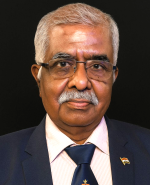
(Author is a former Chief Secretary in the Sikkim state govt. An extensively traveled member of bureaucracy, he also served in several key positions in the Government of India.)



[[comment.comment_text]]