The Bangladesh Crisis: A Critical Imperative for India’s Neighbourhood First Policy

 9 months, 2 weeks ago
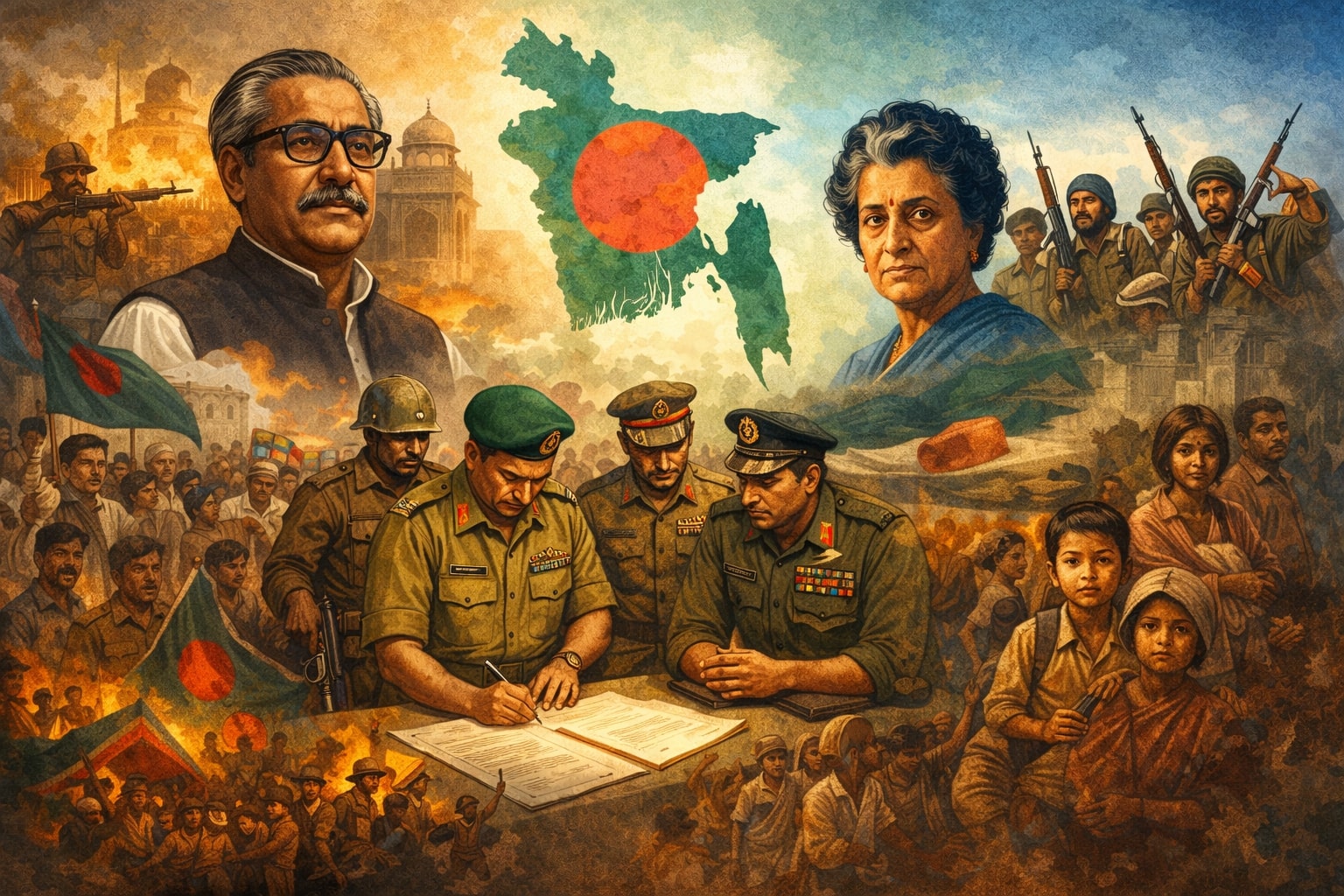
Bangladesh came into existence in 1971 as a result of nine month armed conflict of Mukti Vahini of the then East Pakistan with Army of West Pakistan Linguistically and culturally East Pakistan had never felt comfortable under Pakistan rule. Rise of Bangla nationalism took birth owing to West Pakistan's imposing and inhuman attitude.
India supported Mukti Vahini from behind sensing a human crisis which became open with the passage of time. India was keenly watching deterioration in relations between Late Mujibur Rahman and General Yahya Khan, President of Pakistan.
After months of indirect war, document of surrender of over 70,000 odd Pak troops was signed by General A.A.K. Niazi of Pakistan on December 16, 1971. Leadership of Field Marshal Manekshaw and Lt. Gen. J.S.Arora braved the volatile situation and ultimately foundation of a néw nation was laid. But India had to grapple with unwanted impact of 30 lakh refugees on its economy for long.
Assassination of Bang Bandhu
Not many years passed by when Bang Bandhu Sheikh Mujibur Rahman was assassinated by his own troops and thus a gory chapter began in the history of the new nation.
General election after election took place and two prominent ladies Sheikh Hasina Wajed of Awami League (AL) and Khaleda Zia of Bangladesh National Party(BNP) took turns in running the Government.Tenure of former was longer in three and four spells.While she had a tilt towards India, latter became averse to India gradually.The new nation also saw Army rule for some durations.
Anti-Hasina Tirade
While China has always exploited a fragile situation in Bangladesh, Pakistan was waiting in the wings to hit at right time. Probably it was reflected through anti-Government, student led agitations against Sheikh Hasina's Government in July and beginning of August ,2024.
Ultimately, Hasina flew to India on August 5 and sought asylum. Present interim Government headed by Muhammed Yunus, Senior Advisor, took oath on August 8, 2024. New Government, by not liking India, are being led by students and Islamic elements.
November 2025 Court Verdict Against Sheikh Hasina
Sheikh Hasina has faced many Court verdicts since her ouster. But her recent conviction by an " International Crimes Tribunal", Dhaka for alleged crimes against humanity has baffled U.N. Secretary General and many others.
She has been awarded death sentence for crimes which led to deaths, injuries and several arrests which supposedly happened during violent crackdown on students led protests in July-August ,2024. She has been also awarded five year prison for indulging in corruption.
Hasina has claimed that trials were rigged and politically motivated. Her party has been also banned from participating in February 12 polls. By doing so, the interim Government has effectively removed her as a contender in elections.It also aims at dismantling her long standing dominance.Her supporters, however, have argued that verdicts are politically motivated.
U.N.Secretary General in a statement on November 18 ,called it a matter of deep concern, as it rejects use of death penalty in all circumstances, regardless of nature of allegations involved.
Emergence and Death of Hadi of Inquilab Mancha
Ever since General Elections slated for February 12, 2026 were announced, hectic political activity had begun in Bangladesh.Time of sixteen months taken by the interim government to announce elections has also baffled India. Delhi not only wants free and fair elections but also inclusive one, so as to include A.L. also.
Students and youth responsible for ouster of Sheikh Hasina together with leaders of B.N.P. and Jamaat-e-Islami (J-e-I)have also swung into action.One prominent youth leader to emerge was 32 year old, Sharif Osman Hadi, Spokesman of Inquilab Manch party (Platform For Revolution). But he made his intentions clear to contest as an Independent. Apart from being active in July-August agitations ,he was emerging as a fierce critic of Sheikh Hasina in general and India in particular.
While starting his campaign in Central Dhaka, he was shot in his head on December 12 allegedly by two masked men riding a bike.They sped away after the crime. It has been alleged that they had fled to India.
Widespread violence erupted thereafter.Offices of Prathmo Alo, a Bangla daily and Daily Star, an English daily were torched. Both are supposedly supporters of Md.Yunus government. Daily Star reportedly, did not want repeat of elections held in 2014, 2018 and 2024. One cultural organisation too had to bear the brunt. Bapi, a Hindu worker was lynched in Mymensingh for no fault of his and his burnt body was hung.
In the meanwhile,Hadi was flown to Singapore for advance medical care. But he ultimately died after six days of treatment. Arrival of his body led to further violence.Critics of Yunus and Sheikh Hasina both have blamed Md.Yunus for perpetuation of violence.
Interestingly, both BNP and JeI have stated that attack on two dailies was a planned attempt to obstruct forthcoming polls.
India has sounded Bangladesh to maintain law and order and ensure holding of peaceful polls. It would be also in the interest of India if no impact was envisaged on conduct of polls in West Bengal in April-May 2026.
Need to Identify and Deport Bangladeshis
Violent Developments in Bangladesh have caused grave concern to the Hindus and other minorities who fear marginalization and further rise in violence against them in a religion driven political climate. Inflows of Hindu refugees may rise if more threat situations are created against them and secular minded people.
During an informal survey conducted by Delhi Police in 1994, there were not less than six lakh Bangladeshis in country's capital alone. One can imagine their mind boggling number now in Delhi, other metros and elsewhere.
In U.P., door to door identification has been initiated but it is mostly targetting Muslims from crime and terrorism angles. Hindu Bangladeshis are very much also working in many states, bereft of any permit, more so, after rapid fall in their percentage in Bangla Desh from 15 to 7, at present.
In view of the fact that Bangladeshis are not only working but have mingled very well with the mainline, it is not easy to identify them and if identified they are not easy to deport. Many are married to Indian nationals and most of them have acquired basic documents of identification.Onus is not on them, rather, it is on the officials who ensure
their 'issue' by unfair means from time to time.
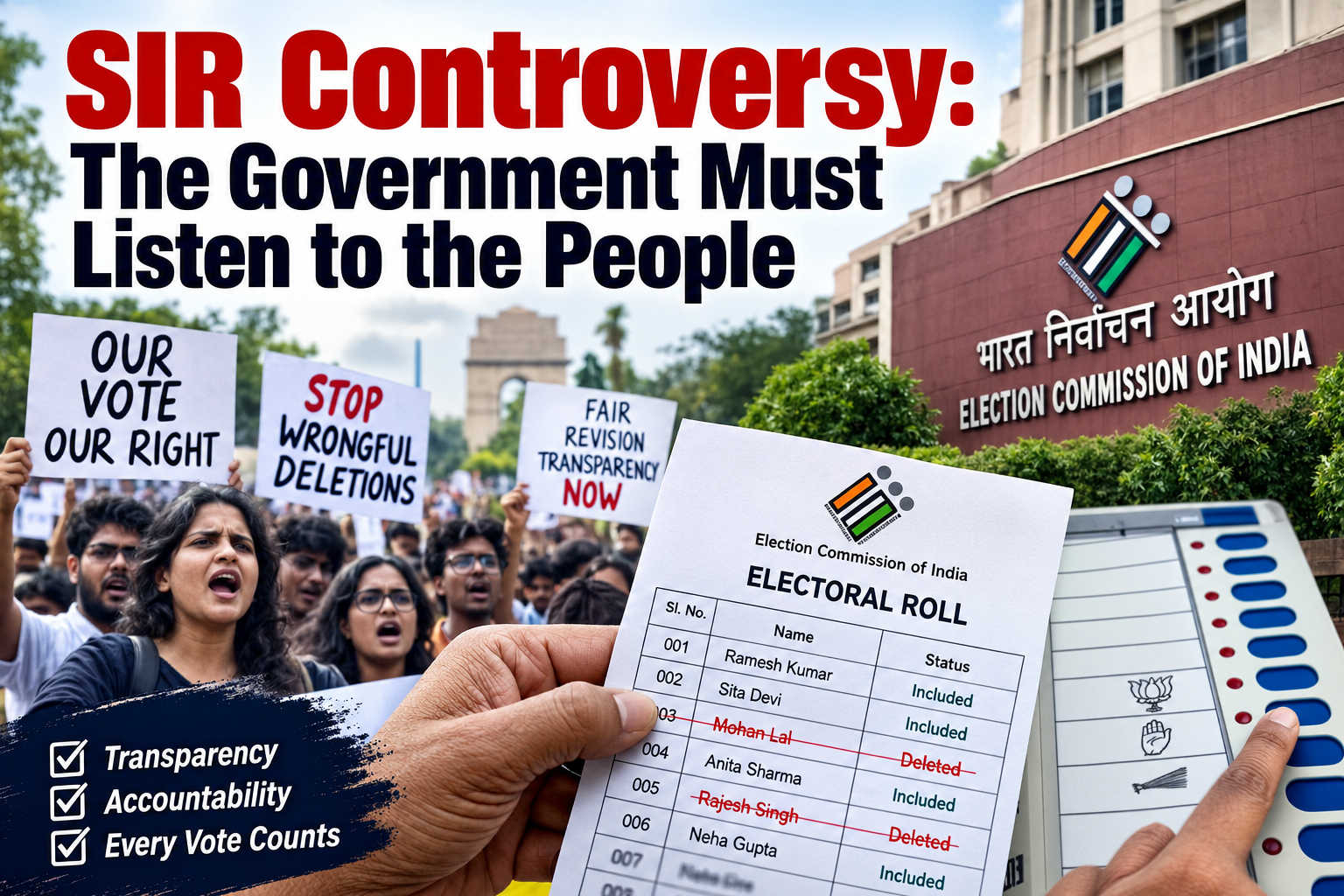
As far as Assam is concerned, Immigrants (Expulsion from Assam) Act ,1950, dormant for years, applies.The formal process of deportation entails a hand over to the authorities of the other country after mutual verification that an individual is a national of the other country. After identification, expulsion orders are issued, directing them to 'remove' themselves from India within 24 hours. But this process is cumbersome and time consuming. Names of lakhs of Bangladeshis were deleted during Special Intensive Revision of electoral roll in Bihar and five other states but what action has been taken against them is in everybody's knowledge.
Possible Fallout
Events of July and August 2024 leading to ouster of Sheikh Hasina and her forced refuge/asylum in India showed utter failure of our external intelligence personnel.
Events following declaration of February 12 General elections and last fortnight one's hovering around slain Sharif Osman Hadi, further go on to prove that Bangladesh, no longer has a secular identity. It is trying at the same time, to further legitimatise its ad hoc government led by Mohanmed Yunus.
In the process, B.N.P., now led by Tareque Rahman, son of Khaleda Zia and J-e-I will be gaining more political space day by day.
A.L. may still have a following but they get regularly vanquished by open Islamic elements safeguarded by students and ruling Government.
Militant elements already on the alert, could exploit porous portions of 2500 kms long international border more than before.
India may be also pressurised more to extradite Sheikh Hasina. Idea is also to present a new image of Bangladesh to international community.
Steps Needed by India
Though official stand of India shows that India remains committed to the best interests of Bangladesh and its people and will 'engage' constructively with all the stake holders, yet we NEED to open our cards MORE.
India has not made any clear commitment on request for extradition of Sheikh Hasina.Instead it has said so far that it has taken 'note of it.' Such a stand supposedly taken to maintain stability in bi- lateral relations while not interfering in internal affairs of Bangladesh, however, may result into more harassments and murders of Hindus.
Bapi, an innocent workman was lynched in Mymensingh, serious injuries were caused to Moteleb Shikder, leader of NCP in Khulna, one Hindu girl was hurt elsewhere and further burning of two innocent Hindu girls took place.
Further on 24th December, massive blasts rocked Dhaka leaving one dead and several injured.
Safety to Our Diplomatic Missions
In addition, India has to ensure safety to its high Commission in Dhaka, four Assistant Commissions in Chittagong, Rajshahi, Khulna and Sylhet and posts in Bangladesh in keeping with diplomatic obligations.It may be noted that on 21st December, visa operations at India's Assistant Commission at Chittagong were suspended. In retaliation thereof and also due to justifiable protests outside Bangladesh High Commission, Bangladesh temporarily suspended consular and visa services until further notice.
But it is felt that this tit for tat move may not lead to reduction of unrest in Bangladesh.
How long Sheikh Hasina's extradition has to be kept in abeyance ,that has to be decided fast. Backed by U.S.A. and obliquely China, Enemy is knocking at India, both from West and East. Rather, for a couple of months they seem to be in unison.
When Nepal, in view of its fragile political situation, will take a turn that is also not known.
Decisive and drastic steps are, therefore, essential or else, situation is bound to deteriorate further.
(Author, a former civil servant, has served in different capacities at the Ministry of Home Affairs and national security establishment. Views are personal.)

[[comment.comment_text]]