Sheikh Abdullah’s Enduring Imprint on Kashmir’s Political Soul

 21 minutes ago
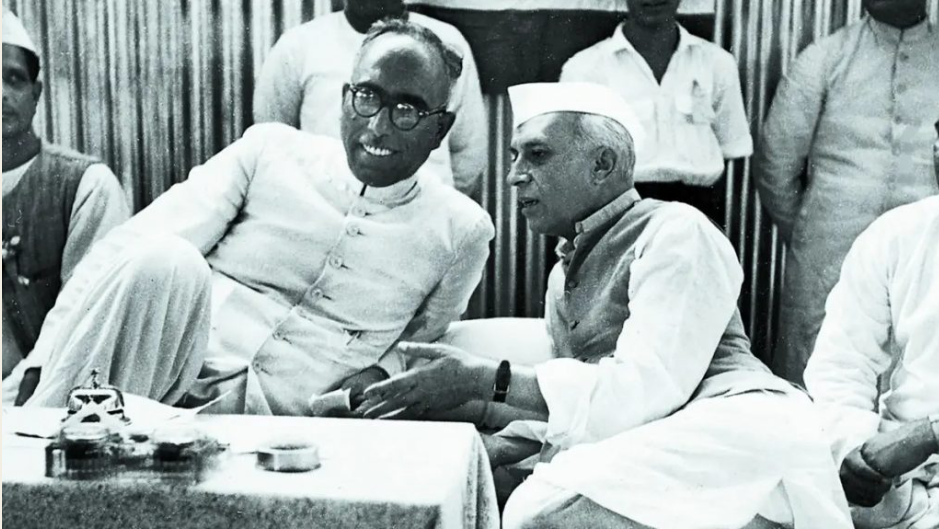
Sheikh Mohammad Abdullah occupies a singular place in the political history of Jammu and Kashmir. Few leaders anywhere on the subcontinent inspired such affection, provoked such debate, or shaped their society as deeply. Born in 1905 in Soura, Srinagar, he was the product of modest circumstances. Yet he emerged as the most compelling Kashmiri figure of the twentieth century, a man who channelled the aspirations and anxieties of an entire people with unusual clarity.
His early years coincided with the last phase of Dogra rule, a period marked by severe political exclusion and economic hardship for large sections of Kashmir’s population. Abdullah’s education at Aligarh Muslim University played a decisive role in sharpening his intellect and widening his horizons. But it was the lived reality of Kashmir that shaped him most. He returned not in search of personal advancement but to challenge a system that had constrained his people for decades. This sense of moral responsibility remained the defining element of his leadership.
In 1932, he helped establish the Muslim Conference, which offered Kashmiris their first organised political platform. A decade later, recognising the need for a broader, inclusive movement, he guided the transition to the National Conference. It was a bold shift at a time when the subcontinent was drifting along sharply communal lines. Abdullah’s conviction that Kashmir’s political future had to rest on secular foundations was a significant departure from prevailing trends and reflected his belief in a shared civic identity.
The Naya Kashmir manifesto of 1944 became the ideological cornerstone of his politics. It offered an ambitious blueprint for a democratic, socially just and forward-looking society. With its focus on land redistribution, educational reform, gender equality and labour rights, it anticipated many of the ideas that later shaped South Asia’s post-colonial discourse. For many Kashmiris, this document transformed Abdullah from a political leader into an emblem of hope and renewal.
The “Quit Kashmir” movement of 1946 marked the beginning of his ascent to mass popularity. His call for the end of Dogra autocracy resonated deeply across the Valley. The state’s response was swift and harsh. Abdullah was arrested, but his imprisonment only elevated his standing. In the public imagination, he became the voice of the voiceless, the man who dared to challenge entrenched power on behalf of ordinary Kashmiris.
The turmoil following the Partition of India placed extraordinary pressures on Jammu and Kashmir. As tribal militias advanced and the princely state hesitated, Abdullah emerged as the most influential Kashmiri leader capable of navigating the crisis. After the state’s accession to India, he assumed office as the first Prime Minister of Jammu and Kashmir. His government moved quickly to implement historic land reforms, the most significant of which was the abolition of absentee landlordism through the “land to the tiller” policy. These reforms were transformative. They freed thousands of farming families from generations of feudal dependence and altered the social balance of rural Kashmir in ways that still endure.
Yet leadership in a conflict-prone region comes with difficult choices and profound pressures. Abdullah’s disagreements with the Indian leadership over Kashmir’s political future deepened over time. In 1953, he was dismissed from office and arrested on charges that many Kashmiris continue to view with bitterness. His imprisonment became a symbol of broken trust, a turning point that reshaped political sentiment in the Valley. Over the next two decades, he remained at the centre of Kashmir’s turbulent politics, navigating periods of detention, negotiation and renewed mobilisation.
Despite these upheavals, Abdullah retained a unique place in Kashmiri society. His steadfastness, his ability to articulate the emotional and political concerns of the people, and his refusal to be silenced made him an enduring figure of resistance. For many, he represented the unresolved questions at the heart of Kashmir’s political story.
In 1975, after long and often fraught discussions, he signed the Indira–Sheikh Accord and returned to power as Chief Minister. The accord drew mixed reactions. Admirers saw it as a pragmatic step to restore elected government and stabilise a region worn down by uncertainty. Critics viewed it as a compromise that diluted earlier commitments. But the larger arc of his life cannot be reduced to a single decision. His legacy stretches across decades of reform, institution-building and political awakening. He helped define Kashmir’s modern identity by expanding access to education, promoting social mobility and fostering a culture of political engagement.
Sheikh Abdullah’s influence continues to reverberate. His achievements and contradictions, his strengths and his flaws, all form part of the Valley’s collective memory. He embodied Kashmir’s resilience and its complexities, its yearning for dignity and its capacity for hope. Above all, he remained an incorrigible Kashmiri: a leader who refused to abandon his land, his people or his principles, even when the costs were immense.
Shiekh’s proximity with Nehru and Mahatma Gandhi was personal. When Gandhi Ji visited Kashmir Shiekh was in Jail but he asked Begum Abdullah and his daughter Khalida Ji to look after and take care of him during his visit.
As we look back on his life, we recognise not just a towering political figure but a chapter of Kashmiri history in human form. His story compels reflection. His reforms changed lives. His courage stirred a generation. His choices sparked debate that still continues. Sheikh Mohammad Abdullah lives on in the memories of his people, in the institutions he shaped and in the unending conversation about Kashmir’s past and future.
(Author is a noted senior Supreme Court’s advocate and an accomplished leader of Kashmiri Pandits.)







[[comment.comment_text]]