A Spark Already Lit: The End of Sonam’s Fast Won't Quench the Fire

 5 hours ago
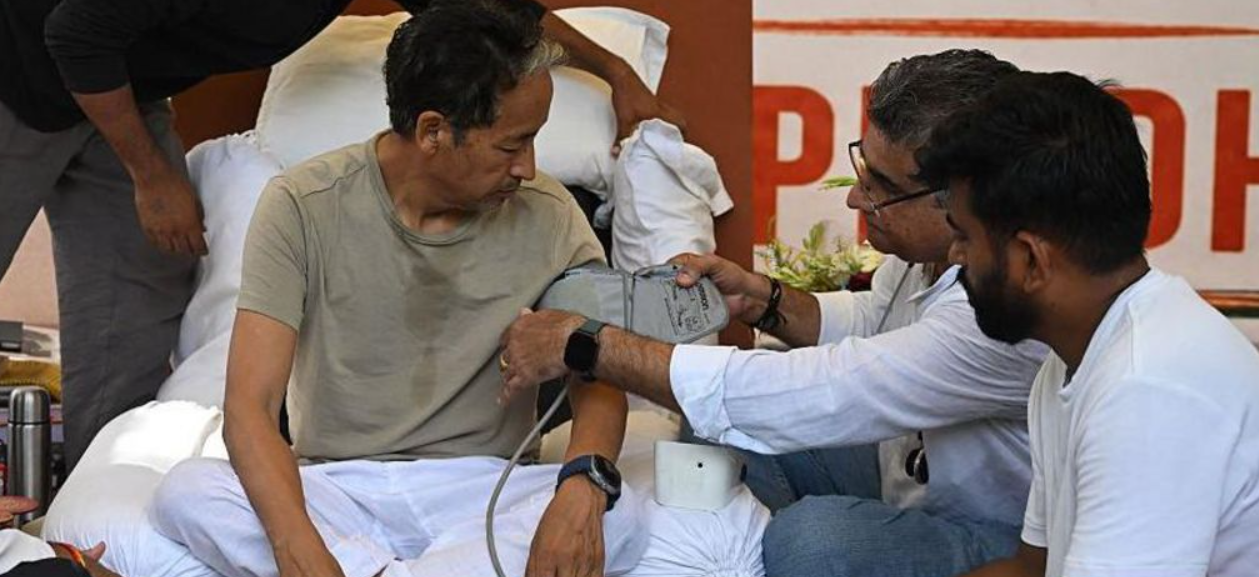
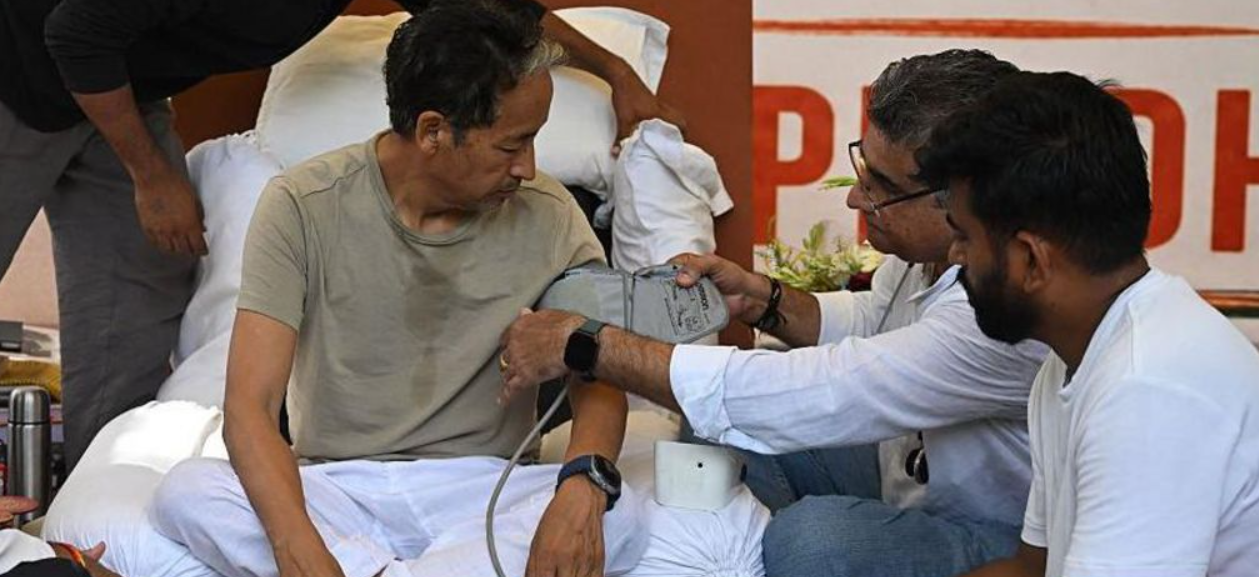
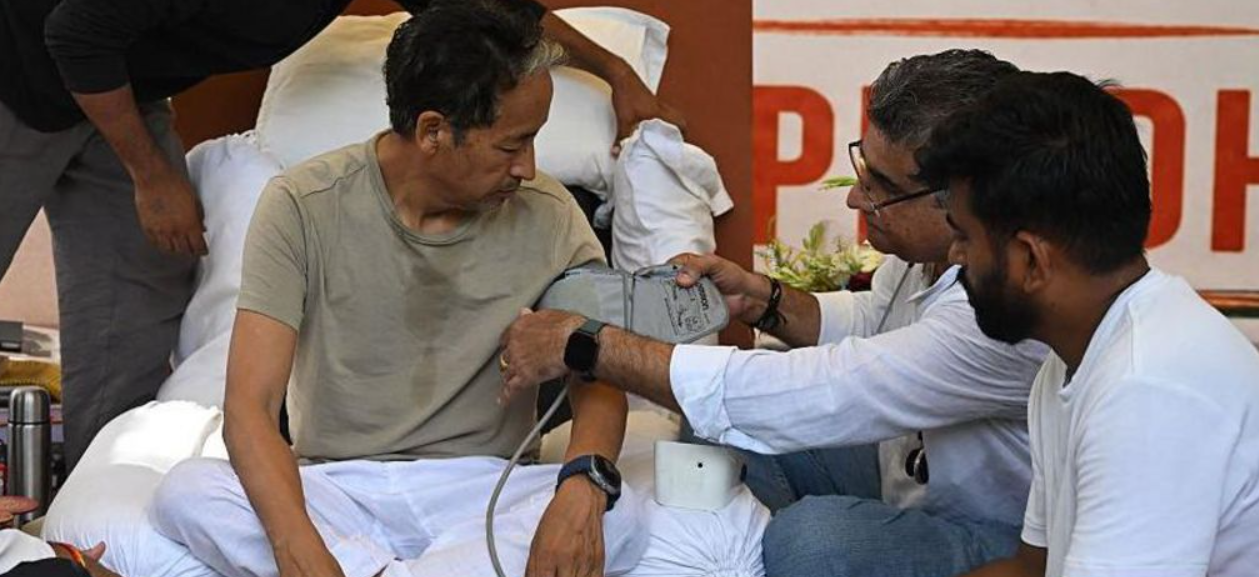
It is the 18th day as of 16th July 2026. For eighteen days, Sonam Wangchuk the visionary engineer, the educator who taught an entire generation that learning could be joyful, the man who inspired millions to think innovatively has been lying on a makeshift bed at Delhi’s Jantar Mantar. He has consumed nothing but salt water. According to medical bulletins released by the youth-led Cockroach Janta Party (CJP), his body weight has plummeted by nearly 9 kilograms, dropping dangerously to 57.15 kg. He is weak, dizzy, and close to emaciation. He is fasting to demand systemic accountability and the resignation of Union Education Minister Dharmendra Pradhan following the unprecedented irregularities and leaks surrounding the NEET-UG competitive exams. Yet, from the highest corridors of power, there is only a deafening, cold silence.
Eighteen days of a man sitting on a hunger strike, demanding accountability not for himself, but for students, for education, for a system that continues to fail those it is meant to protect. For many, these exams are not just assessments they are gateways to opportunity, stability, and dignity. When that system fails, it does not just delay results; it destabilizes lives. His demand for resignation is rooted not in politics, but in the principle of responsibility that leadership must answer when institutions under it fail repeatedly. And yet, there is no meaningful response. Spend enough time observing how this country responds to dissent, and a disturbing pattern emerges. We wait. We delay. We ignore. And then, when it is too late, we mourn.
I do not want Sonam Wangchuk to become another name we remember only after his death. Because we have seen this story before. Professor G.D. Agrawal also known as Swami Gyan Swaroop Sanand was not an ordinary man. He was a respected environmentalist, a former IIT Kanpur professor, and the first member-secretary of India’s Central Pollution Control Board. A man who had spent decades shaping environmental policy in this country chose, in his final act, to sit on a hunger strike for the Ganga. During his fast, he wrote deeply personal letters to the Prime Minister, reminding him of promises made to protect the river.
There was no formal response during the fast. After 111 days, he died. And only then did the country respond with condolences, with tributes, with respect that came too late to matter.
This is what should terrify us…
Because today, Sonam Wangchuk stands at a similar inter section not just physically, but morally. A teacher, an innovator, and someone who has fundamentally changed how education is perceived for countless students. From building alternative education models in Ladakh to making learning experience and meaningful, his work has had a tangible impact on the ground. And yet, here he is on a hunger strike. Not for recognition. Not for power. But for accountability. India’s education system is under immense pressure. According to National Crime Records Bureau (NCRB) data, over 13,000 students die by suicide in India every year. While the reasons are complex ranging from academic pressure to personal circumstances the intensity of competition and systemic uncertainty plays a significant role in shaping student stress. When examination processes become unreliable, the consequences are not administrative they are human. What makes this moment even more disturbing is not just the protest itself, but the response to it or the lack of one. Silence from leadership is not neutral. It is a decision. It signals what matter sand what does not. And when a man is willing to risk his life for students, and the system still does not respond, it raises a question that should make all of us uncomfortable: What does it take for this country to listen? Because this is no longer about one individual. This is about a pattern of neglect. We have normalized a system where people must push their bodies to the edge just to be heard. Where urgency is only acknowledged after tragedy. Where the moral burden is placed on individuals to sacrifice themselves just to demand basic accountability.
And even then, it is uncertain whether anyone will act. I find myself thinking about the contradiction we live in. We celebrate educators in speeches. We quote them in textbooks. We call them “nation builders.” But when a real teacher sits in protest, asking for accountability in education, we look away. There is something deeply unsettling about that. And what angers me the most is not just the inaction it is the predictability of what comes next. If something happens to Wangchuk, there will be statements. There will be condolences. There will be carefully worded tributes acknowledging his “contribution.” But none of it will matter. Because no amount of respect after death can replace the responsibility of action while someone is still alive. We cannot afford to repeat what happened with Professor Agrawal. We cannot afford to reduce yet another life into a posthumous narrative of sacrifice. Because at some point, this stops being negligence and starts becoming something far more serious. When a society watches someone deteriorate in front of its eyes, when institutions remain unmoved despite clear warning signs, when power chooses silence over response responsibility is no longer abstract. It becomes collective. And it becomes moral. I am not asking for perfection. I am not even asking for immediate solutions. At this point, even acknowledgment would matter. A conversation. A response that signals that the system is willing to engage, willing to listen, willing to value life over silence. Because what is at stake here is not just one man’s life. It is the credibility of our institutions. It is the faith people place in governance. It is the message we send to every citizen who dares to speak up. If that message continues to be silence, then we are not just failing individuals we are eroding the very idea of accountability.
And history has shown us what happens when that erosion goes unchecked.
We have seen it in neighbouring countries moments where prolonged frustration, institutional indifference, and public anger converge into something uncontrollable. Movements that begin as peaceful demands but escalate when people feel unheard for too long. Look across our borders. The lessons of history are written in the recent, explosive unrest of our neighbours. We saw what happened in Bangladesh when student protests against an unfair quota system were met with state arrogance and heavy-handedness; it triggered a massive, uncontrollable wave of public fury that altered the country's political landscape overnight. We remember the historic shifts in Nepal when the public was pushed past the brink of endurance. When a government systematically crushes the hope of its youth and ignores its most respected moral voices, the resulting anger does not disappear. It mutters under the surface until it turns into something harsh, sudden, and rewriting.
India is a young country, but its youth are exhausted. They are tired of paper leaks, structural failures, and a total lack of empathy from the leaders who represent them. If Sonam Wangchuk’s fast ends in tragedy, the grief will quickly curdle into a furious rage that no political machinery will be able to contain. The government must break its silence, initiate an honest dialogue, and show the accountability that a democracy demands. The country is simply not ready for the darkness that will follow if they choose to look away.
Those are not sudden eruptions. They are slow burns. They are built on silence. They are built on ignored warnings. And they are built on moments exactly like this. This is one of those moments. We still have time. We still have a chance to respond differently to listen before it is too late, to act before regret becomes the only language left. Because if we fail again if we allow another life to slip away while we watch, debate, and delay then we are not just witnessing a tragedy. We are participating in it.
And this country is not ready for what follows when that kind of anger finally finds its voice because we have already seen what happens when silence turns into unrest in places like Bangladesh and Nepal. And when that line is crossed, history does not ask who was responsible. It only records that everyone was watching.






[[comment.comment_text]]