From MGNREGA to VB-G RAM G: A Quiet Reset of Rural Employment Policy
 9 months, 3 weeks ago
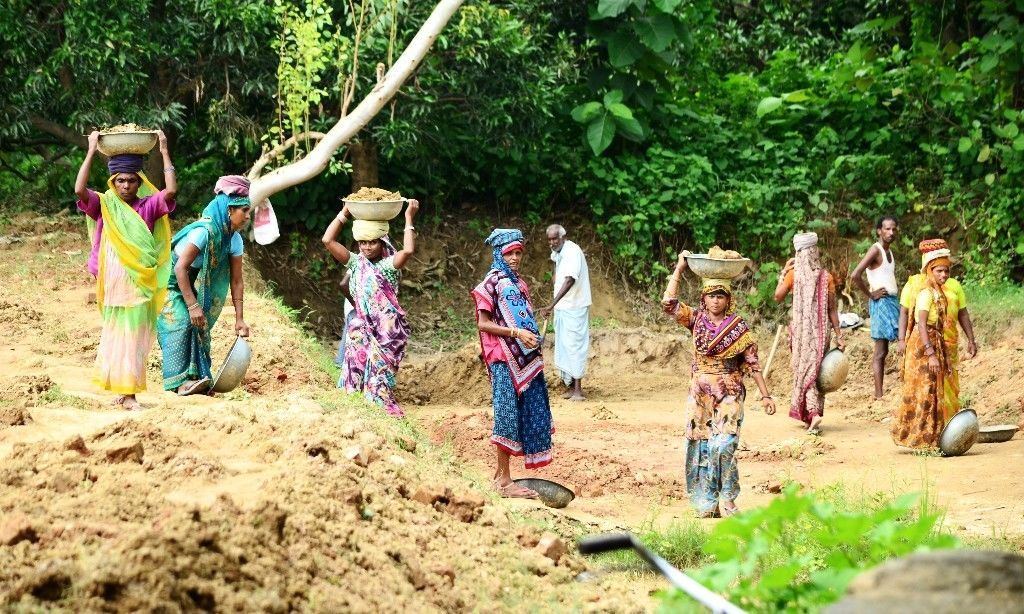
For nearly two decades, the Mahatma Gandhi National Rural Employment Guarantee Act (MGNREGA) has occupied a central place in India’s rural economy and welfare architecture. Enacted in 2005, it marked a fundamental shift in how the Indian state approached poverty and unemployment by recognising wage employment as a legal right rather than a discretionary welfare measure. At a time when rural distress, agrarian uncertainty, and informal labour dominated the countryside, MGNREGA emerged as a statutory assurance that the state would act as an employer of last resort. Today, with the circulation of a draft bill proposing the Viksit Bharat Rozgar evam Aajeevika Guarantee Mission (Gramin)—or VB-G RAM G Bill, 2025—the Union government appears ready to replace this landmark legislation with a new framework aligned with its long-term vision of “Viksit Bharat 2047”.
The proposed change has triggered wide discussion not only because it seeks to repeal a well-known and deeply entrenched law, but because it signals a broader reorientation of rural employment policy. The move raises questions about the balance between rights and efficiency, welfare and productivity, decentralisation and mission-mode governance. While the government presents the new scheme as an upgrade suited to a transforming economy, critics warn that replacing a rights-based law carries risks that go beyond administrative restructuring. Understanding this shift requires a careful examination of what MGNREGA represented, what VB-G RAM G proposes, and what the transition could mean for rural India.
From Legal Right to Development Mission: Redefining the State’s Obligation to Rural Workers
MGNREGA’s most distinctive feature was its legal enforceability. Any rural household willing to perform unskilled manual labour could demand work, and the state was obligated to provide up to 100 days of employment in a financial year. The law mandated that employment be provided within 15 days of demand, failing which the applicant became eligible for an unemployment allowance. This provision, though unevenly implemented, established an important principle: the burden of unemployment was not solely on the individual, but also on the state.
Over time, MGNREGA evolved into a multi-dimensional instrument. Beyond providing wages, it contributed to the creation of rural infrastructure such as roads, ponds, canals, water harvesting systems, and land development works. In drought-prone and rain-fed regions, these assets supported agricultural resilience and groundwater recharge. During periods of economic disruption—most notably the Covid-19 pandemic—the scheme acted as a shock absorber, absorbing surplus labour when urban employment collapsed and migrant workers returned to villages in large numbers. Demand under MGNREGA reached record levels during this period, underlining its role as a safety net in times of crisis.
At the same time, the scheme faced persistent operational and fiscal challenges. Delayed wage payments became a recurring complaint, eroding the credibility of the employment guarantee. Budget allocations often lagged behind demand, forcing state governments to ration work or delay payments. There were concerns about corruption, inefficiencies, and uneven quality of assets created. Critics also argued that the scheme remained largely confined to unskilled manual labour and did little to enhance skills or long-term employability.
It is against this backdrop that the proposed VB-G RAM G Bill seeks to redefine the state’s role. Rather than positioning the government primarily as an employer of last resort, the new framework frames rural employment as part of a development mission. The language of the draft bill emphasises alignment with national goals, productivity enhancement, and livelihood security. The shift from a rights-centric law to a mission-oriented framework suggests a recalibration of state obligation—from guaranteeing work on demand to designing structured pathways for employment and livelihoods.
Supporters of this approach argue that India’s rural economy has changed significantly since 2005 and that policy must evolve accordingly. They contend that a mission-mode framework allows for better coordination across sectors, clearer outcomes, and integration with broader development initiatives. Critics, however, caution that diluting the rights-based character of employment guarantees could weaken accountability and reduce the ability of rural workers to claim work as a matter of entitlement rather than policy priority.
Livelihoods Over Labour: Can Productivity Replace the Security of Guaranteed Work?
One of the most significant departures from MGNREGA in the proposed VB-G RAM G framework lies in its emphasis on livelihoods alongside employment. While MGNREGA focused almost entirely on unskilled manual labour, the new scheme explicitly speaks of rozgar aur aajeevika—employment and livelihood. According to the draft bill, the objective is not merely to provide wages for survival, but to facilitate sustainable income generation through productive activities.
The proposed scheme increases the employment guarantee from 100 to 125 days per financial year, a change that, on the surface, appears beneficial. All adults above the age of 18 within a rural household would be eligible to apply. However, the qualitative nature of work under the scheme is expected to change. The emphasis on livelihoods suggests the inclusion of semi-skilled and skilled activities, support for rural enterprises, value-chain development in agriculture and allied sectors, and convergence with skill development and self-employment programmes.
In theory, this shift could address long-standing critiques of MGNREGA. By linking employment to skill acquisition and productive assets, the scheme could generate more durable economic outcomes. Rural youth, in particular, may benefit from opportunities that go beyond manual labour and improve employability in both local and external labour markets. Strengthening rural enterprises and value chains could also help retain economic activity within villages and reduce distress-driven migration.
However, the move from labour-centric employment to livelihood-oriented work also raises concerns. MGNREGA’s simplicity was one of its strengths: any individual willing to perform manual labour could participate, regardless of skill level, education, or age. Introducing more complex work profiles or skill requirements could inadvertently exclude the poorest and most vulnerable, including the elderly, women with heavy care responsibilities, and those with limited education. There is also the risk that livelihood-focused interventions, while productive, may take longer to materialise and may not provide immediate income support during periods of acute distress.
Another critical issue is whether livelihood creation can truly substitute the security offered by guaranteed work. Livelihood programmes often require sustained support, market access, and risk mitigation. Without robust institutional backing, they can expose participants to market volatility and failure. In contrast, wage employment under MGNREGA offered predictable, if modest, income with minimal risk to the worker. The success of VB-G RAM G’s livelihood emphasis will therefore depend on the quality of design, availability of complementary infrastructure, and the capacity of implementing agencies at the local level.
Higher Promises, Higher Risks: What Rural India Could Gain — and Lose — in the Transition
The transition from MGNREGA to VB-G RAM G presents a mix of potential gains and risks that will ultimately determine whether the change strengthens or weakens rural employment security. On the positive side, the proposed increase in guaranteed days of employment reflects an acknowledgment that rural underemployment remains a challenge. The explicit alignment of employment with national development goals could help shift the narrative from welfare dependency to productive inclusion. If adequately funded and effectively implemented, the scheme could improve asset quality, enhance rural productivity, and create pathways for sustainable livelihoods.
Mission-mode implementation may also bring greater administrative focus and inter-departmental coordination. By converging employment generation with schemes related to infrastructure, self-help groups, micro and small enterprises, and digital inclusion, the government could potentially reduce fragmentation and improve efficiency. Clear outcome metrics and monitoring mechanisms, if transparently applied, may also address some of the accountability gaps that plagued MGNREGA.
At the same time, the risks are substantial. The most significant concern relates to the erosion of legal entitlements. If the new framework weakens provisions such as unemployment allowance or makes employment contingent on centrally defined targets rather than worker demand, rural households may lose an important safeguard. The shift to a mission-mode approach could centralise decision-making and reduce the role of Panchayati Raj institutions, undermining local planning and community oversight.
Fiscal uncertainty is another major challenge. Expanding the employment guarantee to 125 days without proportionate increases in budgetary allocations could exacerbate problems such as delayed wage payments and unmet demand. Past experience with MGNREGA shows that legal guarantees are only as effective as the resources backing them. Without sustained financial commitment, higher promises risk remaining largely symbolic.
There is also a political and social dimension to the transition. MGNREGA, associated with Mahatma Gandhi’s name and the idea of dignity of labour, carries symbolic weight in rural India. Replacing it outright may generate mistrust unless the new scheme clearly demonstrates continuity in protecting workers’ interests. Public confidence will depend not only on policy design but also on how the transition is communicated and implemented on the ground.
Ultimately, the debate over VB-G RAM G versus MGNREGA is less about choosing between welfare and development and more about how the two can be balanced. Few dispute that MGNREGA required reform to improve efficiency, asset quality, and skill integration. The critical question is whether these reforms necessitate the dismantling of a rights-based framework or whether they could have been achieved through incremental change.
As Parliament considers the proposed bill, the outcome will have far-reaching implications. For millions of rural households, employment guarantees are not abstract policy constructs but instruments of economic dignity and survival. Whether VB-G RAM G emerges as a genuine evolution of rural employment policy or as a departure that weakens established protections will depend on the choices made now—choices that will shape India’s rural economy as it moves toward the centenary of its independence.
Here are four well-defined, print-friendly information boxes that complement the article, add clarity for readers, and maintain a neutral, analytical tone suitable for The Emerging World:
MGNREGA at a Glance
Enacted: 2005
· Nature: Rights-based employment guarantee law
· Employment assured: Up to 100 days per rural household per year
· Legal safeguard: Unemployment allowance if work not provided within 15 days
· Type of work: Unskilled manual labour linked to rural asset creation
· Implementation: Demand-driven, with a central role for Panchayati Raj institutions
· Key role: Social safety net during droughts, economic slowdowns, and the Covid-19 reverse migration
What the VB-G RAM G Bill, 2025 Proposes
Proposed law to replace MGNREGA
· Full name: Viksit Bharat Rozgar evam Aajeevika Guarantee Mission (Gramin)
· Employment assurance: Up to 125 days per financial year
· Eligibility: Rural households; all adults above 18 years can apply
· Focus areas: Employment plus livelihood creation (rozgar aur aajeevika)
· Governance model: Mission-mode implementation aligned with Viksit Bharat 2047 vision
Key Shifts: From MGNREGA to VB-G RAM G
· Framework: Rights-based law → Development mission
· Work profile: Unskilled manual work → Mixed unskilled, semi-skilled, and livelihood-linked activities
· Planning approach: Bottom-up demand-driven → Target and outcome-oriented
· Institutional balance: Panchayats at the core → Greater central coordination
· Policy narrative: Social protection → Productivity and economic inclusion
Potential Gains and Risks
· Higher number of guaranteed workdays
· Greater focus on skills, productivity, and durable livelihoods
· Better convergence with MSMEs, SHGs, and rural infrastructure schemes
· Reduced distress migration if local employment becomes more sustainable
· Dilution of legal enforceability and unemployment allowance provisions
· Exclusion of the most vulnerable workers lacking skills or mobility
· Funding gaps leading to delays and unmet guarantees
· Reduced local autonomy and weaker grassroots accountability


[[comment.comment_text]]