From Mitti to Market: India’s Small Farmers Still Don’t Get a Fair Price

 9 months, 3 weeks ago
The Mandi Maze: A System Built for the Past, Not the Present
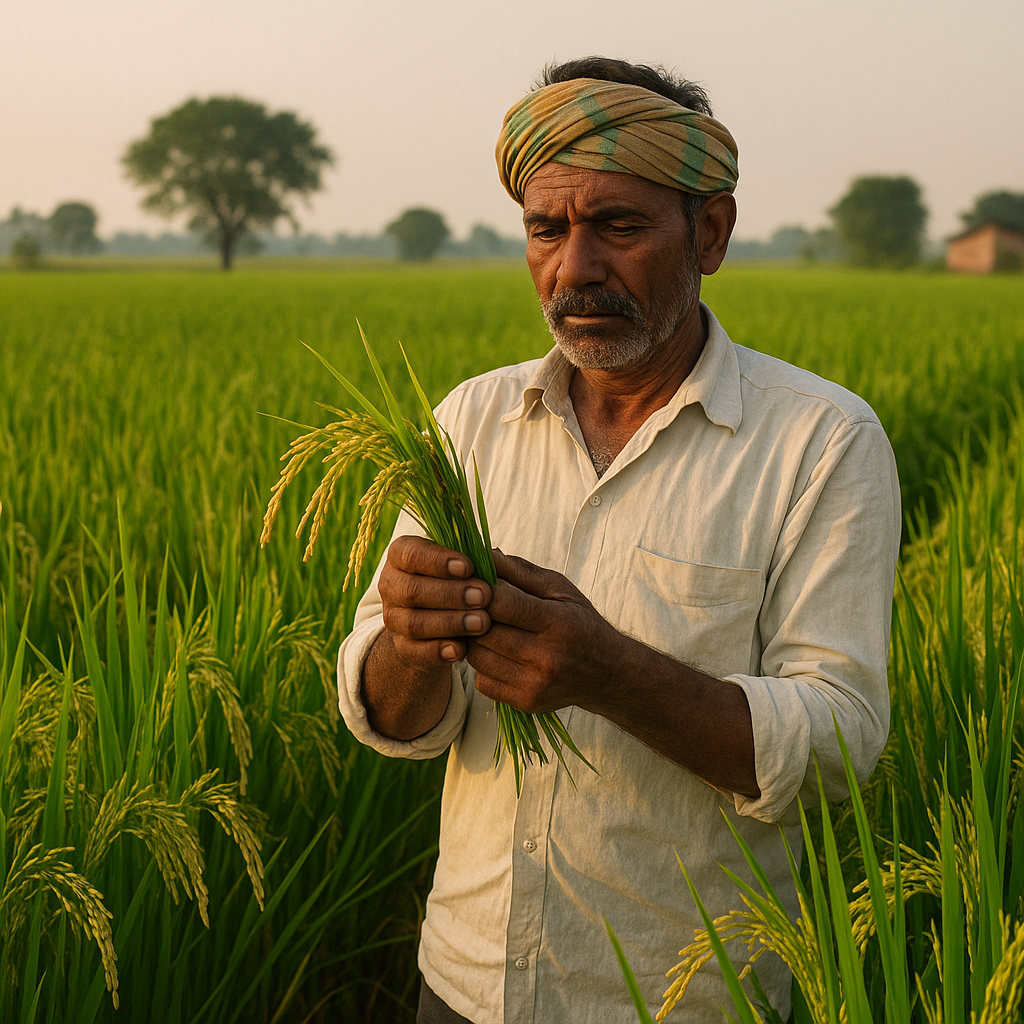
India’s agricultural economy is often described as a story of abundance constrained by structural fault lines. Despite being among the world’s largest producers of rice, wheat, fruits, milk, spices and pulses, the economic well-being of India’s small and marginal farmers—who constitute nearly 86 percent of all cultivators—remains precarious. The promise of doubling farmers’ income has animated public debates and government programmes for nearly a decade, yet the average monthly income of a typical agricultural household still hovers around levels insufficient to sustain a dignified life. The core problem, as many economists agree, lies less in production and more in the pathways between farms and markets. What the farmer grows often has little correlation with what he earns.
This article examines why Indian farmers—particularly small holders—fail to capture a fair share of the value chain. It explores the long-standing fragmentation of mandis, the entrenched power of intermediaries, the limitations and political economy of the Minimum Support Price (MSP) regime, the impact of logistics and storage gaps, and the staggered progress of farmer-producer organisations (FPOs). Together, these form a complex system where the price that a crop commands in the marketplace rarely reaches the hands that till the soil.
At the heart of this problem are three interlinked realities. First, the average landholding size has shrunk dramatically over decades, reducing farmers’ bargaining capacity. Second, the Indian agricultural marketing system—designed in the 1960s and 70s to protect farmers from rural exploitation—has not kept pace with the transformation of the national economy. Third, the architecture of support systems, from procurement to rural infrastructure and farmer collectives, has not achieved the necessary scale to shift power back towards producers. The result is a rural marketplace built on asymmetry: asymmetry of information, resources, mobility, and opportunity.
A starting point in this analysis is the structure of the mandi system. Mandis under the Agricultural Produce Market Committee (APMC) framework were designed to create regulated spaces where farmers could sell crops transparently through open auction. While the early decades saw genuine benefits, the system gradually calcified into a network of localised monopolies. In many states, the number of mandis has remained stagnant or inadequate compared to the volume of produce. A strong mandi should ideally be accessible within 5 kilometres for perishable commodities and 10 kilometres for grains, but the actual average distance is far higher—often 25 to 30 kilometres. This single fact significantly erodes a small farmer’s pricing power. Transporting produce to a distant mandi becomes economically unviable unless the quantity is large enough to cover logistics costs. Most small farmers, working with holdings often less than 1 or 2 hectares, end up selling to local aggregators at the village level, surrendering a portion of their potential earnings even before entering the formal market.
Inside the mandi, the structure becomes even more complex. Licensed commission agents, or arthiyas, wield considerable influence, especially in states like Punjab and Haryana where they act as intermediaries for both farmers and procurement agencies. They facilitate credit, arrange auctions, and negotiate on behalf of farmers, but their dominance creates a dependency cycle. Farmers who borrow from arthiyas often feel compelled to sell only to them, regardless of the price offered. This makes the mandi less of an open marketplace and more of a controlled value chain where the agent captures a disproportionate portion of the gains.
Transparent price discovery—one of the founding goals of mandis—functions only partially. Auctions are frequently opaque, hurried, or influenced by cartel-like behaviour among traders. In crops such as vegetables, the volatility is even more pronounced. A bumper harvest often collapses local prices for reasons unrelated to demand fundamentals but linked to the inability of farmers to access larger markets or store their produce. Studies show that middlemen margins for high-value perishables can reach 60 to 70 percent in certain districts, while farmers receive only a small fraction of the final retail price. The farmers’ grievance is not that intermediaries exist, but that they dominate without adding commensurate value.
MSP: A Promise That Reaches Too Few Farmers
This brings the narrative to the Minimum Support Price system, which, in theory, should provide a floor price guaranteeing farmers basic income assurance. In practice, MSP covers only a handful of crops through meaningful procurement, and mostly in a few states. Wheat and rice dominate procurement because they form the backbone of the Public Distribution System (PDS). For crops like pulses, oilseeds, maize, bajra, and horticultural produce, MSP exists mostly on paper for large parts of the country. Even where MSP procurement operates, farmers must navigate long queues, delayed payments, and restrictive conditions based on moisture percentage or grain appearance. For the vast majority of small farmers, who cultivate diversified crops or horticulture, the MSP mechanism provides psychological comfort but not market assurance.
Moreover, MSP has its own distortions. It encourages monocultures in some regions, leading to resource stress—particularly on groundwater. Its fiscal viability has become a subject of intense political debate. The core limitation, however, is its narrow reach: fewer than 12 percent of India’s farmers directly benefit from MSP procurement. The argument that MSP should become a legal entitlement continues to be debated, but implementation would require a major restructuring of procurement, storage, and distribution systems, along with substantial fiscal commitments. Until such structural shifts occur, MSP can offer only partial relief.
The Logistics Trap: When Poor Infrastructure Forces Poor Prices
Another major factor suppressing farmers’ earnings is logistics. India loses an estimated 15 to 20 percent of its fruits and vegetables post-harvest—one of the highest spoilage rates globally—because of inadequate cold chains, storage facilities, and transportation infrastructure. At the village level, most farmers lack access to pack houses, grading machines, refrigerated trucks, or even basic storage godowns. As a result, they face “forced sales”: once the crop is harvested, it must be sold immediately, regardless of the prevailing market rate. This structural compulsion keeps farm-gate prices low.
The issue is not limited to perishables. For grains and pulses, insufficient quality testing laboratories, limited warehouse receipt systems, and the absence of widely accessible collateral financing prevent farmers from holding produce until prices improve. A small farmer who needs cash for loans, household expenses, and input purchases cannot afford to wait weeks for better prices. Market intelligence systems—while improving through apps and digital advisories—still do not equip farmers with real-time, usable data linked to credible logistics support.
Government initiatives such as the electronic National Agriculture Market (e-NAM) have attempted to bring transparency by linking mandis across states and enabling inter-state trade. While the platform has expanded steadily, its impact remains constrained by the physical realities of mandi operations, trader cooperation, and quality standardisation. Digital markets cannot fully correct structural bottlenecks without simultaneous institutional reform at the ground level.
FPOs and the Quest for Collective Bargaining Power
An important counterbalance to this system was expected to come from Farmer Producer Organisations, or FPOs. These collectives, structured as companies or cooperatives, offer farmers scaled bargaining power, the ability to aggregate produce, access corporate buyers, invest in storage or processing units, and negotiate better input prices. Their conceptual promise is significant: if small farmers cannot individually achieve market power, they can collectivise to create it.
However, the evolution of FPOs has been uneven. While the government has announced the creation of 10,000 FPOs, many remain active only on paper. They struggle with management capacity, working capital, lack of professional leadership, and limited market linkages. Successful FPOs illustrate what is possible—direct contracts with food processors, bulk sales to supermarkets, branded produce lines, and even exports. But scaling this success across thousands of collectives requires not merely registration, but robust support in governance, finance, technology, and business literacy.
In states where FPOs have achieved operational maturity, farmers have seen significantly higher returns: 10 to 20 percent more for grains, 20 to 40 percent more for vegetables, and sometimes double the price for niche or organic produce. The challenge lies in ensuring that FPOs move beyond donor-driven or scheme-driven models and evolve into independent, market-oriented institutions. Without this, the structural vulnerabilities of individual small farmers remain unaddressed.
Building a Fairer Market: What India Must Do Next
Taken together, these complexities underline an uncomfortable truth: India’s small farmers do not receive a fair price because the market system is structurally misaligned against them. The distance between the mitti (soil) and the marketplace is not geographic alone; it is institutional, financial, informational, and infrastructural.
Strengthening localised markets, reforming intermediary roles, reimagining MSP, modernising rural logistics, and building professionally governed FPOs form the five essential pillars of a fairer system. Without these reforms, the value generated by agriculture will continue to bypass those who cultivate the land.
The promise of equitable pricing is not just an economic aspiration; it is central to rural dignity, national food security, and the reimagining of India’s developmental trajectory. Bridging the gap between mitti and market is, therefore, not merely an agricultural reform—it is a national imperative.
India’s Agricultural Price Reality — The Numbers Behind the Crisis
• 86% of all Indian farmers are small or marginal, cultivating less than 2 hectares.
• Only 12% of farmers benefit meaningfully from MSP procurement.
• India loses 15–20% of fruits and vegetables post-harvest due to poor storage and logistics.
• Distance to the nearest mandi averages 25–30 km, far above the recommended 5–10 km.• Middlemen margins can reach 60–70% in high-value perishable supply chains.
• Less than 10% of Farmer Producer Organisations operate as financially viable entities.
Why Farmers Cannot Hold Their Crops for Better Prices
No storage: Limited village-level cold chains, godowns, and warehouse receipt systems.
No cash buffer: Immediate post-harvest expenses force distress sales.
No timely transport: Lack of refrigerated or reliable transport makes waiting risky.
No bargaining power: Traders exploit gluts, offering lower prices when supply peaks.
No real-time market links: Price advisories exist but are not backed by logistics support.
What a Fair-Price Ecosystem Should Look Like
Market Access: More mandis, decentralised procurement, and digital–physical hybrid markets.
Transparent Trade: E-auctions, digital receipts, graded quality standards, and independent oversight.
Price Assurance: Broader MSP coverage, price deficiency payments, and risk-mitigation schemes.
Infrastructure Upgrade: Village-level pack-houses, cold chains, rural warehouses, and testing labs.
Collective Strength: Professionally managed FPOs with credit access, market tie-ups, and technical support.
Corporate Linkages: Contract farming with enforceable protections and fair negotiation frameworks.









[[comment.comment_text]]