Reaching Out Healthcare: Mega Medical Camps of the Indian Army

 2 hours ago
Bringing specialist medical care to remote communities and strengthening the bond between the Army and the people of Jammu and Kashmir.
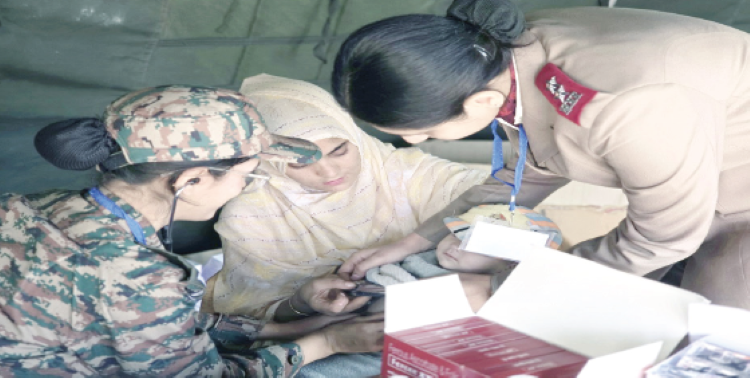
Healthcare is one of the most fundamental necessities of human life, yet its accessibility remains a serious challenge for people living in the remote, mountainous and border regions of Jammu and Kashmir. For many families residing in villages far away from district hospitals and specialised medical institutions, even a routine medical consultation can involve considerable expenditure, difficult journeys and the loss of an entire working day. The difficulties become particularly acute for elderly citizens, women, children and economically weaker families who cannot easily travel to Srinagar, Jammu or other major medical centres. In this challenging geographical and social environment, the Indian Army’s mega medical camps have emerged as a meaningful humanitarian initiative, bringing medical assistance closer to communities that need it most. These camps are not merely temporary arrangements for distributing medicines or conducting routine examinations; they represent an effort to address the human consequences of geographical isolation and limited access to healthcare. Through Operation Sadbhavana and other community outreach programmes, the Army has consistently extended medical support to remote populations, demonstrating that service to the nation also involves concern for the welfare of its citizens.
The importance of these initiatives becomes particularly evident in border villages, where difficult terrain, harsh winters and inadequate transportation frequently complicate access to essential services. By organising medical camps in such locations, the Army helps reduce the distance between patients and healthcare providers, offering relief to people who might otherwise postpone treatment or remain unattended.
The effectiveness of these initiatives can be understood through several recent examples from Jammu and Kashmir. In December 2025, the Indian Army’s Kalapahar and Pir PanjalBrigades organised a three-day medical camp across Salamabad, Nambla and Gingal in Uri, where more than 1,350 people benefited from medical assistance provided by Army medical officers and civilian specialists. The participation of doctors specialising in orthopaedics, gynaecology, dermatology and paediatrics made the initiative particularly valuable for patients requiring specialised attention. In February 2026, another mega medical camp organised by 53 Rashtriya Rifles in collaboration with the Health Department at Chalyan Choontinad in Budgamexamined 523 patients, bringing specialist consultations to a remote village where access to medical facilities is often difficult.
The outreach continued in other parts of the region, including Ganderbal, where Army medical camps provided consultations, medicines and health-related assistance to local residents. More recently, the scale of such humanitarian efforts was demonstrated in Kishtwar, where a two-day mega medical camp under Operation Sadbhavana reportedly benefited over 5,800 patients on November 1 and 2, 2026. A multidisciplinary team offered consultations in several specialties, while assistive devices such as wheelchairs, walkers and hearing aids were provided to eligible beneficiaries. These examples illustrate how military healthcare outreach can respond to diverse medical requirements while making professional assistance accessible to people who might otherwise struggle to obtain basic medical support.
Beyond the immediate medical benefits, these camps carry a larger social significance that deserves recognition. The presence of specialist doctors in a remote village does more than provide treatment; it offers reassurance to families who often feel disconnected from essential public services. For an elderly patient unable to undertake a difficult journey, a medical camp near home can mean the difference between receiving timely attention and continuing to suffer in silence.
For women and children, the availability of consultations in familiar surroundings can encourage them to seek assistance for health concerns that might otherwise remain neglected. Such initiatives also create opportunities for preventive healthcare, awareness about hygiene and nutrition, early identification of medical conditions and guidance on seeking further treatment. The Army’s healthcare outreach can be especially effective when conducted in partnership with civilian health institutions, district administrations, local medical officers and community representatives. Collaboration ensures that patients requiring specialised or long-term treatment are referred to appropriate facilities rather than left dependent on a one-day camp.
Equally important is the compassionate manner in which medical personnel interact with local residents. In regions where trust, accessibility and public participation are essential to development, humanitarian assistance can strengthen mutual understanding and encourage cooperation. The Army’s role in healthcare should therefore be appreciated not simply in terms of the number of patients examined or medicines distributed, but also through the dignity, confidence and relief experienced by the people receiving assistance.
Nevertheless, mega medical camps should be viewed as a valuable complement to the civilian healthcare system rather than a substitute for permanent medical infrastructure. Jammu and Kashmir requires sustained investment in rural health centres, specialist facilities, diagnostic services, ambulances, telemedicine and the availability of qualified medical professionals in underserved areas. The Army’s outreach can help identify recurring medical problems, highlight gaps in public healthcare and provide valuable feedback to the concerned authorities. A systematic mechanism for maintaining anonymised patient records, ensuring follow-up consultations and referring serious cases would further enhance the impact of these programmes. Regular camps, particularly before winter in inaccessible areas, could offer timely assistance to vulnerable populations, while coordination with the Health Department would help avoid duplication and improve continuity of care.
There is also considerable scope for extending health awareness programmes to schools, women’s groups and local community organisations, thereby promoting a culture of prevention alongside treatment. The Indian Army has earned public appreciation through its commitment to humanitarian assistance, disaster relief and community welfare in Jammu and Kashmir. Its mega medical camps reflect a humane dimension of national service, reminding us that the strength of a nation is measured not only by its ability to protect its borders but also by its willingness to care for those living in difficult circumstances.
When medical expertise reaches the doorstep of a remote village, healthcare becomes more than a service; it becomes a message of solidarity, compassion and shared responsibility. The lasting success of these initiatives will lie in ensuring that the goodwill they generate is accompanied by stronger institutions, sustained public investment and a healthcare system that leaves no community behind.
(The author is a commentator on Kashmir affairs, particularly Pak-occupied Kashmir and Gilgit-Baltistan. At his own request, his photograph has been partially blurred to protect his identity and respect his preference for privacy. Email: syedjahanzeeb2@gmail.com)

[[comment.comment_text]]