Demonetisation or Demonisation? Ten Years After the Midnight Strike That Shook India

 an hour ago
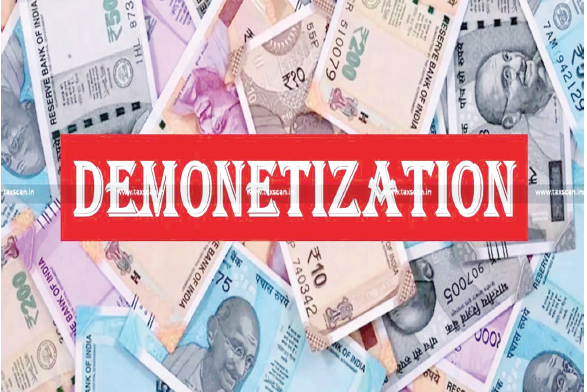
On the night of 8 November 2016, as the nation settled into its evening routines, a televised address declared that the ₹500 and ₹1,000 notes — together forming more than 86 per cent of the currency in circulation — would cease to be legal tender from midnight. What was projected as a decisive surgical strike on black money, counterfeit currency and terror funding unfolded instead as a prolonged national trauma. Ten years later, the anniversary invites not celebration but a sober audit of an experiment whose costs remain etched in memory while its promised gains have largely evaporated.
Echoes of an Earlier Folly
History offers an uncomfortable parallel. In 1330, Sultan Muhammad bin Tughlaq introduced a token currency of copper and brass to conserve scarce precious metals. The measure lacked effective state control over minting. Counterfeit coins flooded the market. When the experiment collapsed, the Sultan ordered the token currency exchanged for gold and silver at the treasury, pushing the state close to insolvency. The episode earned Tughlaq a lasting reputation for impatience and poor execution.
The 2016 announcement carried similar hallmarks: secrecy, scale, and inadequate preparation. Banks and ATMs were unready. New notes arrived slowly. Withdrawal limits changed repeatedly. Citizens, especially the elderly, daily-wage workers, small traders and rural households dependent on cash, stood for hours, often days, in serpentine queues. Reports of exhaustion, cardiac events and distress suicides circulated widely in the weeks that followed. While official records later acknowledged only a handful of deaths linked to the process, contemporary accounts documented widespread human suffering that no statistical revision can erase.
The RBI’s Quiet Verdict
The central claim of the exercise was that large volumes of unaccounted cash would simply not return to the banking system. The Reserve Bank of India’s final accounting told a different story. Of the roughly ₹15.41–15.44 lakh crore of demonetised notes in circulation on 8 November 2016, more than 99.3 per cent — approximately ₹15.31 lakh crore — found its way back into the formal system. Only a marginal amount remained outside. The anticipated windfall of extinguished black money never materialised. What did materialise was a massive, temporary surge in deposits that strained bank operations and later required costly printing of replacement currency.
The printing bill itself rose sharply. Expenditure on note production more than doubled in the year of the ban. The dividend the Reserve Bank paid to the government took a corresponding hit. Counterfeit detection in the withdrawn denominations declined, yet fake notes in the new series continued to appear in subsequent years. The notion that demonetisation would permanently cripple the parallel economy proved optimistic.
The Informal Economy’s Long Shadow
India’s informal sector — employing the vast majority of the workforce and accounting for a substantial share of output — is cash-intensive by nature. Small manufacturers, retailers, construction labour, agriculture and roadside enterprises suddenly found their working capital frozen. Supply chains snapped. Orders dried up. Migrant workers returned home. Demand for work under the rural employment guarantee scheme spiked in several poorer states, signalling distress.
Independent analyses later confirmed measurable contractions in employment and economic activity in districts more severely affected by the cash shortage. Night-light data and survey-based employment measures registered clear dips in the months immediately after the ban. Credit growth slowed. Official GDP figures, which lean heavily on formal-sector indicators, understated the pain felt by the cash-dependent majority. Growth decelerated in the quarters that followed, and the recovery was neither swift nor uniform.
Digital Dreams and Cash’s Stubborn Return
One collateral outcome often cited in defence of the policy is the acceleration of digital payments. Unified Payments Interface volumes and values have since grown spectacularly. Yet cash has not retreated. Currency in circulation as a share of GDP has returned to levels comparable to the pre-2016 period — around 12 per cent. The ₹500 note now dominates the value of notes in circulation, much as the older high-denomination notes once did. The cash paradox persists: digital convenience has expanded, but the preference for physical currency among large sections of the population remains intact.
The Second Shock: GST’s Turbulent Birth
Barely eight months later came the Goods and Services Tax. A long-overdue unification of the indirect tax system arrived with multiple slabs, complex compliance requirements and an IT backbone that was not fully ready. Small businesses already reeling from the cash crunch faced fresh difficulties with filings, invoice matching and refunds. Technical glitches, rate changes and procedural roll-backs marked the early years. What was intended as a seamless national market became, for many micro and small enterprises, another layer of disruption. The sequential timing of the two reforms amplified the strain on the informal and semi-formal economy.
An Unfinished Balance Sheet
A decade on, the government has shown little inclination to revisit the episode with a comprehensive cost-benefit accounting. Digital formalisation has advanced, tax bases have widened in some respects, and certain compliance habits have changed. Yet the core objectives — a decisive blow to black money and a lasting reduction in cash dependence — remain only partially realised.
The human and economic costs, concentrated among those least able to absorb them, were immediate and tangible.
Policy experiments of this magnitude demand meticulous preparation, phased execution and transparent evaluation. When secrecy replaces readiness and rhetoric outruns evidence, the result is not transformation but disruption. Muhammad bin Tughlaq’s token currency is remembered as a cautionary tale. The 2016 note ban, ten years later, still awaits an honest national reckoning that matches the scale of the disruption it imposed.
(The author, a former member of the history faculty at St. Xavier’s College, Mumbai, is a senior TEW columnist.)








[[comment.comment_text]]