Akbar the Great: Imperial Consolidation, Administrative Innovation and the Politics of Religious Inclusion
 an hour ago
A Comparative Study of Conquest, Statecraft, Religious Tolerance and Historical Legacy (Part- 2)
From Conquest to Inclusive Governance
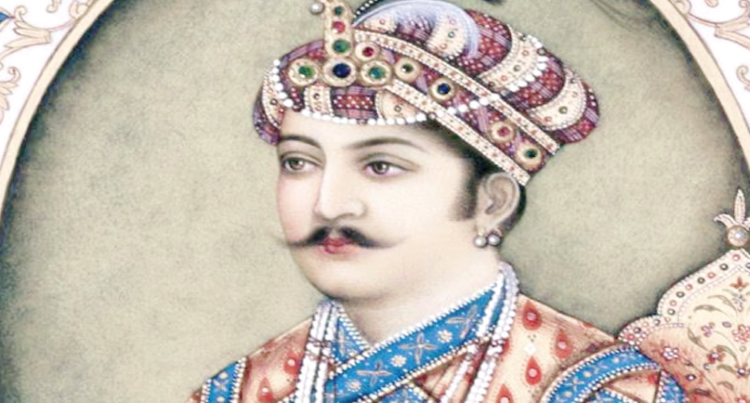
Among the great rulers of world history, Jalal al-Din Muhammad Akbar (1542–1605) occupies a distinctive position. While Alexander the Great transformed the ancient world through military conquest and Genghis Khan established one of the largest contiguous land empires in history, Akbar’s achievement lay in combining territorial expansion with administrative consolidation, political accommodation and cultural integration.
Akbar became Mughal emperor in 1556, at a time when the dynasty was still struggling to secure its position in the Indian subcontinent. During his nearly five-decade reign, he transformed the Mughal state into one of the most powerful and enduring imperial systems in South Asian history.
His military success depended on experienced commanders, the recruitment of regional elites, the expansion of the mansabdari system and the development of a more regular revenue administration. His political achievement was not simply that he conquered territory, but that he established institutions through which the empire could govern an exceptionally diverse population.
I. Hindu and Other Non-Muslim Officers in Akbar’s Service
Akbar’s recruitment of Hindu nobles and administrators was one of the defining features of his imperial policy. Rajput alliances, particularly through marriage and political accommodation, helped integrate important ruling houses into the Mughal nobility. Non-Muslim officials also served in revenue administration, military command and courtly life.
Among the prominent figures were:
Raja Todar Mal: A leading revenue administrator, celebrated for his role in developing and systematising Mughal land-revenue arrangements. He had administrative experience before entering Akbar’s service and became one of the most important financial officials of the reign. Calling him simply Akbar’s prime minister is inaccurate.
Raja Man Singh I of Amber: A senior Rajput noble and distinguished military commander who held high rank in imperial service and led campaigns on Akbar’s behalf. He was among the most influential Hindu nobles of the empire.
Raja Bhagwan Das of Amber: A prominent Rajput ruler whose political alliance with Akbar helped establish a durable relationship between the Mughal court and the Amber ruling house.
Birbal, or Mahesh Das: A Brahman courtier and trusted companion of Akbar, remembered for his literary and personal association with the emperor. His reputation in popular storytelling should be distinguished from his documented historical role.
Raja Rai Singh of Bikaner: A Rajput ruler and Mughal noble who served the empire in military and political capacities.
Bharmal of Amber: The Rajput ruler whose alliance with Akbar in 1562 was an important early step in the integration of Rajput elites into Mughal politics.
Tansen: The celebrated musician associated with Akbar’s court. His musical achievements became central to the cultural memory of the Mughal period, although details of his life and religious background require care.
These examples demonstrate that important non-Muslims could occupy senior positions in Akbar’s government. They do not mean that every important post was held by a non-Muslim or that religious identity ceased to matter in imperial politics.
The distinction between a modern cabinet and a Mughal court is also important. The Mughal state had offices, ranks and chains of command, but its institutions did not correspond exactly to modern ministries or the contemporary concept of a prime minister.
The mansabdari system linked military obligation, personal rank and imperial service, allowing the emperor to build a diverse nobility under central authority.
II. Akbar’s Military Power: Cavalry, Elephants and Firearms
Akbar’s military system differed markedly from those of Alexander and Genghis Khan because it belonged to the early modern age of gunpowder warfare. His forces used cavalry and war elephants, but they also employed matchlock firearms, artillery, infantry and siege technology.
The Mughal army drew strength from several complementary elements:
Cavalry: Remained central to imperial campaigns and rapid manoeuvre.
Artillery and firearms: Played an increasingly important role in siege warfare and field operations.
Elephants: Served in combat, transport, command and ceremonial functions.
Fortifications and logistics: Supply systems and the recruitment of regional military elites helped sustain imperial expansion.
Akbar’s use of elephants is well attested, and the animals were important instruments of warfare and royal display. However, the claim that he possessed 25,000 elephants in his army, or that he personally marched with 10,000 elephants against Ali Quli Khan, requires a specific contemporary source and careful contextualisation. It should not be repeated as established fact without verification.
Nor should Mughal elephants be described as invincible. Elephants could frighten opposing troops, carry commanders and contribute to battlefield shock, but they could also become uncontrollable under stress. Their effectiveness depended on training, terrain, tactics and the circumstances of battle.
The story of Ali Quli Khan Zaman’s rebellion belongs to the early phase of Akbar’s reign and illustrates the challenges of consolidating imperial authority. The specific itinerary through Allahabad, Varanasi, Mughalsarai and Ghazipur, together with the figure of 10,000 elephants, should be included only if supported by an identifiable passage in a reliable historical source.
III. Sulh-i Kull: Peace with All
Akbar’s policy of sulh-i kull, commonly translated as “peace with all” or “universal peace”, is central to any serious assessment of his political and religious legacy.
Associated particularly with Abu’l-Fazl’s political thought and the emperor’s evolving policies, the principle supported a broad conception of imperial harmony that was not restricted to one religious community.
Its practical expressions included the recruitment of non-Muslim nobles, the cultivation of dialogue among religious traditions, the patronage of translations from Sanskrit into Persian and the development of an imperial ideology that emphasised justice and the welfare of diverse subjects.
Akbar abolished the pilgrimage tax in 1563 and the jizya tax in 1564, important measures in the history of his relations with non-Muslim subjects. He also encouraged discussions among Muslim scholars and representatives of other religious traditions at the Ibadat Khana in Fatehpur Sikri.
The emperor’s religious policy evolved over time and was not free from controversy. His experiments included the movement known as Din-i Ilahi, or more accurately in some modern discussions Tawhid-i Ilahi. It was not a mass religion that replaced the established faiths of the empire; it involved a limited circle of courtiers and should not be confused with the broader policy of sulh-i kull.
It is tempting to call sulh-i kull the “Magna Carta of India”. The phrase conveys admiration for its inclusive aspirations, but it is not a precise historical equivalence. The English Magna Carta of 1215 arose from a different constitutional and political context. Akbar’s principle was an imperial ethic and policy of governance, not a charter establishing modern constitutional rights or equal citizenship in the contemporary legal sense.
Its importance lies in the attempt to make political loyalty and imperial justice more inclusive than exclusive religious identity. That is a substantial historical achievement without requiring anachronistic comparisons.
IV. Scholars, Historians and Religious Interlocutors at Akbar’s Court
Akbar’s court supported a remarkable range of intellectual and cultural activity. The most important names include:
Abu’l-Fazl ibn Mubarak: Akbar’s close adviser and principal imperial chronicler. His Akbarnama narrates the emperor’s life and reign, while the Ain-i-Akbari describes imperial administration, institutions, revenue, the court and the empire’s resources.
Faizi (Fayzi): Poet and scholar, elder brother of Abu’l-Fazl, who served as poet laureate and participated in the intellectual culture of the court. He was involved in Persian literary and translation projects.
Abd al-Qadir Badauni: Historian and scholar whose Muntakhab-ut-Tawarikh provides a valuable, often critical perspective on Akbar’s reign and religious initiatives. His account should be read alongside Abu’l-Fazl’s more celebratory narrative.
Shaikh Mubarak Nagori: Scholar and father of Abu’l-Fazl and Faizi. He played a significant intellectual role in the court’s religious and political discussions.
Jain religious leaders, including Hiravijaya Suri: Their interactions with Akbar contributed to the court’s engagement with Jain ethical ideas and practices.
Jesuit missionaries, including Rodolfo Acquaviva and Antonio Monserrate: Members of the first Jesuit mission to Akbar’s court, arriving from Goa in 1580. They participated in religious discussions and left accounts of their experiences.
Sanskrit scholars and translators: A number of learned Hindu intellectuals assisted with Persian translations of Sanskrit works, including texts from the Mahabharata tradition, in the court’s wider translation enterprise.
It is important to distinguish the documented participation of Christian missionaries and Hindu, Jain and Muslim intellectuals from the broader claim that Akbar’s court contained a substantial community of Jewish scholars. That particular assertion needs specific evidence and should not be included without a reliable reference.
Akbar’s intellectual policy was neither a modern secular university system nor a declaration that all religions were identical. It was a distinctive imperial programme that drew on scholarship, debate, translation and political pragmatism to strengthen the monarchy and broaden its cultural foundations.
V. Akbar’s Death and Burial at Sikandra
Akbar died in 1605 and was buried at Sikandra, near Agra, where his tomb remains one of the major monuments of Mughal architecture. The mausoleum reflects the artistic and architectural traditions that flourished under the Mughals, combining elements from different cultural influences.
The claim that Akbar’s body was never taken outside India is unnecessary to understanding his burial and should not be presented as an established statement about his personal wishes unless a reliable source is supplied. His grandfather Babur, by contrast, was initially buried in Agra and later transferred to his preferred garden in Kabul.
The statement that Agra was named after Akbar is incorrect. Agra existed as an important city before his reign. Akbar founded and developed other imperial centres, most famously Fatehpur Sikri, and undertook major building projects at Agra and elsewhere.
Conclusion: The Distinctive Legacy of Akbar
A comparison of Alexander, Genghis Khan and Akbar reveals three different approaches to empire-building.
Alexander’s military brilliance transformed the ancient world, but his empire fragmented after his death. Genghis Khan established a formidable military and political structure that enabled his successors to create an empire spanning much of Eurasia. Akbar, however, demonstrated that imperial greatness could also rest on administrative consolidation, political alliances, revenue reform and the accommodation of diverse religious communities.
Akbar’s greatest contribution was arguably his recognition that military supremacy alone could not ensure the stability of a vast and culturally diverse empire. Sustainable governance required the participation of local elites, institutional continuity and a political philosophy that could accommodate different communities.
His policy of sulh-i kull was not equivalent to modern secular democracy or constitutional equality. Nevertheless, it represented a significant attempt to place imperial loyalty, justice and political cooperation above narrow religious divisions.
The three rulers were products of their respective historical circumstances, and none should be judged through an entirely modern political framework. Yet their legacies offer enduring lessons about leadership, statecraft, military power and the relationship between political authority and cultural diversity.
Alexander conquered to transform the known world; Genghis Khan conquered to establish an unprecedented Eurasian imperial order; Akbar combined conquest with a sustained effort to govern through inclusion and institutional consolidation. It is this distinctive synthesis that gives Akbar a special place in the history of world empires.
(The author, a former Cabinet Minister and Acting Chief Minister in UP government, is a widely respected political leader and educationist. A life President for The Organisation of Nuclear Disarmament and World Peace, he has extensively traveled to the US, UK, Turkey, Afghanistan, Hong Kong, Italy, Russia, Iran, Iraq,Kuwait and South East Asian countries.)





[[comment.comment_text]]