The Dragon-Bear Dance: Growing Closeness Between Russia and China

 3 weeks, 1 day ago
The world is undergoing unprecedented transformations across various domains, from digital and technological advancements to demographic, climatological, military, pathogenic, economic, and geopolitical shifts. This era of profound change, described by China's President Xi Jinping as "unseen in a century," is leading to the strained birth of a new global order. Recent events, such as conflicts in the Middle East and tensions between India and Pakistan, underscore this turbulent transition.
Burgeoning Dragon-Bear Axis
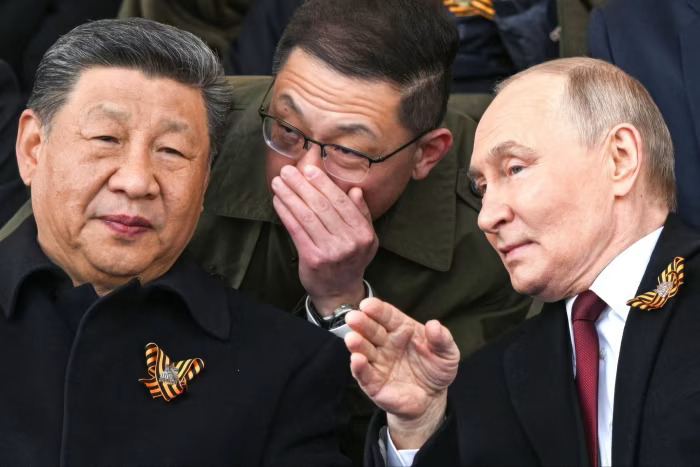
A central dynamic shaping the 21st century is the burgeoning relationship between China and Russia, often dubbed the "Dragon-Bear" axis. This close alignment is viewed by some, including EU High Representative Kaja Kallas, as "the greatest challenge of our time." While Europe prioritizes preserving the existing rules-based order, Beijing and Moscow perceive things differently, openly challenging what they see as Western attempts to thwart their rise.
Chinese President Xi Jinping has frequently articulated a narrative of historical grievances, asserting that "Western countries led by the United States have implemented all-round containment, encirclement and suppression of China." He frames China's past hardships as a result of foreign bullying and seeks to rectify this historical injustice, a message that resonates in many parts of the world with legacies of colonialism.
Echoing this sentiment, Russian President Vladimir Putin has vehemently criticized the West, stating that their claims of bringing freedom and democracy are false. Instead, he argues, Western powers have "suppressed and exploited" and view countries like Russia as mere colonies. This rhetoric portrays Russia as a victim rather than an imperial power, despite its own extensive historical expansion.
Both China and Russia aim to present an alternative to the Western model, fostering a "marriage of convenience" that they publicly declare as unbreakable. Ahead of the Ukraine invasion, Putin and Xi famously announced their relationship had "no limits," a sentiment reiterated in subsequent meetings and letters, emphasizing their bond as "eternal" and "everlasting."
The shared identification of the West as a historical and present threat serves to establish a narrative for the future. While the West is depicted as destructive, China positions itself as a force for "peace, development, co-operation and mutual benefit," claiming to always stand "on the right side of history."
China’s Belt and Road Initiative
The Belt and Road Initiative (BRI) is a prime example of China's proposed alternative. Presented through the metaphor of the ancient Silk Roads, the BRI emphasizes peaceful engagement, mutual learning, and shared benefits, contrasting with what Beijing portrays as the West's exploitative past. This initiative is framed as a "Key Pillar of the Global Community of Shared Future," belonging to the world and benefiting all humanity.
Russia's foreign policy mirrors this approach, outlining its "special position as a unique country-civilization" capable of fostering harmonious coexistence across diverse peoples in Eurasia. Like China, Russia seeks to offer a non-Western way of engaging with the world, emphasizing its historical ties and ability to unite different cultures.
This shared narrative of friendly, collaborative relationships, focused on histories of enlightenment rather than violence, aims to legitimize alternatives to the current rules-based order. This has fueled the growing embrace of multi-polarity, with "middle powers" like the BRICS nations (Brazil, Russia, India, China, and now others) demanding a more equitable redistribution of global economic and political power.
The historical significance of Asia, particularly the Eurasian steppes, as a "crucible of empires" for millennia, provides a crucial backdrop to understanding current global shifts. This region's historical role in fostering large states and military advancements underscores why the world's center of gravity is perceived to be returning eastward, generating anxiety in the West, particularly the US.
Underlying Tensions
Despite the outward display of solidarity, underlying tensions exist between Russia and China. Historically, Russia expanded at China's expense, and while these past grievances are conveniently overlooked, some Chinese scholars express critical views of Russia's imperial ambitions and inherent hostility. There's also evidence of mutual suspicion, with China actively trying to recruit sources in Moscow and Russian intelligence viewing China as "the enemy."
Nonetheless, the war in Ukraine has undeniably benefited China, providing cheap resources and valuable military lessons. Beijing perceives little to gain from restraining Moscow and limited capacity to do so meaningfully. Thus, maintaining a narrative of friendship and shared grievances serves both domestic and international interests with minimal risk, indicating that their alliance remains a "marriage of convenience" driven by shared incentives and historical narratives.
(Author holds a doctorate in International Relations.)




[[comment.comment_text]]